
 +971 52 110 0777


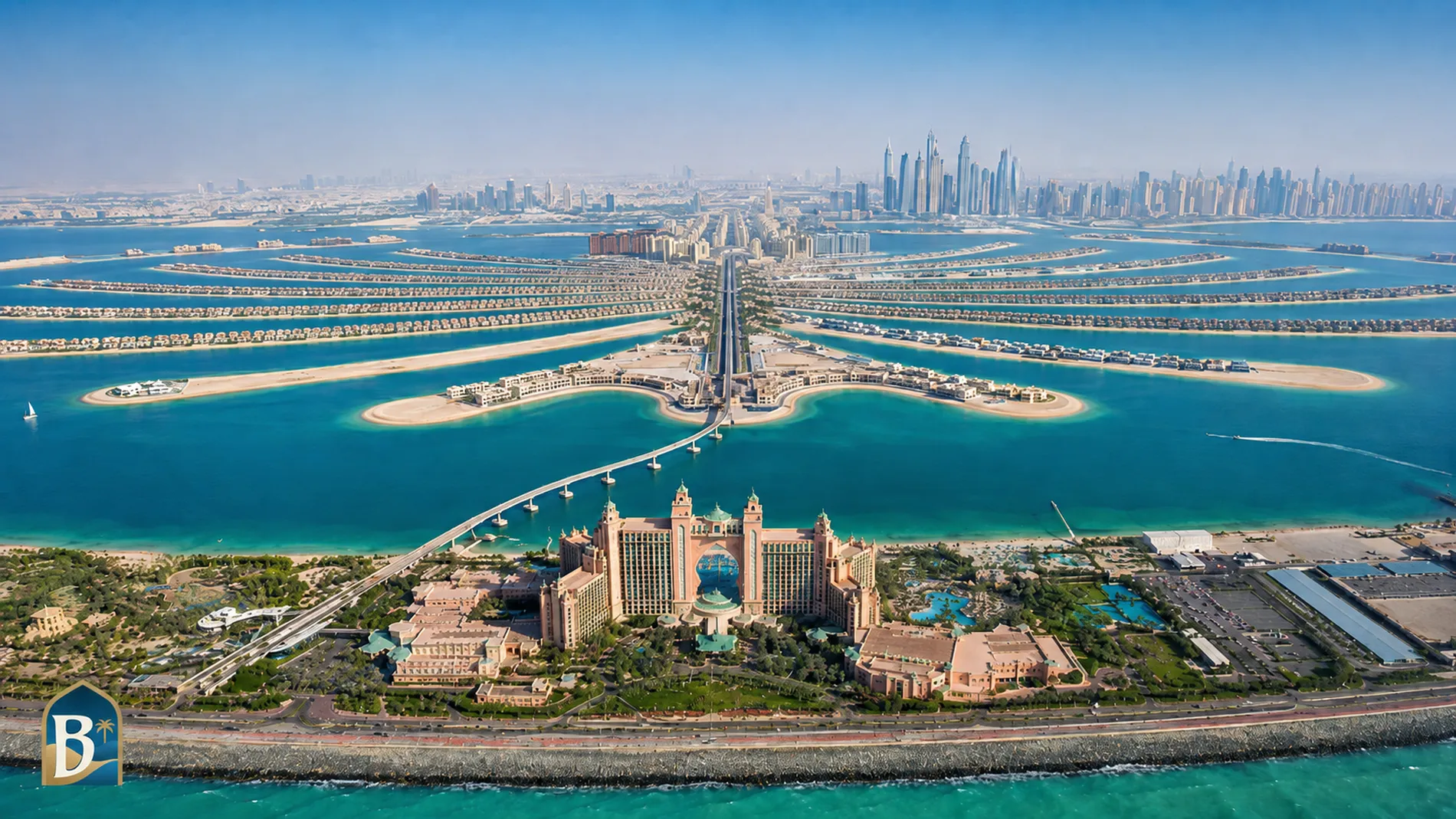

Palm Jumeirah is one of Dubai’s best-known waterfront residential areas, combining apartments and branded residences on the trunk and crescent with beachfront villas on the fronds. Foreign buyers can purchase freehold property in the area, while the choice ranges from studios and apartments to penthouses and ultra-prime villas.
For buyers, however, Palm Jumeirah is not a single uniform market. The trunk, fronds, and crescent differ significantly in property types, beach access, privacy, transport, service charges, and everyday convenience. A beachfront villa and an apartment in a residential tower may share the same Palm Jumeirah address but have very different ownership costs and buyer profiles.
This guide explains Palm Jumeirah property types, prices and market factors, ownership costs, transport, schools and amenities, as well as the practical differences between the trunk, fronds, and crescent.
This guide is intended for anyone considering the Palm as a place to live, a second home, or a long-term asset. We will look at the island’s geography, property formats, pricing dynamics, transport realities, everyday infrastructure, and the practical criteria that matter when selecting a specific property — helping you decide whether Palm Jumeirah deserves a place on your shortlist.
Palm Jumeirah at a glance:
- Location: off Dubai’s Jumeirah coastline
- Main areas: Trunk, 17 Fronds, and Crescent
- Property types: apartments, branded and serviced residences, penthouses, townhouses, villas, and ultra-prime homes
- Ownership: freehold property is available to foreign buyers
- Public transport: Palm Monorail with connections toward Dubai Tram and Metro
- Best known for: beachfront homes, luxury hotels, restaurants, leisure facilities, and waterfront living
- Main buyer considerations: purchase price, beach access, service charges, traffic, property condition, and exact location within the Palm
How Palm Jumeirah Is Structured
To properly assess real estate on Palm Jumeirah, it helps to first understand the island’s physical layout. Developed by Nakheel in the early to mid-2000s, Palm Jumeirah was created from reclaimed sand and rock in the waters of the Arabian Gulf. It extends from Dubai’s Jumeirah coastline and is connected to the mainland by road infrastructure and a monorail system.
The island is shaped like a stylized palm tree and consists of three main structural elements: the trunk, seventeen fronds, and a crescent-shaped breakwater encircling the outer edge.
Trunk — the central spine of the island. This is Palm Jumeirah’s widest and most densely developed section, connecting the island directly to the mainland. It contains most of the high-rise residential buildings with apartments, along with retail and dining venues and the island’s main transport corridor. The Trunk is the most urban part of Palm Jumeirah, with higher density, more traffic, and more activity at street level. For buyers looking for an apartment, this is typically the first part of the island they consider.
Fronds — the island’s residential branches. Seventeen “palm leaves” extend outward from both sides of the Trunk. Each frond is essentially a narrow residential street lined primarily with townhouses and villas, many of which have their own private beaches. This is a fundamentally different style of living: low-rise, secluded, and with the water almost literally on the doorstep. Life on the fronds is considerably quieter than on the Trunk, but it is also far less walkable. For most residents, managing everyday life here without a car would be difficult.
Crescent — the crescent-shaped breakwater forming the island’s outer perimeter. This is Palm Jumeirah’s resort district, home to some of its largest hotel developments, including Atlantis The Palm and a number of other luxury resorts, as well as premium apartment residences overlooking the open sea. The Crescent is the part of the island furthest from the mainland, which shapes both its distinctive resort atmosphere and the additional travel time involved in everyday journeys.
Parts of Palm Jumeirah: How Each Area Shapes Daily Life
| Part of Palm Jumeirah | Typical Property Types | Key Characteristic | Everyday Practicality | Best Suited To |
|---|---|---|---|---|
| Trunk | Apartments, branded residences, penthouses | Urban atmosphere, higher density, core infrastructure | Shops, restaurants, and services within walking distance; access to the Palm Monorail | Apartment buyers who value infrastructure and day-to-day convenience |
| Fronds | Townhouses, villas, beachfront villas | Privacy, low-rise living, private beach access | Strong reliance on a car; fewer walkable routes | Families and buyers who prioritize privacy and direct beach access over urban activity |
| Crescent | Apartments in luxury hotels and residential developments, serviced residences | Expansive open-sea views and a resort-style atmosphere | Farthest from the mainland; greater dependence on a car or the Palm Monorail | Buyers seeking a second home who value sea views and a resort environment more than proximity to everyday amenities |
The table highlights how dramatically the lifestyle can vary even within Palm Jumeirah itself. The Trunk has the feel of an urban island district, with cafés, shops, constant movement, and an active residential environment. The Fronds are closer to private waterfront communities, where peace, space, and seclusion matter more than walkability. The Crescent, meanwhile, functions as a self-contained resort enclave, offering minimal everyday bustle but placing residents farther from the routines and conveniences of the wider city.
This distinction is crucial when choosing a property. Two people can both say they own a home “on Palm Jumeirah” yet experience completely different lifestyles. One may live in a lively apartment development with concierge services and dining options in the building next door, while another may be in a villa where even the nearest supermarket requires a drive.
Understanding which of these lifestyles best matches a buyer’s priorities should happen before any documents are signed, not after the purchase is complete.
Apartments, Branded Residences and Villas
The Palm Jumeirah property market spans a remarkably broad range of formats, from studios and one-bedroom apartments in residential towers to expansive mansions with multiple swimming pools, private berths, and five to seven bedrooms. What all of these properties share is the address. Beyond that, however, they can be fundamentally different products.
Apartments make up a significant share of the residential stock, particularly along the trunk of the island. These are typically located in high-rise or mid-rise developments with shared swimming pools, leisure areas, fitness facilities, and parking. The quality of individual developments varies considerably. Some buildings date back to the mid-2000s and require closer attention to the condition of their engineering systems and communal areas, while others are newer or have undergone substantial refurbishment. Beach access for apartments on the trunk varies by development. Some residential complexes offer direct or private beach access, while others rely on nearby beaches or shared waterfront facilities. Buyers should therefore verify the exact beach-access rights attached to the specific building and unit.
Branded residences form a distinct segment of the Palm Jumeirah market, but the term does not describe a single ownership or management model. Depending on the project, a residence may be hotel-operated, associated with a hospitality brand, or simply licensed to use a luxury brand name.These are residential developments operated by, affiliated with, or carrying the name of international hotel groups and luxury brands. Buyers are not simply purchasing an apartment; they are buying into a product with a defined service standard, a professionally managed reputation, and usually a more consistent level of maintenance across shared spaces and amenities. That premium is reflected in the price: branded residences typically command significantly higher prices than non-branded apartments of a comparable size. Branded residences may command a price premium over non-branded properties, although the size of that premium varies by brand, location, building, services, and market conditions. Service charges may also be higher where extensive hotel-style services and amenities are provided. Their service charges are also generally higher.
Serviced residences combine elements of hotel accommodation with residential living. They are particularly well suited to owners who plan to spend several months of the year on the Palm and value hotel-style services without wanting to manage the property themselves.
Penthouses occupy the upper end of the apartment market. They are often duplexes or unusually configured residences with expansive terraces and views unavailable from lower floors. Their value is determined less by floor area alone and more by the quality of the views, the standard of the interiors, and the specific building in which they are located.
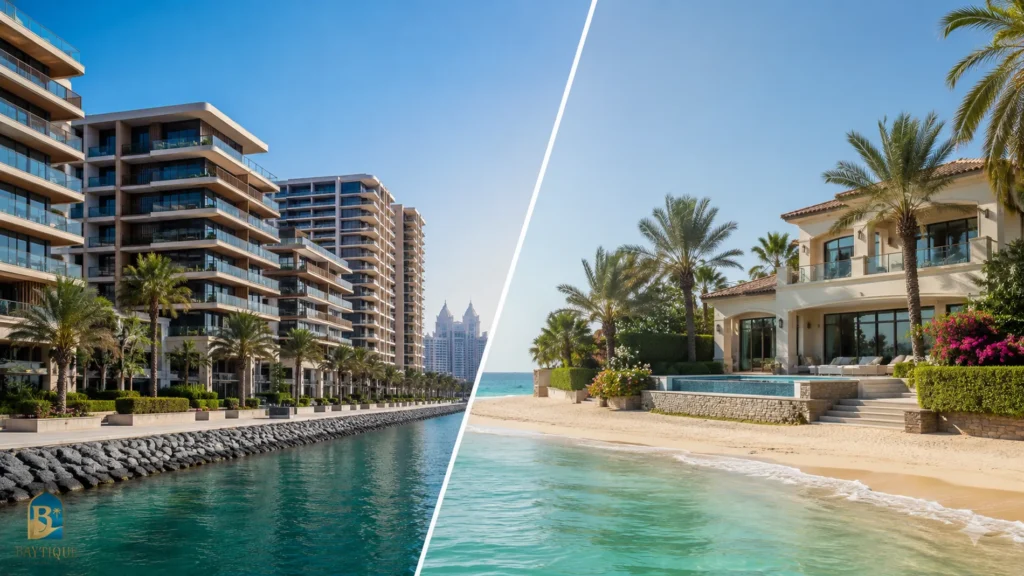
Villas are an entirely different type of property. Most Palm Jumeirah villas are located along the fronds and consist of two- or three-storey homes with private gardens and direct beach access. This is perhaps the most recognisable image associated with the Palm: a waterfront home with a private gate opening directly onto the beach. Villas vary significantly in plot size, shoreline frontage, architecture, condition, and degree of renovation. A villa purchased in 2007 and left largely unchanged since then is a very different product from one that has undergone a complete contemporary refurbishment, even if both have the same number of bedrooms and a similar frond address.
Beachfront mansions and ultra-prime residences sit at the very top of the market. Here, properties are assessed not only by their internal floor area but also by the length of their private shoreline, architectural uniqueness, specification, and degree of privacy. These are highly individual assets, and transactions are relatively infrequent, with many never appearing on the open market at all.
One point is particularly important to understand: the same number of bedrooms does not make two properties comparable. A three-bedroom apartment on the trunk and a three-bedroom villa on a frond are fundamentally different assets, with different operating characteristics, ownership costs, and target buyers. Comparing them as though they were equivalent means comparing products that are inherently unlike one another.
alm Jumeirah Property Types Compared
| Property Type | Typical Buyer Profile / Use Case | Key Advantages | Potential Limitations | What to Check |
|---|---|---|---|---|
| Apartment | Full-time living or rental investment; buyers who value convenient access to amenities | Wide selection, multiple price points, well-developed infrastructure across the trunk | Beach access varies significantly by development; building quality and the condition of common areas should also be assessed individually; | Year of construction, condition of common areas, service charges, management company |
| Branded residence | Second home, premium investment, or service-led lifestyle | Potential access to brand-led services, amenities, and professional management, depending on the operator and the specific residence | Higher purchase prices and service charges; owners are partly dependent on the brand’s operating policies | Management terms, rental rules, actual quality and consistency of service |
| Penthouse | Buyers who prioritize views, space, and generous terraces | Exceptional views and distinctive layouts | High entry price; genuinely outstanding penthouses on the Palm are in limited supply | Orientation, floor level, and the actual view from each room |
| Villa | Families seeking privacy and private beach access | Direct beach access, standalone living, and a high degree of privacy | Greater dependence on a car; higher maintenance costs than apartments | Length of private beachfront, condition of the property and plot, renovation potential |
| Beachfront mansion / ultra-prime property | High-net-worth buyers looking for a primary or second residence | Maximum privacy, exceptional scarcity, and direct waterfront frontage | Highly limited market, very high entry cost, and potentially more complex resale | Legal status, ownership history, and any restrictions affecting the property |
Once the main property types are clear, one practical principle becomes especially important: on Palm Jumeirah, buyers are paying for far more than square footage alone. A property’s value is also shaped by the view from a particular window, the length of its waterfront frontage, the degree of privacy it offers, whether it has direct beach access, the level of service provided, and the specific building itself—including its age, quality of management, condition of its engineering systems, and overall reputation.
Two properties may carry the same asking price, yet if they differ significantly across these factors, they represent fundamentally different investments with very different ownership profiles.
Palm Jumeirah Property Prices and Market Trends
Palm Jumeirah sits within Dubai’s prime residential market, but transaction prices vary substantially by property type, location within the island, view, beach access, building, condition, and level of service. Apartments in residential towers on the trunk and ultra-prime villas with their own private shoreline differ not simply in price, but in the fundamental nature of the product itself.
Because Palm Jumeirah contains everything from studios to ultra-prime beachfront villas, a single average price can be misleading. Buyers should compare recent transactions within the same property type, building or villa category rather than relying on an island-wide average.
Current price levels should therefore be checked against recent Dubai Land Department transaction data. For apartments, useful comparisons include price per square foot, building age, floor, view, beach access, service charges, and whether the property is branded. For villas, plot size, built-up area, frond position, beachfront width, condition, and renovation quality can materially affect the transaction price
Pricing on Palm Jumeirah is shaped by several interconnected factors. The first is location within the island. Properties on the fronds with direct access to the water are priced very differently from apartments on the trunk without a beach immediately outside the residence. Properties on the crescent overlooking the open sea follow their own pricing dynamics. The second factor is the view: sea views, Dubai skyline views, canal views, and internal courtyard views can place units in entirely different price categories, even within the same building. Corner apartments, higher floors, and non-standard layouts with open terraces can also command a substantial premium.
The third factor is the property’s brand and the quality of its management. Branded residences operated by international hotel groups typically trade at a significant premium to the wider market, reflecting the level of service, the strength of the brand reputation, and the property’s international recognition. The fourth factor is condition. A fully renovated villa with modern building systems, high-end finishes, and professionally designed landscaping is an entirely different proposition from a villa in its original condition after years of rental use, even if both have the same number of bedrooms and are located on comparable fronds.
Another important consideration is whether the property is completed or still under development. The primary, or off-plan, market and the secondary market have different risk profiles, timelines, payment structures, and resale liquidity. Off-plan properties may offer different payment structures or launch-stage pricing, but they are not necessarily cheaper than comparable completed properties. Buyers should assess the developer’s track record, construction status, payment schedule, contractual terms, and the pricing of comparable ready properties.
For current market analysis—including registered transactions, sales volumes, and trends within specific areas—an important primary source is transaction data published by the Dubai Land Department. DLD records registered transactions and allows buyers and analysts to compare activity by location and property type. DLD records registered transactions and allows the market to be analysed by location and property type. Quoting specific current price ranges without tying them to a defined period and source would be misleading in this context: the Palm Jumeirah market is highly dynamic, and figures from general market reports can become outdated quickly.

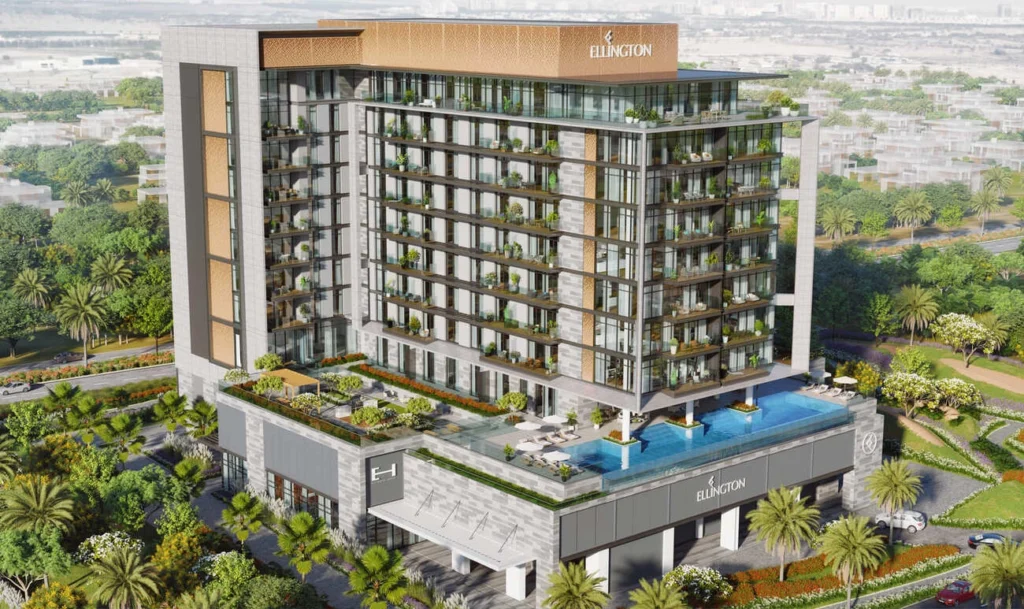
 City of Arabia (Dubai)
 from 95м²

It is also important to distinguish between the mainstream premium segment and the ultra-prime segment. The former includes relatively standard apartments in residential towers that offer above-market specifications but no truly unique competitive advantages. The latter consists of one-of-a-kind properties where almost every characteristic is exceptional, from the length of the private shoreline and the architectural design to the property’s history and quality of finishes. Pricing works very differently in these two segments, and conclusions drawn from one should not be applied directly to the other.
What to compare besides the price per square foot:
- Actual beach access: directly from the property or via shared areas / across a public road
- Views from the main living spaces: sea, skyline, or a neighbouring building
- Floor level and orientation: both affect natural light, privacy, and the premium attached to the view
- Shoreline length for villas: a measurable physical attribute rather than a marketing description
- Building age and maintenance history: including wear and deterioration in engineering systems and common areas
- Quality of the property management company: a major factor in the long-term condition of the building and individual units
- Tenancy terms or restrictions on use: particularly important for serviced residences and branded developments
How Much Does It Cost to Own Property on Palm Jumeirah?
The cost of owning property on Palm Jumeirah consists of the purchase price, transaction costs, annual service charges where applicable, utilities, maintenance, insurance where relevant, and periodic refurbishment. Villas can also involve pool, landscaping, beachfront, and building-system maintenance. The exact cost varies significantly by property.
Buyers should distinguish between one-off acquisition costs and ongoing ownership costs. In addition to the agreed property price, a Dubai purchase may involve registration-related charges, agency fees where applicable, mortgage-related costs for financed purchases, and other transaction expenses. The exact amount depends on the transaction structure and should be confirmed against current Dubai Land Department requirements before signing.
The purchase price is only the first part of the financial equation. Annual property ownership costs on Palm Jumeirah can materially affect the overall economics, particularly for villas and premium developments offering an extensive range of amenities.
Service charges are annual fees that cover the maintenance of common areas, building systems, security, landscaping, and property management. On Palm Jumeirah, service charge levels vary depending on the specific building and type of property. An apartment development with a swimming pool, gym, parking, and concierge services will have one fee structure, while a branded residence offering enhanced hotel-style services may charge substantially more. Service charge figures from one building should never be applied to a neighbouring development or to Palm Jumeirah as a whole — Service charge figures from one building should not be applied to a neighbouring development or to Palm Jumeirah as a whole, as approved charges can vary materially between individual projects.
The official tool for checking approved service charges for specific properties is the DLD/RERA Service Charge Index. It provides information on approved charges for jointly owned properties and should be one of the first points of reference when assessing the operating costs of a particular building.
For villa owners, the cost structure is different from that of apartment ownership. In addition to any applicable service charges, owners need to account for private pool maintenance, including cleaning, chemicals, and equipment servicing; landscaping; beachfront maintenance; and the upkeep of the villa’s mechanical and technical systems, including air conditioning, plumbing, and electrical installations. In Dubai, air conditioning is not merely a seasonal expense but an ongoing one, particularly in homes with large glazed façades. Cooling costs can become significant during the summer months.
Another important expense is repairs and refurbishment. Properties on Palm Jumeirah, especially those completed in the mid-2000s, may require scheduled upgrades or more extensive renovation. This can include kitchens, bathrooms, finishes, and building systems that have reached or are approaching the end of their service life. A villa in need of renovation may appear attractive because of its lower entry price, but buyers need a clear understanding of both the renovation budget and the likely timeframe involved.
A buyer’s Palm Jumeirah budget should account from the outset not only for the acquisition price, but also for a realistic estimate of annual ownership costs, including service charges, utilities, maintenance, and planned upgrades. For villas, these expenses can represent a substantial component of the total cost of ownership.
Service charges can vary considerably from one residential development to another. Before purchasing, buyers should therefore request the actual figures for the specific building or property rather than relying on broad market averages.
Living on Palm Jumeirah: Lifestyle and Amenities
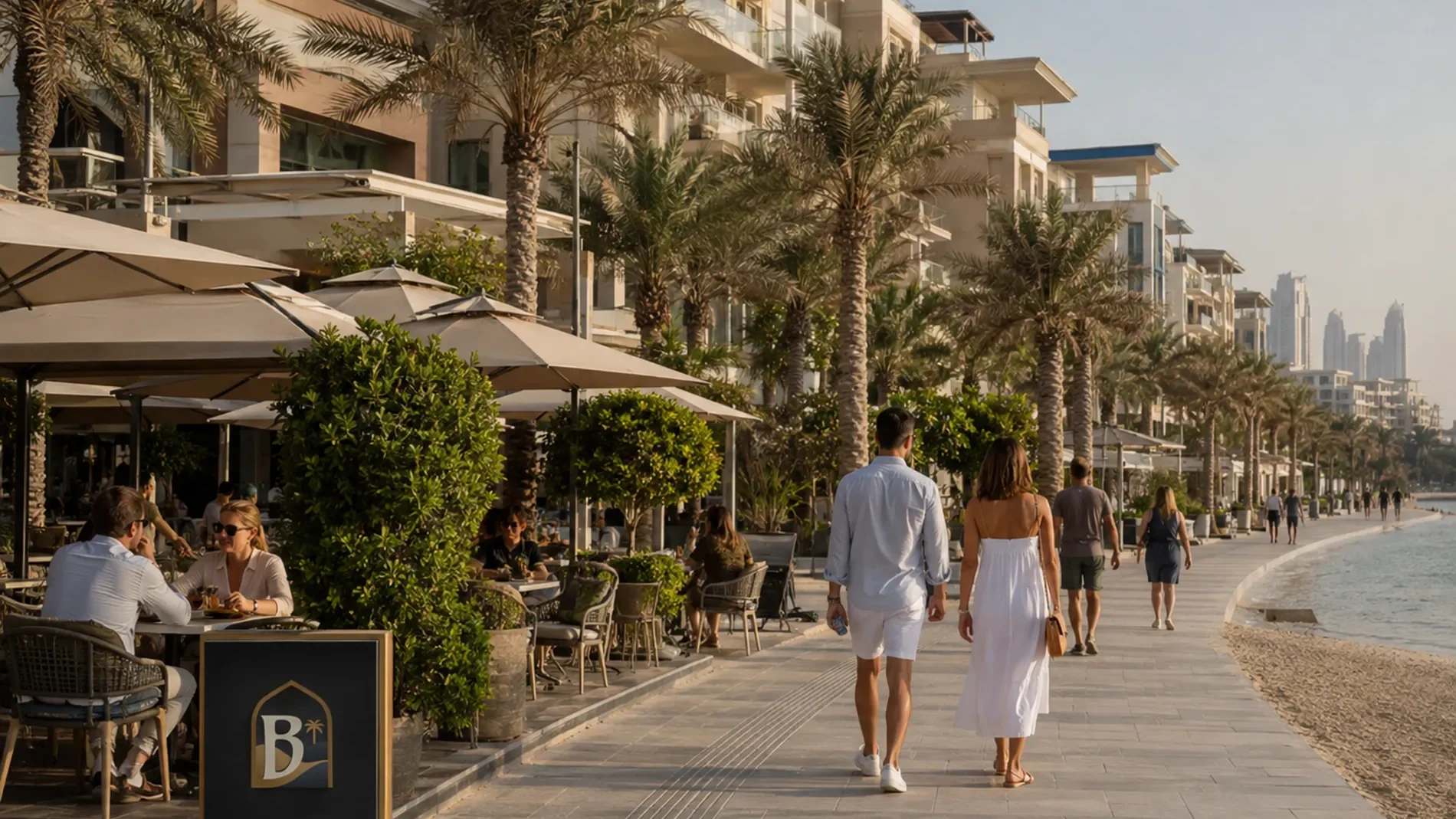
Life on Palm Jumeirah needs to be viewed with some nuance. Describing the island as a “resort paradise” accurately captures the experience of a visitor, but only partly reflects what it is like to live here for months or years at a time.
It is worth starting with what Palm Jumeirah does exceptionally well. Its beachfront and waterfront setting is the main reason many people choose to live here. The island’s coastline is far better integrated into everyday life than in most other parts of Dubai, with public beaches, waterfront promenades, and places to swim. The Boardwalk, a long pedestrian route along the outer edge of the Palm, provides space for walking, running, and cycling with open views across the water. Palm West Beach, on the western side of the trunk, is a major waterfront leisure destination with restaurants, cafés, beach venues, and access to the shoreline. Al Ittihad Park is one of the area’s relatively few landscaped green spaces and is well suited to family walks, exercise, and outdoor recreation.
Palm Jumeirah also has an unusually high concentration of dining and leisure amenities, including restaurants across different price ranges, beach clubs, bars, hotels, and spas. There are more of these venues within a relatively compact area than in many other Dubai communities. For residents who value variety and having plenty of options close to home, this is a clear advantage.
There is, however, another side to the experience. Tourist traffic is a permanent feature of life on the island. Five-star hotels, Aquaventure, high-profile restaurants, and popular social-media destinations attract large numbers of visitors from elsewhere in Dubai and beyond. As a result, Palm Jumeirah is not always as quiet as its image might suggest, particularly on weekends, public holidays, and during peak tourist season. The fronds generally offer far more privacy in this respect than the trunk or areas surrounding the major hotels.
Whether Palm Jumeirah feels primarily residential or more like a resort also depends heavily on where you live on the island. The trunk has a more conventional residential character, with supermarkets, cafés, banks, pharmacies, and the everyday rhythm of an established urban neighbourhood. The fronds feel more like quiet waterfront suburbs, where daily life moves at a noticeably slower pace. The crescent, by contrast, is dominated almost entirely by hotels and resort-style developments.
Everyday shopping does not require leaving the island. Carrefour and several other supermarkets are available on the trunk, while smaller grocery stores operate in different parts of Palm Jumeirah. For a broader selection of shops and malls, Dubai Marina Mall and Mall of the Emirates are generally around 10–20 minutes away by car, depending on traffic.
A number of major destinations also have a direct impact on residents’ quality of life. These include Atlantis The Palm, the island’s largest entertainment complex at its northern end, the water park, the wide selection of hotel restaurants, yacht facilities, and infrastructure for water sports. Those who enjoy Dubai’s attractions and an active leisure-oriented lifestyle will find plenty to do on Palm Jumeirah without having to leave the island.
Transportation and Daily Commutes
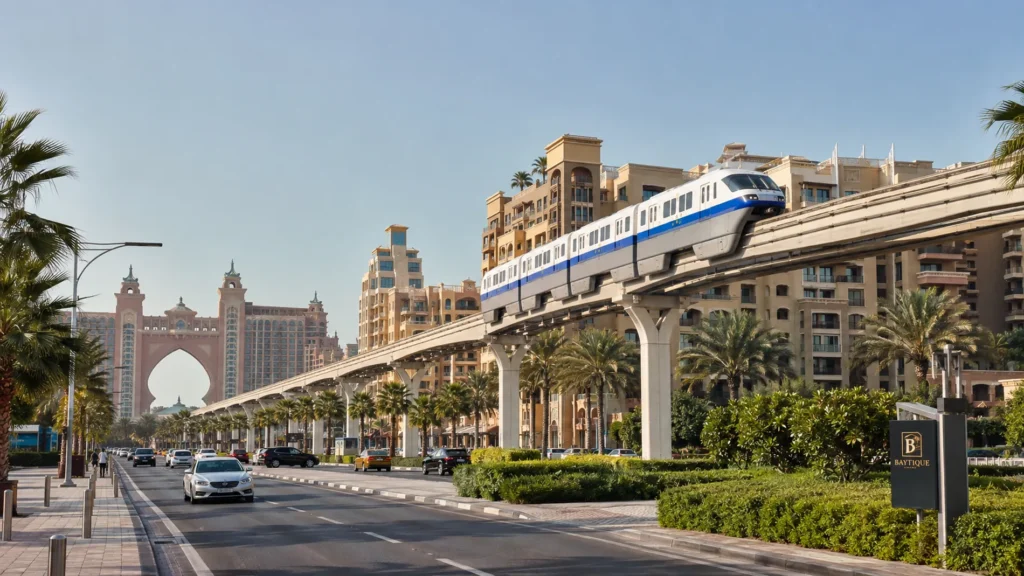
Palm Jumeirah is primarily car-oriented, although the Palm Monorail provides public transport along the island’s central axis and connects with the Dubai Tram network. There is no Dubai Metro station directly on Palm Jumeirah, so buyers who expect to commute by public transport should assess the route from the specific property before purchasing.
Driving remains the primary mode of transport for most Palm residents. The island is connected to the mainland via a tunnel that emerges near Al Sufouh. Palm Jumeirah connects to Dubai’s mainland road network through the trunk of the island. Road journeys from the fronds, trunk, and crescent follow different routes within the Palm, so travel times can vary considerably depending on the property’s exact location and traffic conditions. During the morning and evening rush hours—particularly from 7:30 to 9:30 a.m. and from 5:30 to 7:30 p.m.—During weekday morning and evening peak periods, traffic on the main access roads to and from Palm Jumeirah can become considerably heavier, and journey times vary depending on the day, destination, and current road conditions. Travel times from a particular building on the Palm to Downtown Dubai, Barsha Heights, or Dubai International Airport can vary significantly depending on when you leave. Quoted driving times should always be treated as traffic-dependent. Actual journey times can vary significantly by time of day, destination, and the property’s position on the island.
The Palm Monorail connects the Gateway station on the trunk of the island with Atlantis on the crescent. It is a convenient way to reach the hotel or travel along the island’s central axis, but its usefulness for daily commuting is limited: there are relatively few stops, and the system serves only a single corridor. Once you leave the Monorail on the mainland, the nearest connection to Dubai’s wider public transport network is the Dubai Tram. According to Dubai’s Roads & Transport Authority, the Dubai Tram network connects with both the Dubai Metro and the Palm Monorail, allowing passengers to continue from Palm Jumeirah toward the wider rail network. In practice, reaching the Metro may therefore involve a Monorail → Tram → Metro journey, with multiple transfers and the additional travel time they entail. There is no Metro station directly on Palm Jumeirah itself.
Taxis and ride-hailing services such as Careem and Uber are widely used by residents, particularly by those who prefer not to own a car or who only need transport occasionally. They are a reasonable option for irregular commuting. For everyday journeys during rush hour, however, they add another variable: vehicle availability, while still being subject to the same peak-hour congestion on the surrounding road network.
Dedicated public waterfront areas such as the Palm Jumeirah Boardwalk and Palm West Beach provide opportunities for walking and leisure. Walkability elsewhere on the island varies considerably by location and development. For practical everyday trips—to a supermarket, café, or workplace—the island is most walkable along the trunk and primarily within close proximity to its main central axis. On the fronds and the crescent, walking is considerably less practical because of the layout of the developments and the distances involved.
Practical checklist: what to test before buying if you plan to live on the Palm
- Morning commute: Test the route from the specific building to your workplace during your normal weekday commuting time, rather than on a quiet day.
- Evening commute: Check the return journey during your normal evening commuting period.
- School run: Consider where the relevant schools are located and how long the journey takes with children under real traffic conditions.
- Supermarket access: Determine whether groceries are within walking distance or realistically require a car, and which supermarkets and everyday services are realistically accessible on foot or by a short drive from the specific property.
- Parking: Confirm how many parking spaces come with the specific property and what arrangements are available for visitors.
- Access from the specific frond: Some fronds are farther from the tunnel than others, which can add meaningful travel time during peak periods.
- Public transport access: Make a realistic assessment of whether the Monorail + Tram combination actually works for your particular daily route.
Families, Schools, and Everyday Services
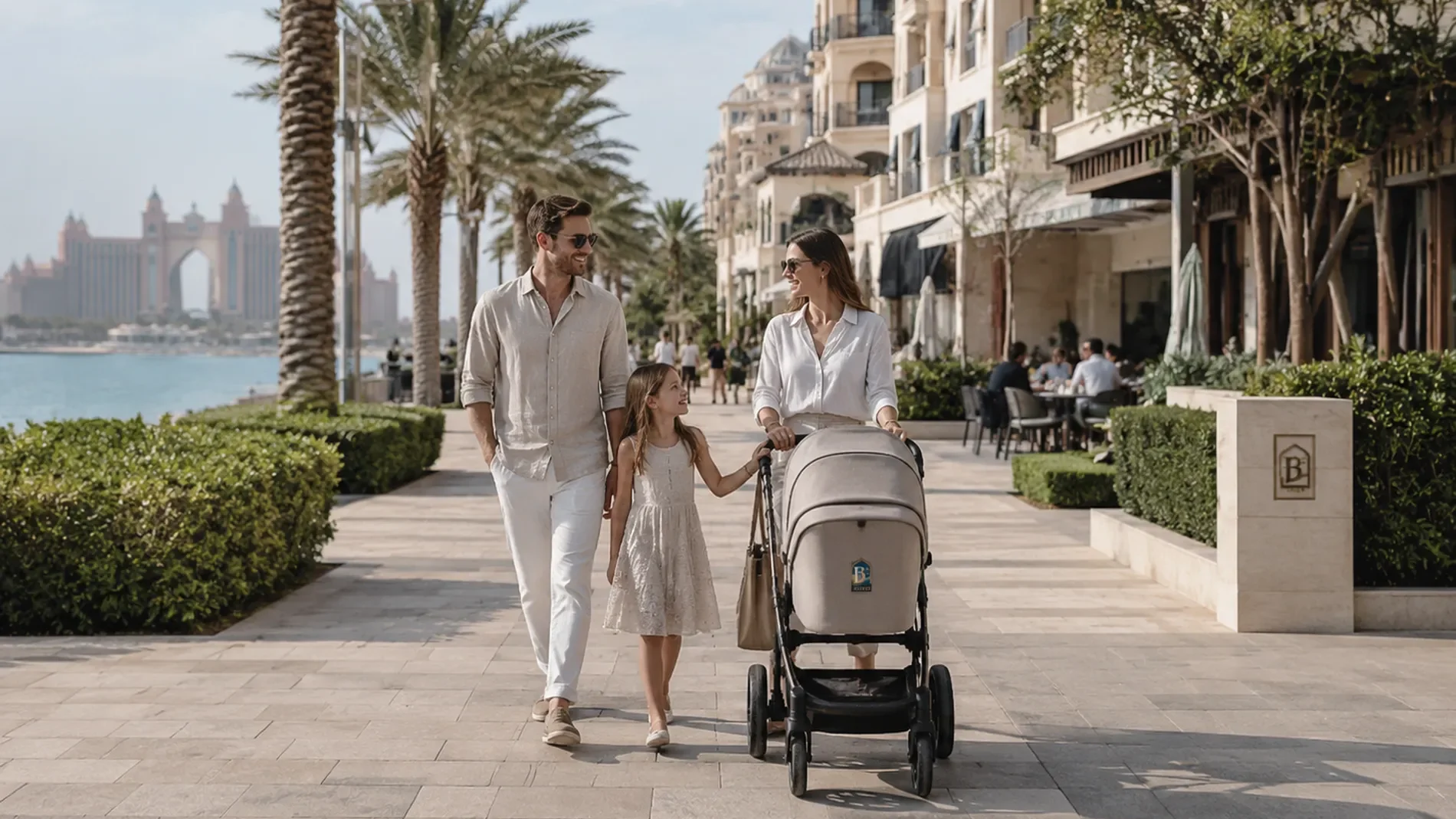
Palm Jumeirah can work very well for families, but it is not a universally practical choice and comes with certain trade-offs. Whether it is right for a particular household depends on the children’s ages, the family’s priorities, and how willing they are to accommodate some logistical compromises.
There are several clear advantages. Space and direct beach access are rare features in urban residential environments. A villa on one of the fronds with its own private beach gives children a lifestyle that is difficult to replicate in a densely built city neighbourhood. The waterfront promenades, the Boardwalk, parks, and the surrounding marine setting create plenty of opportunities for active family recreation. Many residential areas on Palm Jumeirah have controlled access, security personnel, or building security systems, although arrangements vary by development. Many of the fronds have limited through traffic, which helps reduce the number of cars passing close to homes.
There are, however, some practical limitations. The choice of schools directly on Palm Jumeirah is limited, so many families with school-age children commute to schools elsewhere in Dubai. Most families with school-age children commute to the mainland every day, whether to Al Sufouh, Jumeirah, Dubai Marina, or areas farther afield. The school run, particularly when morning traffic through the tunnel is taken into account, becomes a daily commitment that requires both planning and time. For families with two children attending different schools, this logistics burden can become an important consideration when assessing the area as a whole.
Healthcare services on the island include clinics and pharmacies, but residents generally travel to the mainland for more specialised medical care, including facilities in Jumeirah, Dubai Healthcare City, and other parts of Dubai. Once again, distance and traffic can become relevant factors, particularly in urgent situations.
Everyday services such as hair salons, dry cleaners, pharmacies, and banks are reasonably well represented on the trunk. The range is more limited on the fronds and the crescent, meaning that some routine errands may require leaving the island. This is not necessarily a major drawback, but it is worth factoring into expectations about day-to-day convenience.
The pedestrian environment also varies depending on the age of the children and the exact location of the property. Palm West Beach is an excellent option for active recreation. The Boardwalk works well for cycling and rollerblading, while Al Ittihad Park provides a landscaped green space for walking and outdoor time. However, how easily residents can reach these places once again depends on where exactly their home is located on the Palm.
Palm Jumeirah is a sensible choice for families that prioritise space, beach access, and privacy, are comfortable with a daily school commute, and can rely on a car as their primary means of transport. For families with younger children who place a particularly high value on having schools, extracurricular activities, and medical services close to home, other areas of Dubai may ultimately prove more practical.
Pros and Trade-Offs
An honest assessment of Palm Jumeirah means acknowledging both its strengths and its real limitations. Neither is absolute—the importance of each depends directly on the individual buyer’s lifestyle and priorities.
Palm Jumeirah: Advantages and Trade-Offs
| Factor | Advantage | What to Consider |
|---|---|---|
| Beachfront lifestyle | Direct access to the sea, beaches, and waterfront promenades—a combination that remains relatively rare among Dubai’s urban districts | Beach access on the trunk is not always direct; the fronds offer the full beachfront experience, but at a substantially higher price point |
| Prestigious address | An internationally recognized location with strong appeal for buyers who place a premium on the status of an address | The Palm brand cannot compensate for a weak individual property—the building, its condition, and its management ultimately determine real value |
| Privacy | The fronds offer gated residential streets with very little through traffic | Privacy is significantly lower on the trunk and around hotel destinations |
| Property choice | Palm Jumeirah offers a broad range of high-end residential property, from apartments and branded residences to villas and ultra-prime homes | Quality varies considerably: building age, management standards, maintenance, and engineering systems can differ substantially from one development to another |
| Dining and leisure | A high concentration of restaurants, beach clubs, and hotels, with a wide variety of options within a relatively compact area | Tourist demand means some venues can become crowded during peak season and at weekends |
| Transport | The monorail, taxis, and road access via the tunnel make mobility reasonably convenient, particularly for residents with a car | There is no direct Dubai Metro station on the island, and peak-hour congestion at the tunnel is a genuine consideration for daily commuters |
| Tourist activity | A lively environment with an international atmosphere | On the trunk and around major hotels, tourism is a permanent feature of the area and may not suit everyone as a residential setting |
| Service charges | Premium developments may provide more extensive services and amenities, which can be accompanied by higher operating costs. | Charges in branded residences and villa communities can be substantial and should be reviewed carefully before purchase |
| Family logistics | Space, beach access, and a strong sense of security | More space and beach access, but a limited choice of schools directly on the island |
| Purchase price | Entry prices reflect the quality and prestige of the location and the type of product available | Palm Jumeirah is one of Dubai’s more expensive residential markets; buyers with tighter budgets may find better value elsewhere |
| Property liquidity | Ultra-prime homes and branded residences may appeal to an international buyer segment, but demand and resale liquidity vary with pricing, property characteristics, supply, and broader market conditions. | The liquidity of any individual property still depends on its features, condition, pricing, and broader market conditions |
The table provides a structured overview, but it cannot replace an individual assessment. For one buyer, the tourist activity creates the kind of lively atmosphere they enjoy. For another, it may be the reason Palm Jumeirah does not make the shortlist at all. Transport limitations can be highly significant for someone commuting to Dubai’s business districts every day, yet largely irrelevant to a remote worker or someone who visits Dubai only a few times a year.
The same applies to service charges. A villa owner who uses Dubai as a primary residence will view maintenance costs very differently from an investor renting out an apartment and closely monitoring net yield. Likewise, a family with teenage children will experience school logistics very differently from a family with children under the age of three.
The fairest conclusion is that Palm Jumeirah is an excellent choice for a particular type of buyer, rather than a universally superior option within Dubai. Its key strength lies in the rare combination of waterfront living, an internationally recognized address, and a highly varied selection of properties within a single district. Its limitations—car dependency, the tourist character of certain areas, and high ownership costs—are equally real and should be weighed carefully.
Buying on Palm Jumeirah is not about acquiring property in “Dubai’s best neighborhood.” It is about choosing a specific lifestyle: waterfront living, privacy, a prestigious address, and the corresponding set of trade-offs.
Palm Jumeirah vs Dubai Marina vs Downtown Dubai
Choosing between Palm Jumeirah and Dubai’s other premium districts is one of the most common questions buyers face. The right answer always depends on what matters most to the individual buyer.
For a broader analysis of Dubai’s property market, including comparisons by district, property type, and infrastructure, see our overview of Dubai real estate, districts, and infrastructure. Here, we will focus on a practical comparison of three of the city’s main competing locations.
| Criteria | Palm Jumeirah | Dubai Marina | Downtown Dubai |
|---|---|---|---|
| Type of environment | Island-style setting combining residential and resort living | Dense urban waterfront district | Highly urbanised business and residential centre |
| Sea access | Direct access to the Arabian Gulf, with beaches on the island | Marina waterfront rather than open sea; beach access via JBR | No direct beach or sea access within the district |
| Walkability | Moderate on the trunk; limited on the fronds and crescent | High around Marina Walk | High around Dubai Mall and the fountain district |
| Public transport | Monorail + Tram + Metro connections, with transfers; no direct Metro service on the island | Metro, Tram, and strong wider transport connectivity | Metro access and extensive central-city connectivity |
| Privacy | High on the fronds; moderate on the trunk | Low due to dense urban development | Low due to heavy tourist and business traffic |
| Family lifestyle | More space and beach access, but no schools directly on the island | Compact urban lifestyle with children growing up in a dense city environment | Compact and amenity-rich, with schools nearby |
| Tourist traffic | Significant around hotels and major attractions | Moderate, particularly along the waterfront promenade | High, as one of Dubai’s main international visitor destinations |
| Housing mix | Apartments, branded residences, penthouses, and villas | Primarily apartments, with a limited number of townhouses | Primarily apartments and penthouses |
| Commute | Highly dependent on road traffic; congestion can be an issue during peak hours | Good access to both Metro and major roads | Excellent due to its central location |
| Property profile | Broad range, from residential towers to ultra-prime villas | Residential towers, largely within the mid- to high-end premium segment | Residential towers with views of Burj Khalifa and the fountains |
| Best suited to | Beachfront living, privacy, waterfront villas, and second-home buyers | Urban waterfront living with strong transport links | Buyers prioritising centrality, business access, and maximum connectivity |
Dubai Marina is a strong alternative for buyers who want water views and a yachting atmosphere close to home while still valuing urban density, walkability, and direct Metro access. The district’s infrastructure and property market are covered in more detail in our Dubai Marina overview.
Unlike Palm Jumeirah, Dubai Marina does not provide open-beach living directly outside your door; for that, residents generally head towards JBR. On the other hand, Marina offers significantly better walkability and public transport connectivity.
Downtown Dubai is the better fit for buyers who prioritise a business-oriented environment, proximity to major office districts, and maximum urban connectivity. It offers neither a beach nor villas, and genuinely quiet residential streets are difficult to find. What it does offer is some of Dubai’s strongest transport accessibility, an exceptionally dense concentration of amenities, and distinctive views of Burj Khalifa and the surrounding cityscape.
None of these three areas is objectively “better” than the others. They are fundamentally different products designed for different types of buyers. The goal is to choose the district that best matches a particular lifestyle and set of priorities—not simply the one that sounds most prestigious on paper.
How to Choose a Property on Palm Jumeirah
Choosing property on Palm Jumeirah should begin with the intended use—primary residence, second home, long-term rental, or investment—followed by the part of the island, property type, building or villa condition, beach access, service charges, and day-to-day transport. These factors often matter more than the Palm Jumeirah address alone.
A sensible process looks like this.
1. Define your purchase scenario. What is the property for: a primary residence, a second home, long-term rental, or a combination of personal use and rental income? Each scenario places different demands on the property. A second home, for example, may justify higher service charges and greater distance from schools. A family buying for permanent residence will need to consider school commutes and convenient access to everyday services.
2. Choose the right part of the Palm. The trunk, fronds, and crescent offer fundamentally different living environments, as the table above illustrates. Decide what matters most to you: privacy and direct beach access → fronds; infrastructure and a more connected residential environment → trunk; resort-style living and open-sea views → crescent.
3. Decide on the property format. Apartments, branded residences, villas, and penthouses each come with their own cost structure, management considerations, and target buyer profile. Comparing fundamentally different formats as though they were interchangeable is rarely useful.
4. Compare specific buildings or villas. Even within the same segment, quality can vary significantly from one property to another. The reputation of the building, its management track record, the age of its engineering systems, and the condition of common areas should all be assessed individually rather than inferred from the prestige of Palm Jumeirah as a whole.
5. Test the day-to-day logistics. Drive the route during peak hours. Check the school commute. Walk from the property to the nearest supermarket and public transport option. See what traffic is like around the tunnel entrance at 8 a.m. These practical details can have a major impact on everyday life.

6. Review service charges and ongoing ownership costs. Ask for the actual service charges for the specific building rather than relying on average figures for the wider segment. Cross-check them against the DLD Service Charge Index. For villas, also factor in landscaping, swimming pool maintenance, beachfront upkeep, and air-conditioning costs.
7. Inspect the condition of the property. Hire an independent technical inspector. Assess the mechanical and electrical systems, the roof in the case of a villa, the condition of the finishes, and the date of the most recent renovation. This becomes particularly important for older properties and for homes where major building systems or finishes have not been refurbished for an extended period.
8. Assess the quality of management. Who manages the building or residential complex? What do residents say about the management? How quickly are maintenance issues resolved? The quality of the management company has a direct impact on both day-to-day comfort and the long-term condition of the property.
9. Verify the legal and registration details. Confirm that the title documents are in order, that the property has freehold status available to foreign buyers, and that there are no encumbrances or other legal restrictions. This is a standard part of due diligence for any property purchase in Dubai.
10. Compare the property with alternatives. Before making a final decision, make sure you have compared the property not only with other options on Palm Jumeirah, but also with comparable properties in Dubai Marina, Jumeirah Bay Island, or other waterfront locations, depending on your priorities and buyer profile.
Checklist: 10 Questions to Ask Before Buying Property on Palm Jumeirah
- What exactly is the purpose of the purchase, and does the property genuinely fit that use case?
- Where exactly is the property located on the Palm — the trunk, a frond, or the crescent — and what does that mean for day-to-day living?
- What are the actual service charges for the building, and what do they include?
- What kind of beach access does the property really offer — direct access or access via a shared pathway? For villas, how much private beachfront does the property have?
- What does the commute from the property to your workplace or your children’s school actually look like at 8:15 a.m. on a Monday?
- What is directly visible from the main windows and terrace — the sea, a neighboring building, or an active construction site?
- Who manages the building, and what is the actual standard of maintenance in the common areas?
- How old are the building’s engineering and utility systems, and when was the last major refurbishment carried out?
- Are there any restrictions on renting, renovating, altering the layout, or using the property in ways that could affect your intended plans?
- How competitive is this property compared with other options available within the same budget?
If you are choosing between several neighborhoods, property types, or specific homes on Palm Jumeirah, the specialists at World Estate Homes can help you create a shortlist based on your budget, purchase goals, lifestyle requirements, and intended use of the property.
Who Palm Jumeirah Is Best Suited For
Palm Jumeirah is not universally the best area in Dubai. It is a distinctive product with a clearly defined profile — and the more closely that profile aligns with a buyer’s priorities, the more natural the choice becomes.
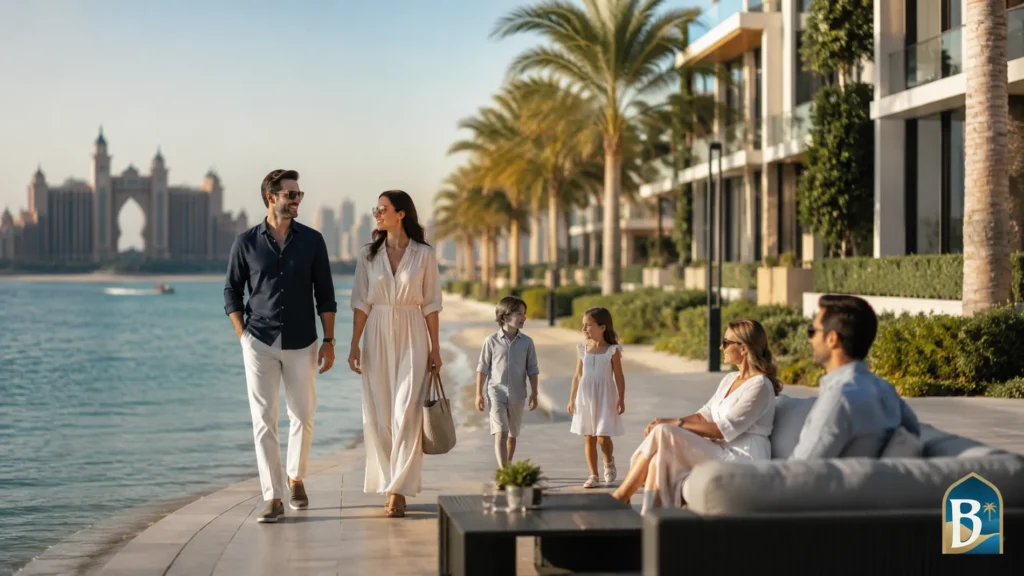
[IMAGE: A peaceful residential evening on Palm Jumeirah — waterfront residences, a quiet promenade, sunset over the water; no overly touristy atmosphere]
Palm Jumeirah is particularly well suited to people who value:
- Beachfront living — direct access to the sea as part of everyday life, rather than something reserved for weekends
- Privacy — a preference for a calm residential environment with limited through traffic and fewer outside visitors; particularly relevant on the fronds
- A prestigious location — an internationally recognised address that carries weight both as a personal status symbol and in a professional context
- Premium amenities — a high standard of service, extensive leisure infrastructure, and hotels and restaurants within easy reach
- A choice between apartments and villas — Palm Jumeirah offers both formats within the same community, which is relatively rare among Dubai’s waterfront districts
- A second residence — the island works particularly well for owners who spend several months a year in Dubai and value comprehensive services and convenience
- Asset status — property on Palm Jumeirah has traditionally been regarded as a premium holding within a real estate portfolio
Palm Jumeirah may be less suitable for someone whose priorities include:
- The simplest and most affordable possible commute by public transport, without transfers or additional travel time
- Keeping service charges and other ongoing ownership costs to a minimum
- Having several schools offering different curricula within walking distance or a very short drive
- A completely tourism-free residential environment
- Maximum value for money in terms of space and infrastructure
- High walkability for everyday errands without relying on a car
These are not shortcomings of Palm Jumeirah itself. They simply reflect a different set of priorities — and for buyers with those priorities, other areas of Dubai may offer a better balance between cost and lifestyle fit.
Is Palm Jumeirah the Right Choice?
Palm Jumeirah is more than just another Dubai neighborhood. It is a residential and lifestyle phenomenon that brings together several fundamentally different ways of living within a single address. That is why the right question is not simply, “Is the Palm right for me?” but rather, “Which part of the Palm is right for me?”
The trunk and the fronds offer distinctly different lifestyles. An apartment and a villa are also fundamentally different products, with very different ownership economics. A primary residence requires a different assessment from a second home. Maximum privacy and convenient day-to-day access often pull in opposite directions, and deciding where to compromise is only possible once you understand which of those priorities matters more in your particular case.
The Palm’s greatest strength is not universal practicality, but a rare combination of qualities: having the sea as a permanent part of everyday life rather than an occasional weekend escape; villas with direct beach access just minutes from a major international city; and a globally recognized address offering a wide variety of residential formats. These are qualities that are difficult to replicate elsewhere, and they are ultimately what determine who Palm Jumeirah is truly right for.
At the same time, its limitations are real. Dependence on cars and a single main road connection, the lack of direct metro access, high service and maintenance costs in some developments, heavy tourist activity in certain parts of the island, and the absence of schools directly on the Palm are not marketing exaggerations from competing areas. They are practical considerations that need to be factored into any decision.
A sensible way to approach Palm Jumeirah is therefore not to choose “the Palm” in general, but to choose a specific lifestyle scenario within it: trunk or frond, apartment or villa, full-time home or occasional residence. It is at this level of analysis that the difference between the right purchase and the wrong one becomes clear.
Objectively, for the right buyer in the right property, Palm Jumeirah remains one of Dubai’s most compelling residential addresses. For buyers with different priorities, however, there are strong alternatives that may offer a better fit for their lifestyle with fewer compromises.
 Real estate in Georgia
 Real estate in Cyprus
 Real estate in Montenegro
 Real estate in Bali
 Real estate in Thailand
 Real estate in Spain
 Real estate in Saudi Arabia
 Real estate in Turkey
 Real estate in Zanzibar
 +971 52 110 0777
 hello@baytique-uae.com
 UAE, Dubai, Dubai Hills Estate, Park Heights Square 1


 Get catalogue of TOP-7 objects