
 +971 52 110 0777



Introduction
What This Guide Covers
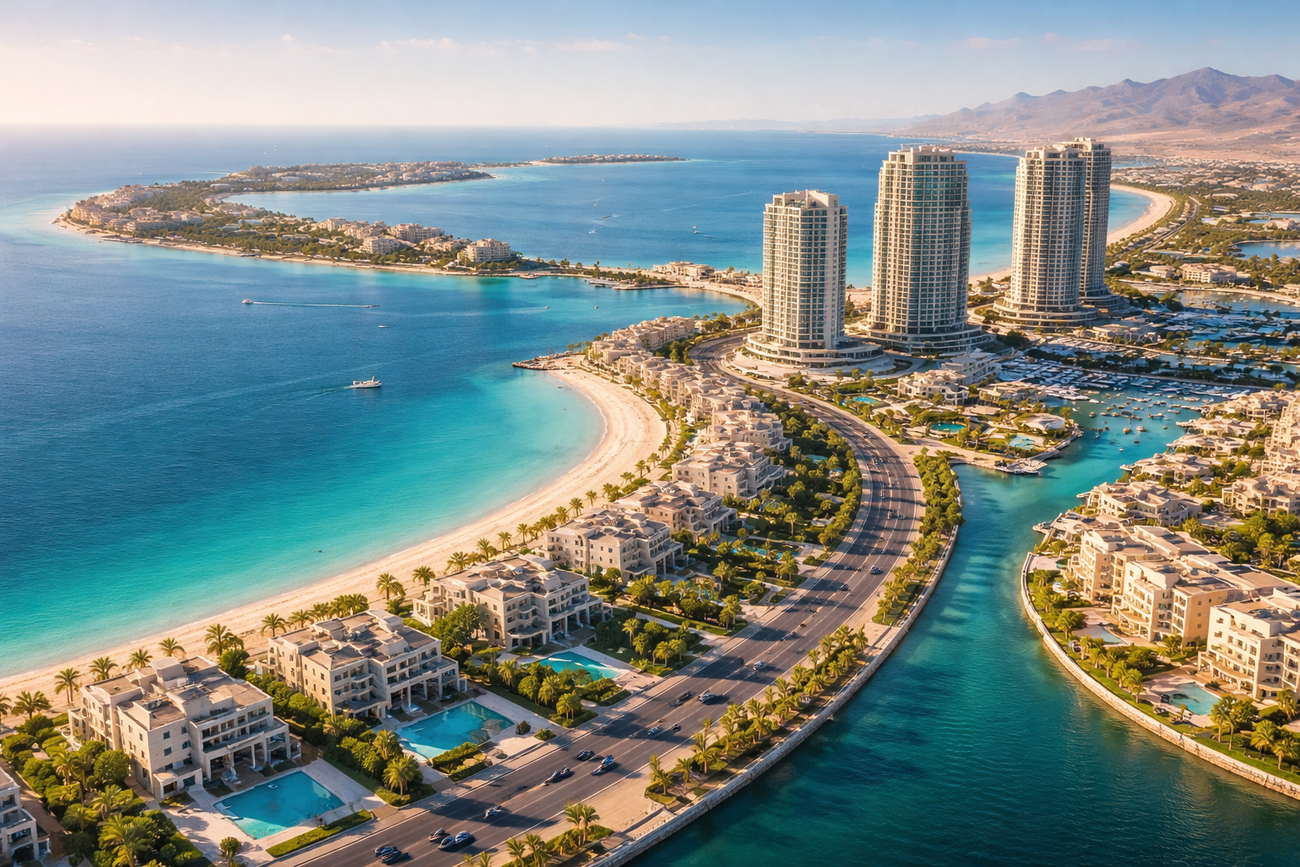
Ras Al Khaimah is one of the UAE’s most dynamic and well-balanced real estate markets. Property here remains approximately 30–50% more affordable than in Dubai, while offering annual rental yields of around 6–8%. Conveniently located just 1 to 1.5 hours from Dubai via the E11 and E311 highways, the emirate blends pristine beaches along the Persian Gulf, the dramatic Jebel Jais mountain range, and a fast-developing modern infrastructure. For international travelers, Ras Al Khaimah is served by its own international airport (Ras Al Khaimah International Airport official website).
Foreign buyers benefit from clearly designated freehold zones—most notably Al Hamra Village, Mina Al Arab, and Al Marjan Island—making it straightforward to purchase and fully own property in Ras Al Khaimah on a long-term basis.
This article is designed as a concise yet comprehensive overview of the local real estate landscape. We explore Ras Al Khaimah’s key residential areas and infrastructure, assess their impact on property values, and provide benchmarks for pricing and rental returns. You’ll also find a step-by-step breakdown of the property registration process and related costs.
Important legal and residency considerations are drawn from official UAE government sources. For instance, the Golden Visa program—available to investors contributing AED 2 million or more—is detailed on the UAE Government’s official Golden Visa portal. The role of free economic zones, both for commercial activity and as employment hubs for tenants, is explained on the UAE Government’s page on free zones.
As for pricing benchmarks: one-bedroom lagoon-facing apartments start at approximately $190,000, premium residences on Al Marjan Island are priced at around $9,000 per square meter, and beachfront villas typically begin at $700,000, depending on location and project class.
Why Ras Al Khaimah Is Attracting Property Buyers


 Al Jaddaf (Dubai)
 from 62м²
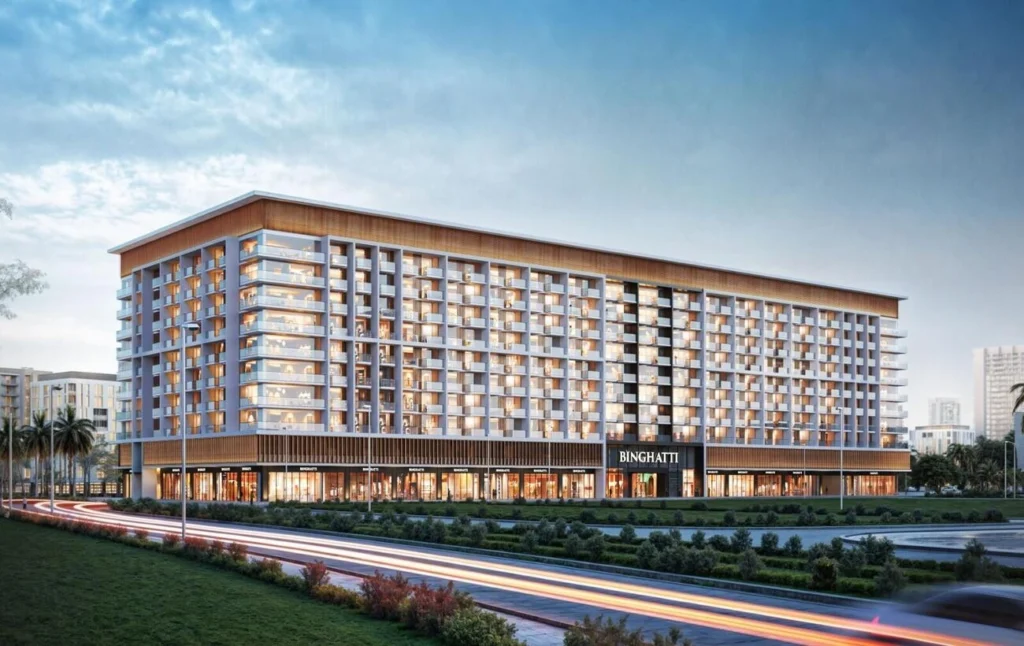


One of Ras Al Khaimah’s core advantages lies in affordability: on average, real estate prices here are 30–50% lower than in Dubai, while rental yields in the mid-market segment reach 6–8% annually—and even higher in resort zones.
Below, we’ve structured the key reasons why investing in Ras Al Khaimah’s real estate is a compelling choice for private investors and families seeking a balance of lifestyle and rental income.
A Clear Comparison: Prices and Yields
| Metric | Ras Al Khaimah (RAK) | Dubai (for comparison) |
|---|---|---|
| Avg. Price per m² (mid-market) | ~$2,000–3,000 | ~$3,500–5,000 |
| Premium beachfront property | ~$6,000–9,000 (Al Marjan Island) | ~$8,000–15,000+ |
| One-bedroom apartment | ~$160,000–220,000 | ~$280,000–400,000 |
| Beachfront villa | From ~$600,000–800,000 | From ~$1.0–1.5 million |
| Gross rental yield | ~6–8% | ~5–6% |
| Income tax on rental earnings | 0% | 0% |
Figures are approximate and may vary depending on the project, property class, and location. In the premium segment, such as Al Marjan Island, prices can reach up to ~$9,000 per m².
Attractive Pricing with High Returns
- RAK offers a much lower entry threshold compared to Dubai, reducing upfront investment and accelerating return on capital. For example, lagoon-facing one-bedroom apartments start at ~$160,000–220,000, with studios available at even lower price points. In high season, short-term vacation rentals can yield gross returns above 8%.
- For families and long-term tenants, a key advantage is the value per square meter. What you’d pay for a modest apartment in Dubai often buys you more space—and frequently, waterfront or golf course views—in Ras Al Khaimah.
Strategic Location and Natural Setting
- RAK is seamlessly connected to Dubai via highways E11 and E311. Travel time to Dubai Marina or Business Bay is typically 60–80 minutes outside peak hours. This makes it possible to work in the city while enjoying a relaxed seaside lifestyle.
- The emirate’s natural landscape is a major draw: pristine Gulf beaches, tranquil lagoons, lush mangrove forests, and the dramatic Jebel Jais mountain range—the UAE’s highest peak. This combination fuels steady tourism demand and supports strong performance in the resort rental market.
Modern and Rapidly Developing Infrastructure
- RAK is home to an international airport, with road networks integrated into the wider UAE. The emirate is expanding its offerings in private education, healthcare, retail, and entertainment.
- Resort zones such as Al Marjan Island, Mina Al Arab, and Al Hamra Village are being developed according to master plans, with promenades, beaches, marinas, and golf courses all within walking distance or a 5–10-minute drive. This enhances property liquidity and minimizes vacancy rates in both long- and short-term rental markets.
Full Freehold Ownership for Foreigners
Foreign investors are eligible for full freehold ownership in designated zones—including Al Hamra Village, Mina Al Arab, and Al Marjan Island—allowing for long-term control and resale flexibility.
- This means no need for a local nominee partner, transparent registration of the property in your name, and secure, predictable ownership.
- On the resale market, freehold properties typically enjoy greater liquidity due to a wider pool of eligible international buyers.
0% Income Tax and Residency Incentives for Investors
The UAE levies no personal income tax, so rental income is fully tax-exempt—officially confirmed on the UAE Government’s portal: UAE individual taxation.
- This tax neutrality improves net yields and supports long-hold strategies of 5–7 years or more.
- Residency benefits: by investing AED 2 million or more (~$545,000) in property, you may qualify for a 10-year UAE residency under the Golden Visa program—details available on the official portal: UAE Golden Visa. Other residency options exist for smaller investments, depending on current thresholds and emirate-specific regulations.
Business Environment and Stable Rental Demand
- Ras Al Khaimah hosts several free economic zones, serving as employment hubs and sustaining consistent rental demand from professionals and entrepreneurs. Full information is available on the UAE Government’s portal: Free zones in the UAE.
- For private investors, this ensures a large and reliable tenant base throughout the year: long-term leases are typically filled by professionals working in RAKEZ and affiliated clusters, while short-term leases benefit from a growing tourist inflow.
In summary: A moderate entry point (from ~$160,000–220,000 for a one-bedroom unit), zero income tax, freehold zones for foreigners, and rapidly growing resort infrastructure combine to give Ras Al Khaimah a distinct edge. For investors seeking a balance of lifestyle, stability, and return, it represents a smart choice for real estate investment and coastal living.
Ras Al Khaimah’s Real Estate Market: Growth, Trends, and Outlook

Ras Al Khaimah has firmly positioned itself as one of the UAE’s rising stars. Waterfront resort clusters are driving strong price appreciation, while the broader mid-market segment remains accessible, offering reliable rental yields of 6–8% annually.
These trends are underpinned by the emirate’s diversified economy—anchored in industry, tourism, and logistics—as outlined on the UAE Government’s official Ras Al Khaimah profile. Complemented by the emirate’s free zones (see UAE Free Economic Zones), this structure ensures sustained long-term rental demand.
Price Trends: Where Growth Is Concentrated
The main pricing catalyst has been coastal master-planned communities. Premium waterfront residences on Al Marjan Island now command $8,000–9,000 per m², while RAK’s mid-market properties are still trading at $2,000–3,000 per m².
- In resort districts such as Al Marjan Island and Mina Al Arab, double-digit growth was recorded in 2023–2024—up to 35–40% year-over-year in select beachfront projects.
- In central areas and golf communities like Al Hamra Village, appreciation has been steadier yet robust—ranging from 5–12% annually, with lower volatility.
- Current pricing benchmarks: one-bedroom lagoon-facing apartments range from $190,000–260,000, studios from $120,000–170,000, and beachfront villas from $700,000 to $1.2 million, depending on project class and view.
Investment Demand and Deal Structure
Foreign buyers now dominate the primary market, accounting for an estimated 70–80% of transactions in new developments. In 2024, total deal volume reached AED 15.1 billion (≈ $4.1 billion)—an all-time high for the emirate.
- Resort residences and serviced apartments see peak seasonal demand, supporting high short-term rental rates. Meanwhile, long-term occupancy is driven by professionals working in the emirate’s free zones and industrial parks.
- The share of remote purchases is growing—both for off-plan projects and ready-to-let units—reflecting rising investor confidence in the regulatory framework and construction quality.
Key Market Metrics
| Indicator | Ras Al Khaimah (Estimates) | Notes |
|---|---|---|
| Avg. Price per m² (mid-market) | ~$2,000–3,000 | Applies to central districts and second-line properties |
| Premium Waterfront (Al Marjan) | ~$8,000–9,000 | First-line branded resort residences |
| One-bedroom waterfront apartment | ~$190,000–260,000 | View, floor, and location significantly impact pricing |
| Gross rental yield | ~6–8% | Up to 10–11% during peak resort season |
| Total transaction volume (2024) | ~AED 15.1 billion (≈ $4.1 bn) | Historic high for the emirate |
| Share of foreign buyers | ~70–80% | Primarily in the new-build segment |
Macro Drivers: Tourism, Logistics, and Free Zones
Tourism and business development are the structural forces behind market demand. The emirate’s economic profile and infrastructure—from ports to industrial clusters—are detailed on the UAE Government’s Ras Al Khaimah portal.
- Tourism: RAK is betting on year-round appeal—coastal beaches, the Jebel Jais mountain cluster, and a growing number of branded resorts on its islands. This supports stable occupancy rates and strengthens short-term rental returns.
- Business and employment: Free economic zones and industrial parks (see UAE Free Zones) attract global companies and professionals, forming a steady base for long-term rentals.
- Logistics and connectivity: Saqr Port (a major northern shipping hub), fast highway links (E11/E311) to Dubai, and RAK’s own international airport strengthen the emirate’s role as a logistical and residential node in the northern UAE.
Regulation, Developer Quality, and Market Resilience
- Property registrations are handled by the Ras Al Khaimah Land Department, ensuring title transparency and reliable financial settlements. Foreigners are entitled to freehold ownership in designated areas, which enhances resale liquidity.
- Leading master developers—including those behind Al Marjan Island and major resort clusters—are setting high standards for build quality and community management, driving sustained growth in both capital values and rental yields.
- The 0% personal income tax environment and long-term residency options for investors (see UAE Golden Visa program) support long-hold ownership strategies and improve overall ROI.
2025–2026 Forecast: Strategic Scenarios for Investors
Base scenario: with a 3–5 year horizon and a focus on high-potential areas like Al Marjan Island, Mina Al Arab, or Al Hamra Village, projected capital appreciation could reach 10–25%, while rental yields are expected to remain at 6–8%, with seasonal upside.
- New inventory is expected in upcoming development phases on the islands and via branded hospitality-residential projects. However, operator pre-leasing and limited beachfront land supply help mitigate the risk of oversaturation in premium segments.
- The mid-market will remain accessible: studios starting at $120,000–170,000, and one-bedrooms in established communities from $190,000–260,000.
- Risks: Lower immediate liquidity than Dubai and price sensitivity in second-line projects facing competition from new releases. These can be mitigated by selecting well-managed developments with conservative financial projections and a focus on stable rental performance.
Strategic takeaway: A balanced portfolio—e.g., one or two waterfront units for resort leasing combined with one mid-market apartment for long-term rental—can offer capital growth and steady cash flow with moderate volatility. Ras Al Khaimah’s expanding infrastructure, tax-free environment, and maturing market fundamentals continue to present strong upside potential for well-informed investors.
Key Advantages of Investing in Ras Al Khaimah Real Estate

Investing in Ras Al Khaimah real estate offers a compelling combination of benefits: a low entry threshold, stable rental yields of approximately 6–8% annually, zero income tax, and full freehold ownership for foreign buyers in prime locations.
Below is a concise summary of the core advantages, along with indicative figures.
| Advantage | What It Offers Investors | Indicative Figures |
|---|---|---|
| Affordable Entry Point | Lower initial capital and faster payback | Studios: ~$120K–170K; 1-bed: ~$190K–260K; premium beachfront: ~$6K–9K/m² |
| High ROI | Stronger gross returns vs. major global cities | Long-term: ~6–8% annually; seasonal vacation lets: up to ~10–11% |
| 0% Income Tax | Increased net yields | Rental income fully tax-exempt — see UAE Taxation |
| Freehold Ownership | Full legal ownership and resale flexibility | Available in Al Marjan, Mina Al Arab, Al Hamra, and others |
| Infrastructure Expansion | Capital appreciation and rental rate growth | New resorts, E11/E311 highways, RAK International Airport |
| Residency Incentives | Pathway to legal residence and business rights | Golden Visa with investment of AED 2M+ — see Golden Visa UAE |
| Demand from Free Zones | Steady long-term rental occupancy | Free zones — see UAE Free Zones |
Affordable Prices and Attractive ROI
A standout factor: property prices in RAK are on average 30–50% lower than comparable options in Dubai, while still offering 6–8% annual rental yields.
- Entry points: studios from ~$120K–170K; lagoon-facing one-bedroom units from ~$190K–260K; beachfront villas from ~$700K.
- Resort areas such as Al Marjan and Mina Al Arab can generate 10–11% gross returns during peak holiday seasons via short-term rentals.
- In the broader mid-market, long-term leases provide stable 6–8% yields with low vacancy rates.
Tax-Neutral Environment: 0% Income Tax
The UAE imposes no personal income tax, meaning rental income is entirely tax-free—boosting net portfolio returns. Learn more on the UAE Government portal.
- Withholding no tax on rental income lowers the break-even threshold and allows greater flexibility in pricing rental units.
- For medium- and long-term strategies, this is a decisive advantage over jurisdictions with high tax burdens.
Full Freehold Ownership for Foreign Buyers
In designated zones, foreign investors are granted full freehold ownership—no local partner required.
- Practical benefits include simple registration in the buyer’s name, direct resale rights, access to mortgage financing, and a broad resale market.
- The most in-demand freehold zones—Al Marjan Island, Mina Al Arab, and Al Hamra Village—typically offer stronger liquidity and above-average capital growth.
Infrastructure-Driven Appreciation and Yield Growth
Waterfront master-planned communities—complete with promenades, marinas, resort brands, and golf amenities—serve as price stabilizers and yield enhancers by driving long-term value.
- Transport: E11/E311 highway connectivity, ~60–80 minutes to Dubai, and RAK’s own international airport.
- Community infrastructure: international schools, private clinics, and shopping centers within a 10–15 minute radius of key residential areas.
- Tourism infrastructure: branded hospitality and year-round entertainment fuel occupancy and rental demand in the short-term market.
Residency Incentives: Secure Long-Term Status
Investing AED 2 million or more (~$545,000) qualifies buyers for the UAE’s 10-year Golden Visa — see full terms on the official Golden Visa page.
- Benefits include long-term residency, the right to work or establish a business, and the ability to sponsor family members under a stable legal framework.
- Alternative residency options may be available for lower investment amounts, subject to current local regulations.
Stable Rental Demand via Free Economic Zones
RAK’s free economic zones and industrial clusters ensure consistent rental demand from professionals and entrepreneurs — learn more at UAE Free Zones.
- For investors, this means reliable long-term occupancy and reduced seasonality in rental income.
- The blend of “resort + free zone” tenants diversifies the rental pool and mitigates vacancy risk.
Additional Bonus: Reduced Registration Fees on Select Projects
In some developments, RAK-based developers cover a portion of the standard 4% property registration fee, effectively reducing buyer costs to ~2% at closing.
- This practice enhances initial returns and simplifies the process for foreign investors.
- Important: Terms vary by project and sales phase—be sure to review the Reservation Form or MoU for specifics.
Conclusion: The combined advantages of a low entry point (from ~$120K–170K for studios), zero income tax, freehold ownership for foreigners, fast-developing infrastructure, and flexible visa options give Ras Al Khaimah a rare and powerful investment profile. For both private and institutional investors, RAK offers a compelling balance of yield, risk, and liquidity that is hard to match elsewhere in the region.
Popular Areas in Ras Al Khaimah for Living and Investment
The core of investment demand in RAK centers around master-planned, waterfront communities that offer freehold ownership to foreigners, well-developed infrastructure, and clear rental potential. Key focus areas: Al Marjan Island, Mina Al Arab, and Al Hamra Village.
When choosing a location, it’s essential to consider the district’s character (resort vs. urban), target tenant profile, and transportation connectivity. A general overview of the emirate and its economy can be found on the UAE Government’s official Ras Al Khaimah portal. Consistent long-term rental demand is supported by the emirate’s free economic zones (see UAE free zones), while daily mobility is facilitated by highways E11 and E311 and public transit operated by the Ras Al Khaimah Transport Authority.
Area Comparison: Pricing, Yield, and Profile
| Area | Profile & Infrastructure | Indicative Prices (Purchase) | Gross Rental Yield | Ideal For |
|---|---|---|---|---|
| Al Marjan Island | Resort archipelago, beachfront living, branded hotels, promenades | Seafront apartments: ~$8,000–9,000/m²; 1-bed: ~$280K–450K; villas from ~$1.2M | ~7–10% (higher in peak season) | Resort-focused investors, short-term rentals |
| Mina Al Arab | Eco-community by the lagoon, parks, schools, waterfront lifestyle | 1-bed: ~$190K–260K; studios: ~$120K–170K; townhouses from ~$420K | ~6–8% (stable long-term) | Families, long-term tenants |
| Al Hamra Village | Golf community with marina, mall, and beaches | 1-bed: ~$180K–240K; villas: ~$600K–900K | ~6–8% (balanced demand) | Expats with families, golf lovers |
| Al Seer & Al Nakheel | Historic city center and commercial hub, malls, government offices | Apartments: ~$120K–200K; townhouses from ~$300K | ~5–7% (urban long-term) | Budget-conscious buyers |
Note: All figures are approximate and depend on project quality, waterfront access, market timing, and lease terms.
Al Hamra Village – Golf, Marina, and Beachfront Residences
A well-rounded location for lifestyle and returns: 1-bed from ~$180K–240K, villas ~$600K–900K, yields around 6–8%.
- Profile: A self-contained master-planned community built around an 18-hole golf course, private marina, sandy beaches, and Al Hamra Mall.
- Residential offering: Ranges from lagoon-facing studios and 1-beds to luxury beachfront villas. The area enjoys strong liquidity due to established infrastructure and consistent expat demand.
- Rental potential: Strong long-term demand from families and free zone professionals; moderate seasonal uptick from golf and beach tourism.
- Access: Direct connection to highways E11/E311; ~60–80 minutes to Dubai under normal traffic.
Al Marjan Island – Flagship Resort Archipelago
High-demand premium location with strong appreciation potential: $8,000–9,000/m² beachfront, 1-bed ~$280K–450K, gross yields ~7–10%.
- Profile: A man-made island cluster comprising four islands, home to upscale residential towers, branded hotel residences, scenic promenades, and public beaches.
- Residential offering: Premium apartments and branded resort-style units; prices are above the RAK average due to first-line seafront location and brand prestige.
- Rental potential: Strong seasonality is a plus—high rates during holidays and peak winter months, driven by steady tourist inflows.
- Outlook: Ongoing resort developments and global events enhance the island’s visibility, supporting long-term capital growth and rental appreciation.
Mina Al Arab – Eco-Living by the Lagoons and Mangroves
A family-friendly destination with solid fundamentals: 1-bed ~$190K–260K, studios ~$120K–170K, rental yield ~6–8%.
- Profile: A coastal eco-district with mangrove preserves, landscaped promenades, running and cycling paths, and green spaces.
- Residential offering: Waterfront condominiums, townhouses, and villas in quiet, low-density communities. Nearby: private schools, clinics, and community facilities.
- Rental potential: Predominantly long-term leases to families and professionals. Lower vacancy rates than tourist-only clusters.
- Convenience: 10–20 minutes to key malls, ~25 minutes by car to Ras Al Khaimah International Airport.
Al Seer & Al Nakheel – City Center, Business Hubs, and Heritage Core
Lowest entry barrier with urban liquidity: apartments ~$120K–200K, rental yields ~5–7%.
- Profile: Historic center and commercial heart of the emirate, featuring government offices, RAK Mall, traditional souks, and waterfront corniches.
- Residential offering: Affordable apartments and townhouses by local developers. Less tourist-driven but offers strong daily convenience.
- Rental potential: Stable long-term demand from civil servants and service sector workers. While not as prestigious as coastal clusters, properties move quickly in the market.
Conclusion:
For capital appreciation, beachfront clusters—especially Al Marjan Island—offer the strongest potential. For a balanced mix of income and livability, Al Hamra Village and Mina Al Arab are top choices. Those seeking budget-friendly entry points and consistent urban rental demand will find opportunities in Al Seer & Al Nakheel. Ultimately, the right location depends on your investment strategy: “waterfront capital gains” or “steady cash flow in family-friendly communities.”
Infrastructure and Urban Development in Ras Al Khaimah: What Makes RAK a Comfortable Place to Live
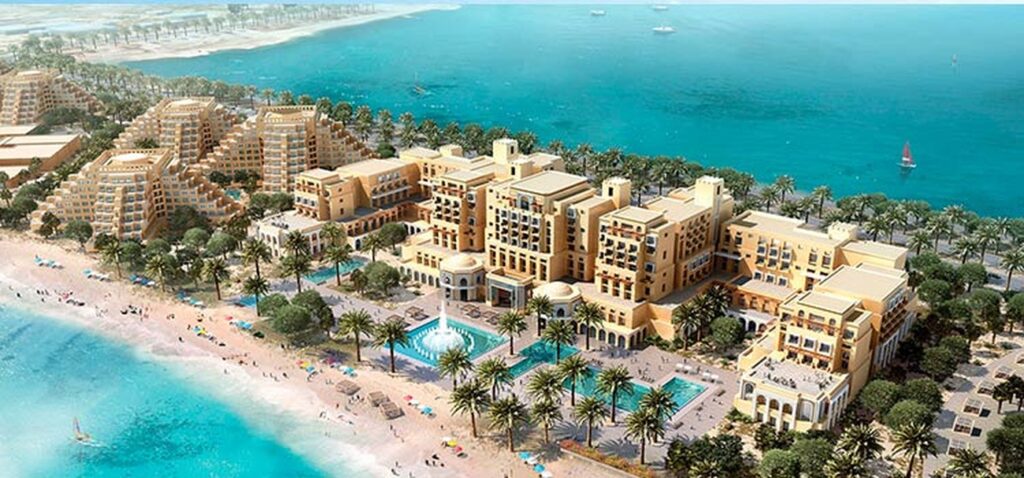
One of Ras Al Khaimah’s greatest strengths is its livability, underpinned by excellent connectivity to Dubai via highways E11 and E311 (~60–80 minutes by car), a self-sufficient local transport system, a growing network of schools and healthcare facilities, and master-planned coastal and mountain resort communities. The emirate’s official profile can be explored on the UAE Government portal.
Below is a structured overview of Ras Al Khaimah’s infrastructure, with indicative costs of services and everyday expenses in USD.
Infrastructure Snapshot: Key Elements and Cost Benchmarks
| Sector | What Matters | Typical Costs for Residents |
|---|---|---|
| Transport & Connectivity | E11/E311 highways to Dubai, urban/intercity buses, taxis, car sharing, e-scooters (RAKTA) | In-city taxi: ~$6–15; Intercity (RAK–Dubai): ~$20–35; mall parking: free or nominal |
| Airport & Flights | RAK International Airport, major hubs nearby: DXB/DWC | Airport–resort transfer: ~$15–30; regional flights priced by carrier |
| Education | British/international schools (RAK Academy, GEMS, etc.); American University of RAK (AURAK) | Schools: ~$5,000–12,000/year; clubs & activities: ~$60–150/month |
| Healthcare | Private clinics & hospitals, central government hospital | General practitioner: ~$40–80/visit; insurance: ~$600–1,200/year |
| Shopping & Leisure | Manar Mall, Al Hamra Mall, beaches, promenades, cinemas, Jebel Jais | Cinema: ~$12–18; family weekend outing: ~$50–120 |
| Utilities & Internet | Metered electricity/water, condo service fees, fiber internet | 1-bed utilities: ~$80–150/month; internet: ~$70–90/month; service charges: ~$10–15/m²/year |
Bottom Line: Ras Al Khaimah offers a well-rounded infrastructure with predictable living costs, creating a comfortable lifestyle and steady rental demand in its key districts.
Transport & Mobility
Transport services are regulated by the RAK Transport Authority (RAKTA), which manages route planning, intercity connectivity, taxis, and micromobility.
- Road access: Highways E11 and E311 provide fast links to Dubai and the Northern Emirates, with typical off-peak drives to Dubai Marina or Business Bay taking ~60–80 minutes.
- Public transit: The city offers urban and intercity buses, licensed taxis, and car sharing services. Tourist areas also feature e-scooter rentals.
- Air travel: RAK International Airport handles scheduled and charter flights. Easy access to Dubai’s DXB and DWC airports makes travel convenient for both business and leisure.
Education & Healthcare
Access to international-standard education and modern healthcare services contributes to a high quality of life at accessible prices.
- Schools: RAK hosts several private international schools, offering British and IB curricula—such as RAK Academy and GEMS Westminster—with annual fees ranging from ~$5,000 to $12,000, depending on grade level and campus.
- Higher education: The American University of Ras Al Khaimah (AURAK) attracts both domestic and international students and faculty.
- Healthcare: Facilities include reputable private hospitals (e.g., RAK Hospital), clinics, and the public Ibrahim Bin Hamad Obaidullah Hospital. Typical GP consultations cost ~$40–80, while individual health insurance ranges from ~$600–1,200 annually.
Shopping, Leisure & Active Lifestyle
- Retail hubs: Manar Mall and Al Hamra Mall offer supermarkets, services, restaurants, and cinemas (tickets ~$12–18).
- Resort amenities: The emirate features long promenades, private and public beaches, a marina, and an 18-hole golf course at Al Hamra.
- Outdoor recreation: Jebel Jais—UAE’s highest peak—is a year-round destination for hiking, sightseeing, and adventure sports like ziplining. This constant tourism inflow supports local services and the short-term rental market.
Economic Infrastructure & Employment
Free economic zones form the backbone of business activity and generate strong demand for long-term rental housing from professionals and entrepreneurs. For more, visit the UAE Free Zones portal.
- RAKEZ and associated industrial parks host thousands of SMEs in logistics, manufacturing, and services, forming a stable base of demand for both city and coastal housing.
- Logistics: Saqr Port, a growing warehousing network, and robust road logistics enhance Ras Al Khaimah’s role as a key Northern Emirates trade hub, translating into strong rental demand among relocating workers and specialists.
Resort Masterplans & Urban Environment
- Waterfront communities like Al Marjan Island, Mina Al Arab, and Al Hamra Village are developed under comprehensive masterplans featuring walkable promenades, parks, sports/play zones, and integrated retail and F&B.
- These “15-minute neighborhoods” boost property liquidity—residents and tourists have everything they need within walking distance, while landlords benefit from lower vacancy rates and stronger yields.
- According to the UAE Government’s Ras Al Khaimah portal, tourism and hospitality development remains a strategic priority, indirectly supporting the capital appreciation of residential assets near the coast.
Conclusion: Ras Al Khaimah’s holistic infrastructure—from highways and air connectivity to international schools, healthcare, and thriving free zones—delivers a high standard of everyday comfort. For investors, this translates into stable rental demand and compelling long-term asset growth in the emirate’s key districts.
How to Buy Property in Ras Al Khaimah: A Step-by-Step Guide

The property purchase process in Ras Al Khaimah is transparent and streamlined. For ready properties, the entire cycle—from reservation to receiving the Title Deed—typically takes 5–10 business days. For off-plan purchases, timelines follow the developer’s construction and payment schedule. All registrations are processed through the emirate’s government authorities, with digital services available via the official Ras Al Khaimah government portal.
What to Prepare in Advance
- Buyer’s passport(s); UAE visa or entry stamp (if available).
- Residential address outside the UAE and contact details. For mortgage applications: income documentation for the past 3–6 months.
- Funds in AED (transactions are conducted in dirhams) or a currency conversion plan; AED is pegged to the USD ($1 ≈ 3.67 AED).
- For remote transactions: a Power of Attorney (PoA) authorizing a UAE-based representative. Authentication guidelines are available on the UAE government portal.
Step-by-Step Purchase Workflow
- Select a Property and Submit an Offer
- Define your objective (investment or end use) and budget.
- Request key property documents: Title Deed copy, floor plans, service charge estimates.
- Negotiate price and terms (furnishings, handover date, payment schedule).
- Reservation and MOU (Agreement for Sale)
- Pay a deposit—typically ~10% of the property price—held in escrow or by the agency, depending on agreement.
- Sign a Memorandum of Understanding (MOU) outlining timelines and penalties for non-performance.
- Estimated administrative costs: ~$300–700.
- Legal Due Diligence and NOC
- On the resale market, a No Objection Certificate (NOC) from the developer or community manager confirms the seller has no outstanding dues.
- NOC cost: ~$150–500, depending on the community.
- Verify encumbrances (e.g., mortgages or legal holds) and confirm property details match the Title Deed.
- Payment and Bank Instruments
- Standard settlement is made via manager’s cheques in AED payable to the seller or escrow account. Bank fees: ~$10–50 per cheque.
- For mortgages: property valuation ~$400–800; mortgage registration fee ~0.25% of the loan amount (if applicable).
- Title Registration
- Submit the full documentation package to the Land Department (via service center or online portal at rak.ae).
- Standard registration fee: 4% of purchase price; in some projects, developers cover up to 2%—check the brochure or SPA.
- Additional administrative fees: ~$200–400.
- Receiving the Title Deed
- The Title Deed (electronic or paper) is issued within 1–2 business days of registration.
- Once issued, you are the legal owner and can connect utilities or list the property for rent.
- Post-Closing and Leasing Setup
- Utility setup (water, electricity, internet) typically costs ~$80–150/month for a 1-bedroom unit. Home insurance: ~$120–250/year.
- Lease registration with the emirate’s tenancy authority (municipality or urban registry): ~$50–150, depending on duration and property category.
Important: For investor residency (e.g., UAE Golden Visa with property investment of 2M AED ≈ $545,000), a separate process via immigration authorities applies. Details: Golden Visa UAE.
Timeline and Costs Summary
| Step | Duration | Typical Costs (USD) | Notes |
|---|---|---|---|
| Reservation & MOU | 1–3 days | 10% deposit; admin: $300–700 | Deposit is part of final payment |
| NOC & Due Diligence | 2–5 days | $150–500 | Includes legal checks and community clearance |
| Payments | 1 day | Cheques: $10–50; Valuation: $400–800; Mortgage fee: 0.25% | Bank fees and mortgage setup if applicable |
| Registration | 1 day | 4% registration fee (developer may cover 1–2%); admin: $200–400 | Via service center or online portal |
| Title Deed | 1–2 days | 0 | Digital or physical issuance |
| Post-Closing | 1–3 days | Utilities deposit: $100–300; Internet: $70–90/month | Connection setup and lease registration |
Buying Remotely: How to Do It Safely
Remote purchases are common and secure when conducted via escrow accounts, proper Title verification, and Power of Attorney authorization.
- Power of Attorney: Must be notarized in your home country with apostille or consular legalization and certified in the UAE. Instructions available at the UAE notary portal.
- Virtual inspections & reports: Request detailed video walkthroughs, layout plans, service charge breakdowns, and utility statements.
- Payments: Use official bank transfers to escrow or notary accounts. Avoid cash transactions or unregulated currency exchanges.
Key Document Checklist
- For resale: buyer and seller passports, original Title Deed, NOC, MOU/SPA, payment proofs, registration forms.
- For off-plan: developer’s registration form, Sales and Purchase Agreement (SPA), payment schedule, and escrow payment confirmation.
- Foreign buyers in freehold zones can register property in their own name. Full e-service listings and authority contacts are available at rak.ae.
In Summary: The standardized sequence—Offer → Deposit/MOU → NOC → Payment → Registration → Title Deed—ensures a smooth purchase experience. For a 1-bedroom lagoon-side property priced at $190,000–260,000, expect one-time transaction costs of approximately ~2–4% of the purchase price (accounting for potential registration fee discounts from developers), plus administrative and banking charges.
Case Studies: 3 Residential Purchases in Ras Al Khaimah’s Off-Plan Market
All transactions were completed in designated freehold zones and officially registered via Ras Al Khaimah’s government e-services portal: RAK e-Government. Below are three typical investment scenarios, detailing budgets, timelines, and expected returns.
Case 1: Al Marjan Island — Seafront Studio for Seasonal Rental
Objective: Maximize short-term rental income during peak tourist seasons; projected gross yield: ~9–10% annually.
- Property: Studio apartment, 36 sqm, located in a first-line tower along the promenade.
- Purchase Price: ~$165,000 (off-plan) with a 60/40 payment plan (60% before handover, 40% on key handover).
- Completion Date: Q4 2026.
- Registration Fees: Standard 4% (~$6,600), with 2 percentage points covered by developer (–$3,300); admin fees approx. $400–600.
- Service Charges: ~$10–15/m²/year (~$360–540/year).
- Rental Income: Short-term/seasonal rental expected to generate ~$14,000–16,000/year, with strong uplift during high season.
- Taxation: 0% personal income tax on rental income in the UAE — see UAE tax regulations.
- Summary: Estimated gross yield ~9–10%, net yield ~7.5–8.5% after service fees and operating expenses.
Case 2: Mina Al Arab — One-Bedroom for Long-Term Family Rental
Goal: Generate stable cash flow with minimal vacancy; target yield: ~6.5–7.5%.
- Property: 1-bedroom, 62 sqm, in a lagoon-side community with waterfront promenade and nearby schools.
- Purchase Price: ~$235,000 (off-plan), with a 50/50 payment plan.
- Completion Date: Q3 2025.
- Registration Fees: 4% (~$9,400), with up to 2 points covered by developer (–$4,700); admin fees approx. $300–500.
- Service Charges: ~$10–15/m²/year (~$620–930/year).
- Rental Income: Long-term lease to families or professionals working in free zones: ~$15,000–17,000/year.
- Visa Eligibility: Property value is below the threshold for the UAE Golden Visa (available from 2 million AED / ~$545,000); see Golden Visa details.
- Summary: Gross yield ~6.5–7.2%, net yield ~5.8–6.6% after service fees.
Case 3: Al Hamra Village — Two-Bedroom with Mortgage, Focused on Liquidity
Strategy: Maximize liquidity and portfolio diversification; financed with a 25% down payment and DSCR > 1.3 under conservative rent estimates.
- Property: 2-bedroom, 95 sqm, with views of the golf course/lagoon.
- Purchase Price: ~$360,000 (off-plan); 25% down (~$90,000), with 75% mortgage upon handover.
- Mortgage Estimate: Interest rate ~5.5–6.5% annually, monthly repayment ~$1,550–1,750, subject to lender and buyer profile.
- Completion Date: Q2 2026.
- Registration Fees: 4% (~$14,400), with 2 points covered by developer (–$7,200); admin fees approx. $400–700.
- Service Charges: ~$10–15/m²/year (~$950–1,425/year).
- Rental Income: Long-term rental to families or free zone professionals: ~$26,000–29,000/year.
- Taxation: 0% personal income tax in UAE — see official information.
- Registration: All titles processed via RAK e-Government portal.
- Summary: Gross yield ~7.2–8.0%; with mortgage — positive cash flow at the higher end of rental estimates.
Conclusion
Investor takeaway: The combination of freehold ownership, zero personal income tax, resort-grade infrastructure, and a relatively low entry threshold makes Ras Al Khaimah one of the most compelling real estate investment destinations in the UAE. With a starting budget of approximately $120,000–170,000 for a studio or $190,000–260,000 for a one-bedroom apartment, investors can expect predictable gross rental yields of around 6–8%, along with notable capital appreciation potential in coastal communities like Al Marjan Island, Mina Al Arab, and Al Hamra Village. A transparent property registration process, clear transaction costs, and RAK’s modern infrastructure help minimize risks and simplify the acquisition process—whether you’re buying for personal use or rental income.
Ready to take the next step? Submit a request through our website, and we’ll help you find the most suitable properties based on your budget and investment goals. We’ll calculate realistic rental yields, negotiate with developers on your behalf, coordinate legal due diligence, and manage the entire transaction remotely—end-to-end. Get in touch with us today and begin your Ras Al Khaimah real estate journey with confidence and expert support.
 +971 52 110 0777
 hello@baytique-uae.com
 UAE, Dubai, Dubai Hills Estate, Park Heights Square 1


 Get catalogue of TOP-7 objects