
 +971 50 108 6910


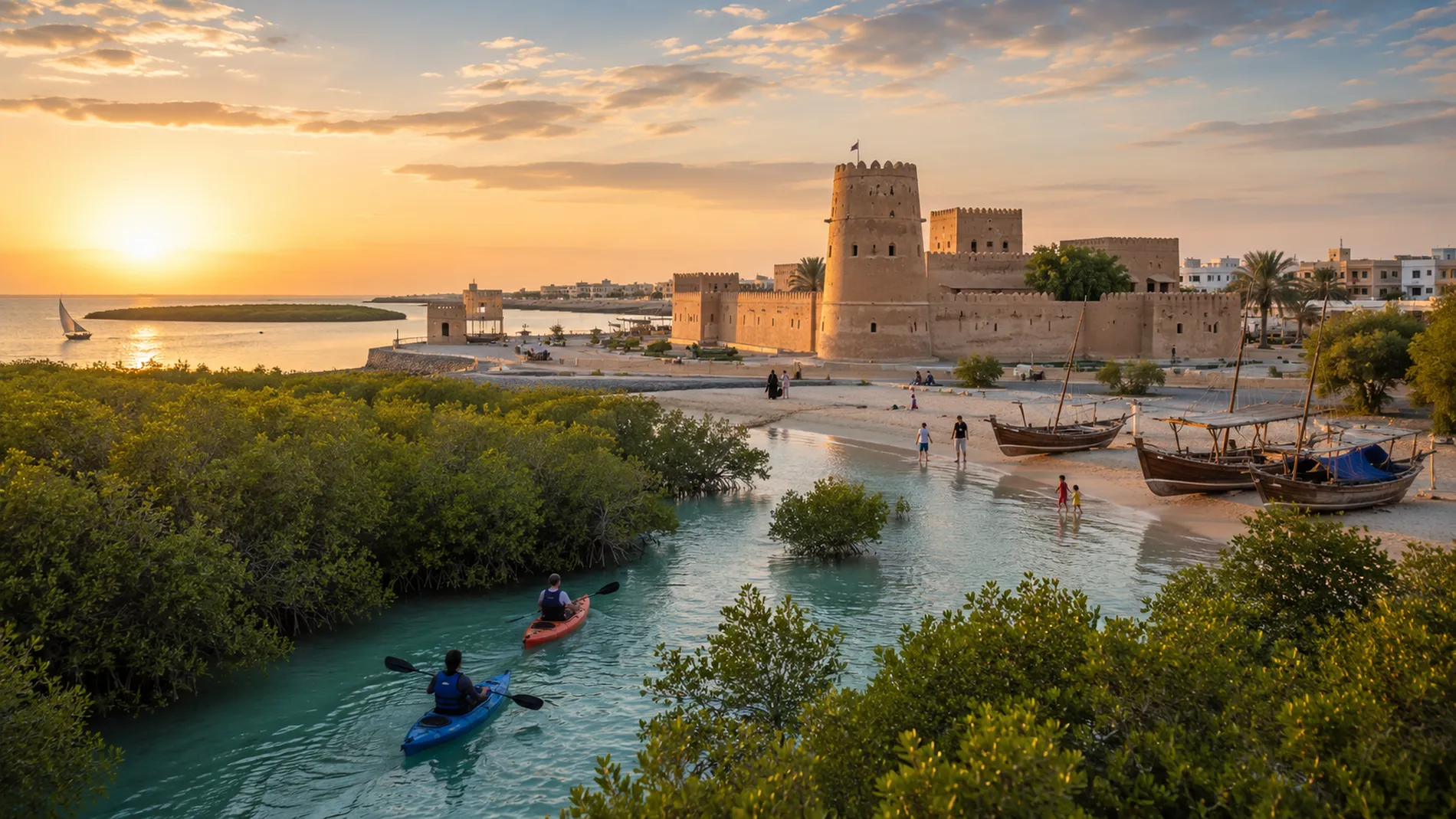

Umm Al Quwain is the UAE’s most intimate and tranquil emirate, often overlooked by travelers focused solely on Dubai’s skyscrapers or the beach resorts of Ras Al Khaimah. Yet that is precisely why it deserves attention. Here, you can experience a different side of the country – calm waters free from crowds, mangrove forests, family-friendly beaches, historic forts, bustling fish markets, and untouched natural islands.
If you’re wondering what to see in Umm Al Quwain, planning a day trip from Dubai, or looking for a more relaxed way to experience the UAE, this emirate should not be viewed as merely an “add-on” to your itinerary. It is a destination in its own right.
- Best suited for: peaceful beach escapes and family holidays away from mass tourism.
- Ideal for: families with children, nature lovers, history enthusiasts, fishing aficionados, kayakers, and anyone who enjoys spending time by the water.
- Top attractions in Umm Al Quwain: Dreamland Aqua Park, the Umm Al Quwain National Museum, Mangrove Beach, Al Sinniyah Island, Kite Beach Center, UAQ Marine Club, and the Ed-Dur Archaeological Site.
- Easy accessibility: the emirate is approximately 50-70 minutes by car from Dubai.
- Budget considerations: many natural attractions can be enjoyed free of charge, while most paid experiences range from $5 to $45 per person.


 Falconcity of Wonders (Dubai)
 from 44м²



Good to know: Umm Al Quwain is particularly valued for a combination that is increasingly rare in the UAE – proximity to Dubai, a genuine coastal atmosphere, low-density development, and a slower, more relaxed pace of life.
Location and How to Get There
Umm Al Quwain lies on the northwestern coast of the UAE, between Ajman and Ras Al Khaimah. By local standards, it is one of the country’s smaller emirates, but its compact size is precisely what makes it so appealing for short getaways. In a single day, you can combine time at the beach with a visit to a museum, a stop at the fish market, and dinner overlooking the water.
For general travel information about the country, you can refer to the official UAE government tourism portal.
Driving is by far the most convenient way to reach Umm Al Quwain from Dubai. Under normal traffic conditions, the journey typically takes 50-70 minutes, depending on your departure point. For example, traveling from Dubai Marina may take longer than setting off from areas such as Deira or Mirdif. If you’re coming from Sharjah or Ajman, travel time is usually reduced to 30-50 minutes.
Main Transportation Options
| Option | Travel Time | Approximate Cost | Notes |
|---|---|---|---|
| Rental car | 50-70 minutes from Dubai | from $25-45 per day | The most convenient choice if you plan to visit multiple attractions |
| Taxi from Dubai | 50-70 minutes | approximately $70-120 one way | A practical option for families or groups |
| Taxi from Sharjah or Ajman | 30-50 minutes | approximately $35-70 | Convenient if you’re staying in neighboring emirates |
| Public transport + taxi | from 1.5-2.5 hours | from $15-35 | Transfers may be required; schedules should be checked in advance |
Practical tip: If you intend to explore more than just the beaches of Umm Al Quwain – including the Umm Al Quwain Fort, Dreamland Aqua Park, UAQ Marine Club, or the Ed-Dur Archaeological Site – having a car will save you a considerable amount of time.
If you’re planning your journey from Dubai, it can also be helpful to consult the services and transport information provided by Dubai’s Roads and Transport Authority, especially if you intend to combine the metro, buses, and taxis.
Umm Al Quwain is not an emirate to rush through. It is a destination designed for slow travel – free from overwhelming crowds and unnecessary noise, offering a blend of sea, heritage, and family-friendly charm. If you’re looking for the best places in Umm Al Quwain to relax, reconnect with nature, and discover a different side of the UAE, start with its beaches, historic fort, museum, and mangrove forests. Together, they capture the true character of this small yet remarkably distinctive emirate.
1. Dreamland Aqua Park
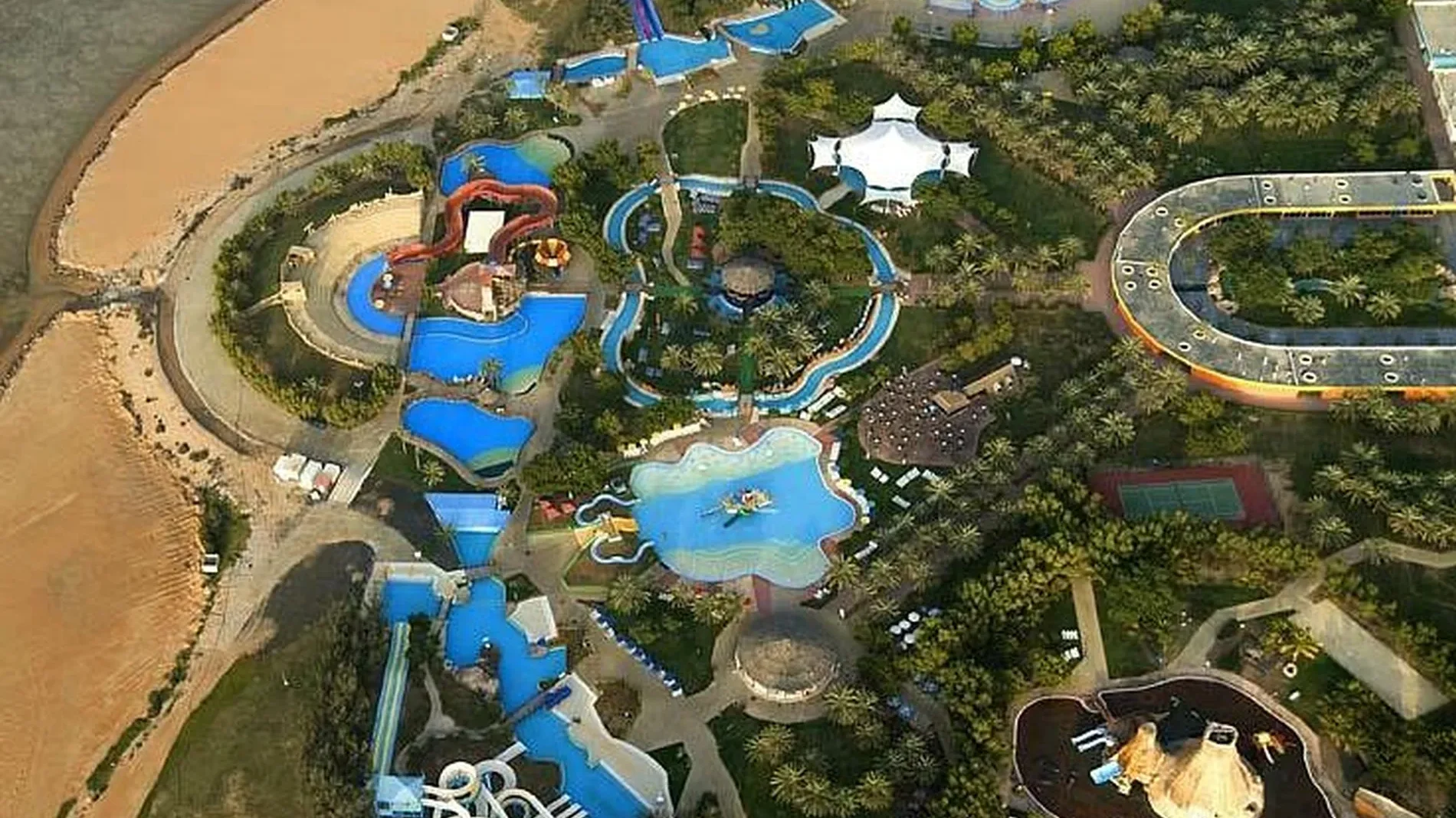
Dreamland Aqua Park is one of Umm Al Quwain’s most popular family attractions and an excellent choice for those looking to combine beachside relaxation, thrilling water slides, and a full day of outdoor fun. Operating for many years, it has earned its reputation as one of the UAE’s larger water parks, attracting not only visitors staying in Umm Al Quwain but also families from Dubai, Sharjah, Ajman, and Ras Al Khaimah.
For travelers searching for the best things to do in Umm Al Quwain with kids, Dreamland Aqua Park often tops the list. Unlike some of Dubai’s larger entertainment complexes, it offers a more laid-back atmosphere, with spacious grounds and a slower pace that makes it easy to incorporate into a one-day itinerary around the emirate.
Dreamland Aqua Park is particularly well-suited to family holidays in Umm Al Quwain, offering children’s areas, swimming pools, water attractions, relaxation spaces, and dining options all within one convenient location.
Location and How to Get There
The water park is located in Umm Al Quwain, close to the E11 highway, making it easily accessible from neighboring emirates. Travel times vary depending on your point of departure. From central Dubai, the journey typically takes around 50-70 minutes; from Sharjah, approximately 35-50 minutes; and from Ajman, around 25-40 minutes.
For independent travelers, driving is by far the most practical option. This is especially true if you’re visiting with children, bringing towels, a change of clothes, sun protection essentials, or planning to continue your day by exploring Umm Al Quwain’s beaches or the emirate’s town center after leaving the park.
| Departure Point | Approximate Travel Time | Recommended Option | Estimated Cost |
|---|---|---|---|
| Dubai | 50-70 minutes | Rental car or taxi | Taxi from $70-120 one way |
| Sharjah | 35-50 minutes | Car or taxi | Taxi from $40-75 |
| Ajman | 25-40 minutes | Car or taxi | Taxi from $30-60 |
| Ras Al Khaimah | 45-60 minutes | Car | Depends on route and fare |
If you intend to use public transportation, it is advisable to check the latest transfer options through the Dubai Roads and Transport Authority’s services before traveling. In most cases, public transport will significantly increase your journey time, and the final leg of the trip is often most conveniently completed by taxi.
General information on transportation, tourism, and travel regulations within the UAE can be found on the official UAE government portal. For updates on local services and information specific to the emirate, the Umm Al Quwain Government Portal is also a useful resource.
Practical tip: If Dreamland Aqua Park is just one stop on your itinerary, traveling by car offers the greatest flexibility. You can easily continue your day with a visit to Mangrove Beach, explore central Umm Al Quwain, or enjoy dinner by the waterfront at your own pace.
What to Expect
Dreamland Aqua Park is designed for a full day of entertainment. While its primary audience is families with children, adults will also find plenty to enjoy. You can spend hours on the slides, relax by the pool, enjoy a leisurely lunch on-site, and avoid the pressure of rushing back to the city.
The park is generally divided into several key areas:
- Water slides for adults and teenagers – ideal for visitors seeking excitement and fast-paced rides.
- Children’s pools and play zones – perfect for families traveling with younger children.
- Family-friendly attractions – designed for shared experiences without extreme thrills.
- Swimming pools and relaxation areas – suitable for those looking to enjoy a peaceful day by the water.
- Cafés and dining outlets – allowing visitors to remain within the park throughout the day.
- Shaded seating areas – particularly valuable during the hotter months.
Preparation is key to making the most of your visit. The UAE sun remains intense even during winter, so it is advisable to bring a hat, sunscreen, sunglasses, a change of clothes, and water-friendly footwear. For children, UV-protective swim shirts with SPF coverage are highly recommended, as exposed skin can burn quickly in outdoor environments.
For families visiting the UAE, Dreamland Aqua Park offers the advantage of simplicity: arrive in the morning, spend the day enjoying the attractions, have lunch on-site, relax, and return to your hotel in the evening without complicated logistics.
If you’re compiling a list of the top attractions in Umm Al Quwain, Dreamland Aqua Park deserves a place near the top for family-oriented itineraries. It pairs well with other destinations across the emirate: spend the morning and afternoon enjoying water-based activities, then wind down with an evening stroll along the coast or dinner at a local restaurant.
Ticket Prices and Opening Hours
Admission fees at Dreamland Aqua Park vary depending on the season, visitor age, special promotions, and ticket type. As prices are subject to change, it is always worth checking the park’s official channels or consulting your hotel before your visit.
Approximate costs include:
| Category | Estimated Cost |
|---|---|
| Adult admission ticket | approximately $35-45 |
| Child admission ticket | approximately $25-35 |
| Food and beverages within the park | around $10-20 per person |
| Taxi from Dubai (one way) | approximately $70-120 |
| One-day car rental | from $25-45, excluding fuel and insurance |
Opening hours should also be confirmed in advance. Water parks in the UAE generally operate during daytime hours, but schedules may vary due to seasonal changes, maintenance periods, public holidays, and Ramadan.
The most comfortable time to visit is between October and April, when temperatures are milder and spending time outdoors is considerably more enjoyable. Summer visits are still possible, but it is advisable to arrive early, seek shade regularly, and pay close attention to children’s well-being.
Important: Visitor numbers tend to increase during weekends and public holidays. If you prefer a quieter experience, consider planning your visit on a weekday and arriving shortly after opening time.
Before your visit, keep the following guidelines in mind:
- Swimwear should be appropriate for a family-oriented public environment.
- Certain attractions may have height, age, or health restrictions.
- Outside food and beverages may be prohibited, depending on park policies.
- Children should remain under adult supervision at all times.
- During the hotter months, staying hydrated and taking regular breaks in shaded areas is essential.
Dreamland Aqua Park is one of the best places in Umm Al Quwain for family entertainment and active leisure by the water. It is well worth including in your itinerary if you’re planning a family holiday in Umm Al Quwain, visiting from Dubai for the day, or simply looking to add a fun, comfortable, and well-organized experience to your trip around the emirate.
It may not be a historical landmark or a protected nature reserve, but attractions like this play an important role in making travel enjoyable. Children stay engaged, adults have the opportunity to unwind, and the entire day unfolds with ease – exactly the kind of experience many families are looking for when exploring the UAE.
2. Umm Al Quwain Fort and National Museum
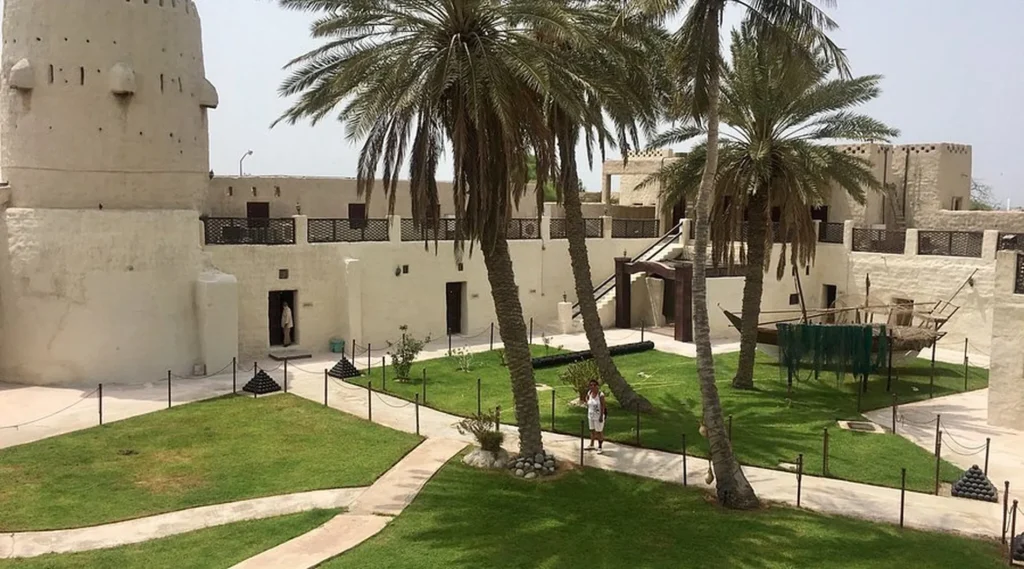
Umm Al Quwain Fort and the National Museum housed within its walls are among the emirate’s most significant historical landmarks. More than just an old defensive structure, the site offers valuable insight into what life in Umm Al Quwain looked like before the arrival of modern highways, seaside developments, and contemporary residential communities. Here, the history of the UAE feels tangible rather than distant – reflected in the realities of daily life: trade, fishing, the protection of the settlement, family traditions, craftsmanship, weaponry, and the enduring relationship between the people and the sea.
For many years, the fort served both administrative and defensive purposes. Today, it functions as a museum showcasing archaeological discoveries, traditional household items, historical documents, weapons, jewelry, and exhibits that trace the emirate’s evolution over time. For anyone exploring the top attractions in Umm Al Quwain, this is one of the most logical places to begin.
Umm Al Quwain Fort and National Museum are well worth visiting for travelers interested in experiencing the emirate’s historical identity rather than its resort lifestyle – without the crowds, queues, or overwhelming tourist infrastructure found elsewhere.
A visit to the fort pairs naturally with a walk through the old quarter of the city, a stop at the waterfront, a visit to Umm Al Quwain Fish Market, or a meal at one of the local restaurants. This itinerary is particularly appealing to those seeking cultural attractions in Umm Al Quwain that reflect the emirate’s heritage, traditions, and authentic way of life.
Location and How to Get There
The fort and National Museum are located in central Umm Al Quwain, close to the shoreline and the city’s historic neighborhoods. Their central location makes them easy to incorporate into a short itinerary around the emirate. Exploring the museum rarely requires an entire day, leaving plenty of time to continue sightseeing or head to Umm Al Quwain’s beaches afterward.
Driving times from neighboring emirates are relatively convenient. The journey from Dubai typically takes 50-70 minutes, from Sharjah around 35-50 minutes, and from Ajman approximately 25-40 minutes. If you’re traveling from Ras Al Khaimah, expect the drive to take roughly 45-60 minutes, depending on traffic conditions and your chosen route.
| Departure Point | Approximate Travel Time | Recommended Option | Estimated Cost |
|---|---|---|---|
| Dubai | 50-70 minutes | Car or taxi | Taxi approximately $70-120 one way |
| Sharjah | 35-50 minutes | Car or taxi | Taxi approximately $40-75 |
| Ajman | 25-40 minutes | Car or taxi | Taxi approximately $30-60 |
| Ras Al Khaimah | 45-60 minutes | Car | Depends on route and fare |
Renting a car is the most practical option if you prefer to explore independently. It allows you to combine visits to Umm Al Quwain Fort, Mangrove Beach, Kite Beach Center, and the fish market within a single day. If you’re relying on public transportation from Dubai, it is advisable to check the latest route options through the Dubai Roads and Transport Authority, as the journey may involve multiple transfers and a final taxi ride.
General information regarding transportation and visitor guidelines within the UAE can be found on the official UAE government portal, while updates on local services and administrative matters are available through the Umm Al Quwain Government Portal.
Practical tip: If you’re arriving by taxi, consider arranging your return journey in advance or checking taxi availability through ride-hailing apps. Traffic in Umm Al Quwain is noticeably calmer than in Dubai, and taxis may be less readily available at certain times of the day.
What to See
The museum’s greatest strength lies in its ability to place Umm Al Quwain within its historical context. The emirate developed around the sea, and themes such as fishing, trade, maritime routes, and traditional lifestyles feature prominently throughout the exhibitions. Unlike large-scale museums filled with interactive technology and multimedia displays, the atmosphere here is far more intimate. Visitors move through the original rooms of the fort, gaining a genuine sense of the scale and character of life in earlier times.
Highlights of the museum include:
- The architecture of the fort – including its watchtowers, inner courtyard, thick defensive walls, and traditional layout.
- Archaeological discoveries – artifacts that reveal the region’s ancient past.
- Traditional weaponry – including daggers, rifles, and items associated with historical defense practices.
- Everyday objects – such as household utensils, jewelry, tools, and handcrafted items used in daily life.
- Historical documents and photographs – offering insight into the emirate’s transformation over the years.
- Exhibitions dedicated to crafts and maritime heritage – an essential aspect of life in the UAE’s coastal communities.
For families traveling with children, the museum can serve as a brief yet rewarding stop between more energetic activities. For example, you might spend the morning at Dreamland Aqua Park or the beach before visiting the National Museum later in the day for a quieter cultural experience in the historic center.
What makes Umm Al Quwain National Museum particularly appealing is its accessibility: the exhibits are thoughtfully curated, easy to navigate, and provide an excellent introduction to Emirati culture without overwhelming visitors with information.
If you’re planning what to see in Umm Al Quwain in one day, consider visiting the fort either in the morning or later in the afternoon, when temperatures are more comfortable. From there, it’s easy to continue to the fish market or the waterfront, creating an itinerary that feels varied without becoming exhausting.
Admission Fees and Opening Hours
A visit to the fort and National Museum is generally one of the most affordable cultural experiences in the emirate. Admission fees may vary over time, so it is always advisable to confirm current pricing through official channels or with your accommodation provider before visiting.
Approximate costs include:
| Expense | Estimated Cost |
|---|---|
| Adult admission ticket | approximately $1-3 |
| Children’s admission | often free or around $1-2 |
| Taxi from central Umm Al Quwain | approximately $5-15 |
| Taxi from Dubai (one way) | approximately $70-120 |
| One-day car rental | from $25-45, excluding fuel and insurance |
Most visitors spend 40-60 minutes exploring the museum. However, if you enjoy reading exhibit descriptions in detail, photographing the architecture, or taking a more in-depth approach to the collections, allowing 1 to 1.5 hours is recommended.
Opening hours may vary depending on the season, public holidays, Friday prayer schedules, and the month of Ramadan. In the UAE, museums and government-operated attractions occasionally adjust their operating times, making it wise to verify schedules before your visit.
The most comfortable times to visit are in the morning or late afternoon. During winter and early spring, walking through the historic parts of the city is particularly pleasant, while in summer it is best to avoid extended periods outdoors during the hottest hours of the day.
Important: When visiting cultural and historical sites in the UAE, modest attire is recommended. Both men and women should aim to cover their shoulders and knees, especially if their itinerary includes not only the museum but also older residential districts within the city.
Photography policies vary from one museum to another, and certain galleries may restrict image-taking altogether. If you wish to photograph exhibits up close, it is best to ask staff members about the rules upon arrival. This is particularly relevant for historical documents, archaeological artifacts, and indoor exhibition spaces.
Umm Al Quwain Fort and National Museum are essential stops for anyone seeking a deeper understanding of the emirate beyond its beaches and family attractions. Calm, accessible, and rich in cultural value, the museum illustrates how life in Umm Al Quwain has long been shaped by the sea, trade, craftsmanship, and enduring traditions. Among the emirate’s most rewarding places to visit, it occupies a unique position: it requires little time yet provides invaluable historical context for the entire journey.
3. Mangrove Beach
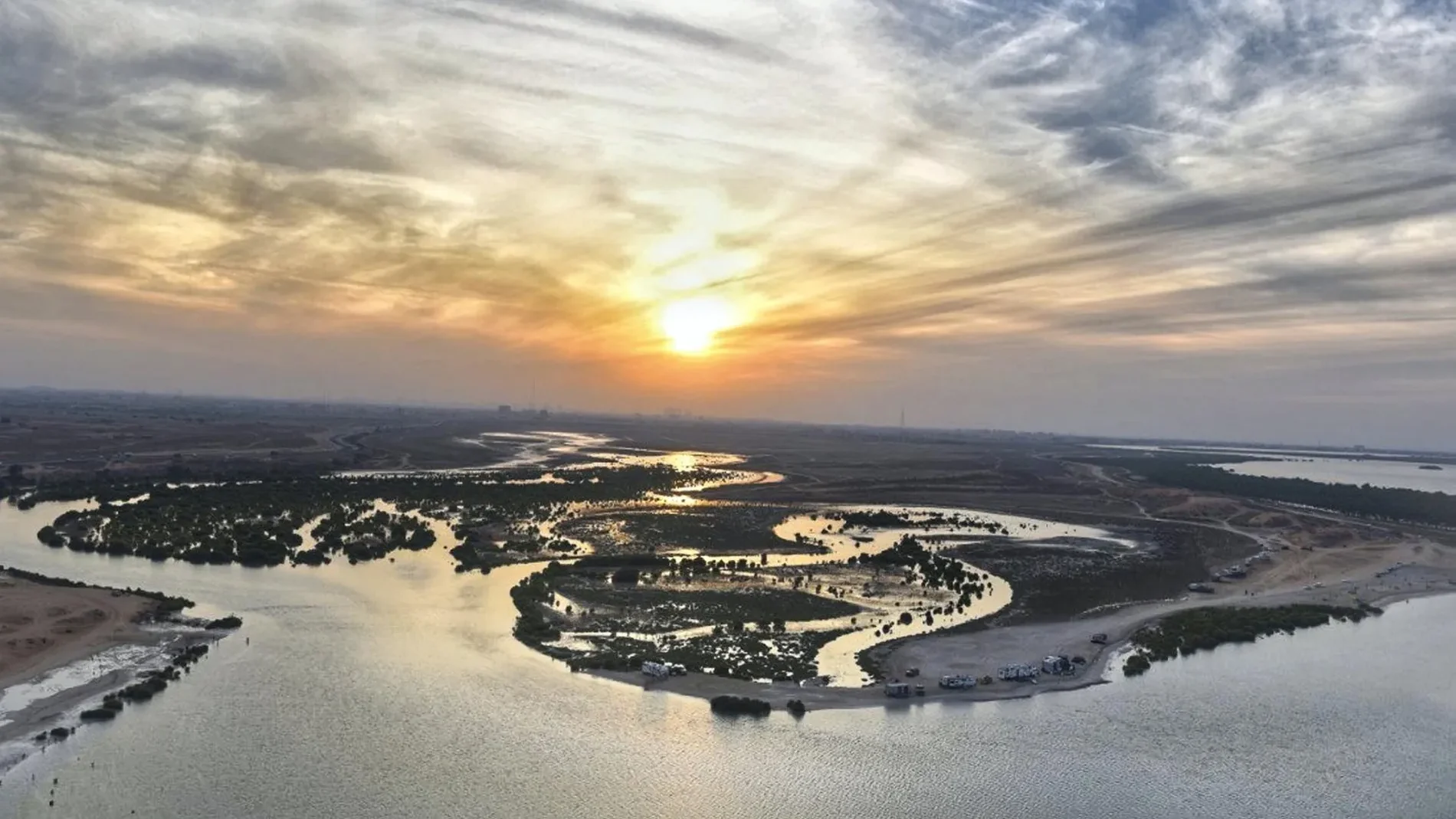
Mangrove Beach is one of Umm Al Quwain’s most tranquil and nature-oriented destinations, where a traditional beach experience blends seamlessly with views of mangrove forests, lagoons, and the emirate’s unique coastal ecosystem. Unlike the lively beach clubs of Dubai, there is no sense of a crowded resort scene here. Visitors come to spend a few peaceful hours by the water, paddle through the mangroves by kayak, photograph local birdlife, and watch the sunset in near silence.
The beach is particularly appreciated by travelers searching for the best beaches in Umm Al Quwain without high-rise developments or heavy tourist traffic. Mangrove Beach is ideal for family outings, relaxed waterfront walks, light picnics, wildlife observation, and short escapes from neighboring emirates. This is not a destination for loud parties or all-day entertainment – it is a place for those who want to experience a gentler, more natural side of the UAE.
Mangrove Beach is one of the best places for a peaceful retreat in Umm Al Quwain, offering a rare combination of seaside relaxation, mangrove landscapes, kayaking opportunities, and unhurried walks along the shore.
For travelers putting together a list of what to see in Umm Al Quwain, this beach makes an excellent stop after visiting the fort, the National Museum, or the fish market. It perfectly reflects the character of the emirate: less noise, more open space, fresh air, and a stronger connection with nature.
Location and How to Get There
Mangrove Beach is situated along the coastal edge of Umm Al Quwain, close to the emirate’s mangrove forests and lagoon areas. Its location makes it especially convenient for independent travelers arriving by car. Well-connected access roads allow the beach to be easily incorporated into a broader itinerary that includes both the urban and natural highlights of the emirate.
From Dubai, the drive generally takes around 55-75 minutes. Travelers departing from Sharjah can expect a journey of approximately 40-55 minutes, while those coming from Ajman usually arrive within 30-45 minutes. Travel times naturally vary depending on traffic conditions, the day of the week, and your starting location.
| Departure Point | Approximate Travel Time | Recommended Option | Estimated Cost |
|---|---|---|---|
| Dubai | 55-75 minutes | Car or taxi | Taxi approximately $75-125 one way |
| Sharjah | 40-55 minutes | Car or taxi | Taxi approximately $45-80 |
| Ajman | 30-45 minutes | Car or taxi | Taxi approximately $30-60 |
| Central Umm Al Quwain | 10-20 minutes | Car or taxi | Taxi approximately $5-15 |
If you plan to travel from Dubai without a car, it is advisable to review available routes through Dubai Roads and Transport Authority services in advance. In practice, public transport to Umm Al Quwain tends to be less convenient than renting a vehicle or taking a taxi, particularly if you intend to visit several attractions within a single day.
Up-to-date information about tourism services and visitor facilities can be found through the Umm Al Quwain Government Portal. General travel guidelines and recommendations for visitors to the UAE are available on the official UAE Government Portal.
Practical tip: Driving to Mangrove Beach is often the most convenient option. It allows you to bring water, beach essentials, sun protection, and gives you the flexibility to continue exploring the emirate without waiting for transportation.
What to See and Do
The true appeal of Mangrove Beach lies not only in its sand and shoreline, but in the natural environment that surrounds it. Mangrove ecosystems play a vital role in protecting the coast, providing habitats for birds and marine life, and creating landscapes that are relatively rare within the region. As a result, the beach offers much more than a place to swim – it provides an opportunity to connect with nature at a slower pace.
Activities worth considering at Mangrove Beach include:
- Walking along the shoreline – the perfect introduction to the beach and its peaceful setting.
- Birdwatching – the mangroves attract both resident and migratory coastal bird species.
- Kayaking or stand-up paddleboarding – when rental services are available.
- Sunset photography – the soft evening light beautifully highlights the water, sand, and lush greenery.
- Family outings – children often enjoy observing crabs, birds, and small marine creatures near the shore.
- Picnicking by the water – provided local regulations are respected and the area is kept clean.
Mangrove Beach is particularly appealing to those seeking the best places to visit in Umm Al Quwain for a more relaxed experience. There is no need to follow a tightly scheduled itinerary. Simply arrive in the morning or late afternoon, take a leisurely walk, spend time by the water, and enjoy the surroundings without rushing from one activity to the next.
Important: The mangroves are a fragile natural habitat. Visitors should avoid entering restricted areas, breaking branches, leaving litter, or disturbing wildlife.
For families with children, the beach’s simplicity is part of its charm. It is easy to spend one or two enjoyable hours here without significant expense – walking, taking photographs, and unwinding by the sea. However, it is worth noting that the infrastructure may be more limited than that of major urban beaches in Dubai or Abu Dhabi. For this reason, it is advisable to bring drinking water, hats, sunscreen, towels, and light snacks.
Costs and Visiting Hours
Access to Mangrove Beach may be entirely free or involve modest charges depending on the specific area, parking arrangements, equipment rentals, and additional services available on-site. If you plan to participate in water activities, it is worth setting aside an appropriate budget in advance.
| Expense | Estimated Cost |
|---|---|
| Beach access | Often free of charge |
| Parking | Free or approximately $2-5 |
| Kayak or paddleboard rental | Around $15-35 per session |
| Light refreshments and beverages | Approximately $5-15 per person |
| Taxi from central Umm Al Quwain | Around $5-15 |
| Taxi from Dubai (one way) | Approximately $75-125 |
Unlike museums or cultural attractions, Mangrove Beach does not necessarily operate according to fixed opening hours. In general, visitors should plan their trip during daylight hours. The most comfortable times to visit are before 10:00 a.m. and after 4:00 p.m., particularly during the warmer months. Evenings are especially pleasant, and the sunset often becomes the highlight of the entire experience.
The best time of year to visit Mangrove Beach is between November and March, when temperatures are ideal for walking, kayaking, and family activities. Visiting during April, May, September, and October is still possible, although midday heat can be intense. During the summer months, from June through August, prolonged exposure to direct sunlight should be avoided.
Before your visit, it is worth checking weather conditions, tide schedules, and the availability of local services, as equipment rentals, cafés, and other facilities may operate seasonally or follow modified schedules.
As with any destination in the UAE, visitors should remain mindful of local customs and etiquette. Umm Al Quwain is known for its calm, family-oriented atmosphere, so a modest approach to beachwear is recommended. Swimwear is perfectly acceptable on the beach itself, but when entering public areas beyond the shoreline, more conservative clothing is advisable. It is also important to avoid photographing strangers without their permission.
Mangrove Beach is one of those attractions in Umm Al Quwain that requires very little planning yet leaves a lasting impression precisely because of its simplicity. It is an ideal destination for travelers looking to escape urban density, explore the emirate’s mangrove landscapes, and spend a few restorative hours by the sea in a peaceful setting. If your itinerary already includes the fort, the museum, or Dreamland Aqua Park, Mangrove Beach provides the perfect nature-focused conclusion to the day.
4. Al Sinniyah Island

Al Sinniyah Island is one of Umm Al Quwain’s most valuable natural and historical treasures. Unlike conventional tourist attractions with ticket booths, cafés, and souvenir shops, this island remains a largely untouched landscape of mangrove forests, lagoons, diverse birdlife, and archaeological sites. That is precisely why it holds such a special place among the top attractions in Umm Al Quwain: here, the emirate reveals itself not through modern infrastructure, but through its natural environment, ancient history, and enduring coastal traditions.
Al Sinniyah is renowned for its rich ecosystem. The island and its surrounding waters are home to seabirds, mangrove habitats, shallow marine areas that support a variety of wildlife, and archaeological remains linked to early settlements. In recent years, the island has attracted significant attention from researchers following discoveries connected to the region’s early history, including evidence of an ancient Christian monastery and communities that existed centuries before the formation of the modern UAE.
Al Sinniyah Island should be viewed not as a beach destination for mass tourism, but as a protected natural and historical area that deserves respect for its fragile ecosystem and existing access regulations.
For travelers looking for things to do in Umm Al Quwain beyond beaches and water parks, Al Sinniyah is one of the emirate’s most fascinating destinations. However, it is important to understand that access to the island itself may be restricted, and independent visits to certain areas are not always possible without prior authorization or participation in an organized excursion.
Location and How to Get There
Al Sinniyah Island lies just off the coast of Umm Al Quwain, within the emirate’s network of lagoons and coastal waters. Separated from the mainland by natural waterways and protected habitats, it cannot be reached as easily as a city beach or museum.
Most visitors experience the Al Sinniyah area through coastal walks, boat excursions, kayaking in designated zones, or tours organized by local operators. Before planning your visit, it is advisable to confirm the latest access regulations through official channels, including the Umm Al Quwain Government Portal.
| Starting Point | Approximate Travel Time to Umm Al Quwain Coast | Recommended Transportation | Notes |
|---|---|---|---|
| Dubai | 55-75 minutes | Car or taxi | Further access is generally limited to authorized boat routes or coastal viewpoints |
| Sharjah | 40-55 minutes | Car or taxi | Convenient for a day trip |
| Ajman | 30-45 minutes | Car or taxi | One of the shortest journeys |
| Central Umm Al Quwain | 10-20 minutes | Car or taxi | Can easily be combined with Mangrove Beach and the waterfront |
If you plan to travel from Dubai without a private vehicle, public transportation may prove less practical due to transfers and the likelihood of requiring a taxi for the final stretch of the journey. Current transport options within Dubai and between major transit hubs can be checked through the Dubai Roads and Transport Authority.
General travel advice for visitors to the UAE, including information on local customs and regulations, is available through the official UAE Government Portal.
Practical tip: Avoid planning an independent landing on Al Sinniyah Island without first verifying the applicable rules. For most travelers, the best approach is a guided boat excursion, kayaking within approved areas, or exploring nearby coastal viewpoints.
What to See
The true significance of Al Sinniyah Island lies in its unique combination of natural beauty and archaeological importance. It is particularly rewarding for those who want to explore Umm Al Quwain’s attractions in a broader context – moving beyond modern entertainment to discover traces of communities that inhabited this coastline centuries ago.
Highlights of the island and its surrounding environment include:
- Mangrove forests – an essential part of the emirate’s coastal ecosystem.
- Bird nesting and feeding areas – attracting birdwatchers and nature enthusiasts alike.
- Lagoons and shallow waters – characteristic features of Umm Al Quwain’s natural landscape.
- Archaeological discoveries – including evidence of ancient settlements and religious structures.
- Panoramic views of the emirate’s coastline – particularly striking at sunrise and sunset.
- The maritime environment itself – offering insight into the deep historical connection between Umm Al Quwain and the sea.
The archaeological heritage of Al Sinniyah Island is of particular significance. Excavations have uncovered traces of structures dating back to different historical periods. These discoveries are important not only to Umm Al Quwain but also to the broader understanding of the Arabian Gulf’s early history.
Important: Archaeological and environmentally sensitive areas should never be treated as ordinary recreational spaces. Removing stones, pottery fragments, shells from protected zones, damaging vegetation, disturbing wildlife, or leaving litter is strictly inappropriate and, in some cases, prohibited.
For most visitors, the safest and most responsible way to experience Al Sinniyah is through organized tours or from designated viewpoints along the coast. If your primary interest is nature, the island area pairs well with visits to Mangrove Beach, Kite Beach Center, or lagoon walks. Those drawn to history may wish to combine the experience with a visit to Umm Al Quwain Fort, the National Museum, and the Ed-Dur Archaeological Site.
Costs and Visiting Information
Al Sinniyah Island does not operate according to the standard opening hours associated with museums or theme parks. As a protected natural and historical area, access may depend on environmental restrictions, archaeological research activities, bird nesting seasons, weather conditions, and regulations established by local authorities.
Approximate costs vary depending on how you choose to experience the area:
| Experience | Estimated Cost | Typical Duration | Notes |
|---|---|---|---|
| Viewing the island from the coastline | Free | 30-60 minutes | Suitable for independent visitors |
| Exploring nearby natural areas | Free or from $5-15 | 1-2 hours | May depend on parking fees or local services |
| Kayaking in designated areas | Approximately $15-35 | 1-2 hours | Availability should be confirmed in advance |
| Guided boat excursion | Approximately $40-120 per person | 1.5-3 hours | Prices vary depending on the operator, route, and group size |
| Private boat tour | From $150-300+ per boat | 2-4 hours | Well suited to families or small groups |
The best time to explore the Al Sinniyah area is between November and March, when temperatures are ideal for outdoor activities, wildlife observation, and time on the water. Spring and autumn visits are also possible, although midday temperatures can be considerably warmer. During the summer months, prolonged exposure to direct sunlight should be approached with caution.
The most rewarding times of day are early morning and late afternoon. Morning visits offer a greater chance of spotting birdlife and enjoying calmer waters, while the landscapes become especially beautiful as the sun begins to set. Between May and September, the midday heat can make outdoor activities uncomfortable.
Before your visit, always check the latest information regarding access restrictions, weather conditions, and approved routes. Independent landings within protected natural or archaeological areas may be prohibited.
It is also wise to prepare appropriately for the trip:
- Bring plenty of water, a hat, and sunscreen.
- Wear comfortable, closed-toe footwear if you plan to explore natural areas.
- Avoid using drones without the necessary permits.
- Refrain from photographing people, private property, or protected sites without permission.
- Maintain a quiet presence in bird habitats.
- Leave no trace and avoid interfering with the natural environment.
Al Sinniyah Island is one of Umm Al Quwain’s most rewarding destinations for travelers interested in nature, archaeology, and slower, more meaningful forms of exploration. It bears little resemblance to the UAE’s more conventional tourist attractions. There are no grand entertainment venues or polished commercial experiences here. Instead, visitors are offered something far rarer: an opportunity to witness the emirate’s enduring relationship with the sea, its ancient settlements, and its delicate coastal ecosystems.
If you are putting together a list of the top places to visit in Umm Al Quwain, Al Sinniyah Island deserves a place on your itinerary as the emirate’s defining natural and historical highlight.
5. Kite Beach Center
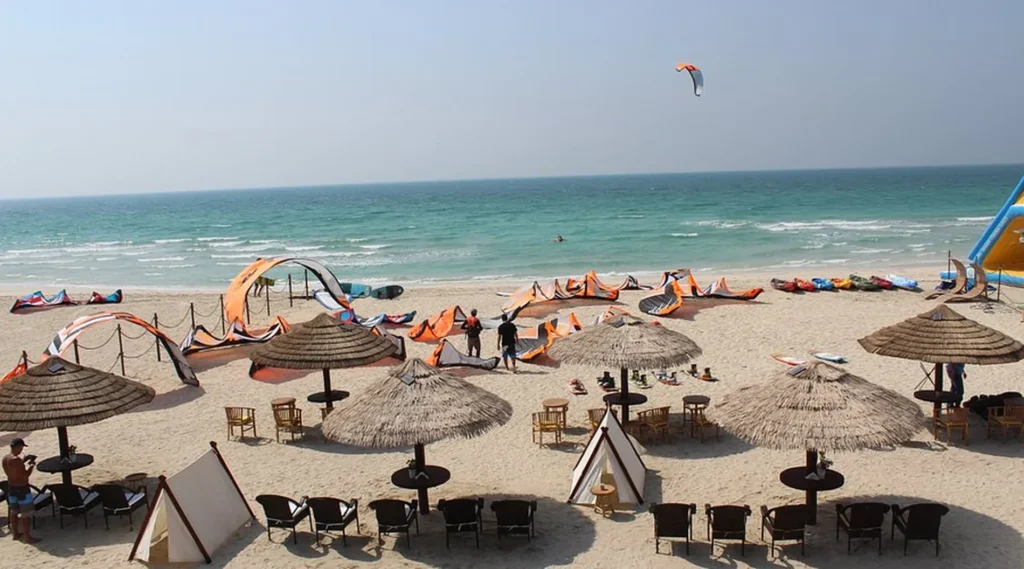
Kite Beach Center is one of Umm Al Quwain’s most popular waterfront destinations for beachside relaxation, water activities, and family-friendly leisure. It appeals to visitors looking for more than just a stretch of sand – offering a well-organized setting complete with cafés, equipment rentals, comfortable seating areas, and opportunities to enjoy kayaking, stand-up paddleboarding, or simply spend a few peaceful hours by the sea.
Unlike the beach venues that share a similar name in Dubai, Kite Beach Center in Umm Al Quwain offers a far more intimate experience. There is less urban energy, more open space, and a noticeably slower pace of life. For travelers wondering what to do in Umm Al Quwain, it makes an excellent half-day destination. You can arrive in the morning for breakfast by the water, rent equipment for outdoor activities, or linger until sunset.
Kite Beach Center is particularly well suited to those who want to combine a relaxing beach experience in Umm Al Quwain with light water sports and convenient on-site amenities.
The location fits naturally into any itinerary featuring the top attractions in Umm Al Quwain. Spend the morning exploring the fort and National Museum, unwind on the beach in the afternoon, and finish the day with a visit to Mangrove Beach or dinner at one of the emirate’s waterfront restaurants.
Location and How to Get There
Kite Beach Center is located along Umm Al Quwain’s coastline, in an area known for its beaches and lagoon landscapes. The easiest way to reach it is by car. Public transportation within the emirate is more limited than in Dubai, and traveling independently is often the most convenient way to move between the area’s natural attractions and beachfront destinations.
The drive from Dubai generally takes around 55-75 minutes, while travelers coming from Sharjah can expect a journey of approximately 40-55 minutes. From Ajman, the trip typically takes 30-45 minutes. If you are already staying in central Umm Al Quwain, the beach center is usually just 10-20 minutes away by car or taxi.
| Departure Point | Approximate Travel Time | Recommended Option | Estimated Cost |
|---|---|---|---|
| Dubai | 55-75 minutes | Car or taxi | Taxi approximately $75-125 one way |
| Sharjah | 40-55 minutes | Car or taxi | Taxi approximately $45-80 |
| Ajman | 30-45 minutes | Car or taxi | Taxi approximately $30-60 |
| Central Umm Al Quwain | 10-20 minutes | Car or taxi | Taxi approximately $5-15 |
If you plan to travel from Dubai using a combination of metro, buses, and taxis, it is worth checking the latest routes through Dubai Roads and Transport Authority services before your trip. When planning your stay in the emirate, general tourism information is also available through the official UAE Government Portal, while local updates and services can be found on the Umm Al Quwain Government Portal.
Practical tip: If Kite Beach Center is part of a one-day itinerary, renting a car is the most convenient option. It allows you to combine a beach visit with the mangrove areas of Umm Al Quwain, the fish market, and a seaside dinner without feeling rushed.
What to See and Do
The main reason to visit Kite Beach Center is the opportunity to enjoy a relaxing beach experience while still having access to a variety of activities. Rather than spending the entire day sunbathing, visitors can rent equipment, head out onto the water, capture scenic photographs, enjoy a meal at one of the cafés, and stay through the evening hours.
Some of the most popular activities include:
- Relaxing on the beach – ideal for unwinding by the water or taking leisurely walks along the shore.
- Kayaking and stand-up paddleboarding – excellent choices for beginners and families alike.
- Water sports and outdoor activities – depending on weather conditions, seasonal availability, and equipment offerings.
- Cafés and dining areas – perfect for breakfast, lunch, or drinks overlooking the sea.
- Photography spots with coastal views – particularly beautiful in the early morning and at sunset.
- Family-friendly recreation – well suited to visitors with children, provided that heat and daily schedules are taken into consideration.
Kite Beach Center is often chosen by travelers searching for the best places to visit in Umm Al Quwain that do not revolve around museums or long drives between attractions. While it is not a historical landmark, it reflects an important aspect of the emirate’s contemporary lifestyle – one defined by the sea, outdoor recreation, a relaxed atmosphere, and a strong focus on family.
Important: The availability of water activities may vary depending on weather conditions, wind levels, tides, and the center’s operational policies. It is always advisable to confirm which services will be available on the day of your visit.
Families traveling with children should prepare a few essentials in advance, including sunscreen, hats, drinking water, towels, a change of lightweight clothing, and suitable beach footwear. Even during the winter months, the UAE sun remains strong, while summer visits are best planned for early mornings or late afternoons.
If you are particularly interested in nature, Kite Beach Center pairs perfectly with a visit to Mangrove Beach. Together, these destinations showcase two distinct sides of Umm Al Quwain’s coastline: one offering organized beach facilities and recreational opportunities, the other highlighting the emirate’s unique mangrove ecosystems and natural landscapes.
Costs and Opening Hours
The overall cost of visiting Kite Beach Center depends on how you choose to spend your time. A simple beach visit may be relatively inexpensive, while equipment rentals, meals, drinks, and additional services can increase your budget. Prices may also fluctuate depending on the season, weekends, and public holidays.
| Service or Expense | Estimated Cost |
|---|---|
| Beach access or basic entry fee | approximately $5-15, or free depending on the conditions |
| Kayak or paddleboard rental | approximately $15-35 per session |
| Light snacks and beverages | around $10-20 per person |
| Full meal | approximately $20-40 per person |
| Taxi from central Umm Al Quwain | approximately $5-15 |
| Taxi from Dubai (one way) | approximately $75-125 |
| One-day car rental | from $25-45, excluding fuel and insurance |
Opening hours may vary depending on the season, weather conditions, private events, weekends, and the month of Ramadan. If you are planning a specific activity – such as kayaking, paddleboarding, or reserving a table at a café – it is advisable to confirm operating hours through the venue’s official channels before your visit.
The most pleasant time to visit is between November and March, when temperatures are ideal for beach walks, outdoor activities, and time spent by the water. April, May, September, and October can also be enjoyable, although early mornings and evenings tend to be more comfortable. During the peak summer months, especially from June through August, midday heat may be too intense for extended periods outdoors.
The ideal way to experience Kite Beach Center is to arrive either in the morning for two to three hours or later in the afternoon, close to sunset. Not only will the weather be more comfortable, but the coastal scenery also becomes particularly photogenic during these hours.
Before visiting, it is also worth keeping local customs in mind. Umm Al Quwain is known for its calm, family-oriented atmosphere, so beachwear is appropriate while at the waterfront itself. However, when leaving the beach area, more modest clothing is recommended. Visitors should also avoid photographing other beachgoers without permission, flying drones without the necessary approvals, or leaving litter behind.
Kite Beach Center is an excellent destination for those wishing to experience the modern, relaxed, and family-friendly side of Umm Al Quwain. While it lacks the crowds and intensity of larger resort destinations, it offers something equally valuable: sea views, fresh air, water-based activities, and a comfortable environment designed for leisure. If you are putting together a list of the top attractions in Umm Al Quwain, this location deserves a place on your itinerary as a welcoming beach stop between the emirate’s natural, historical, and culinary highlights.
6. UAQ Marine Club
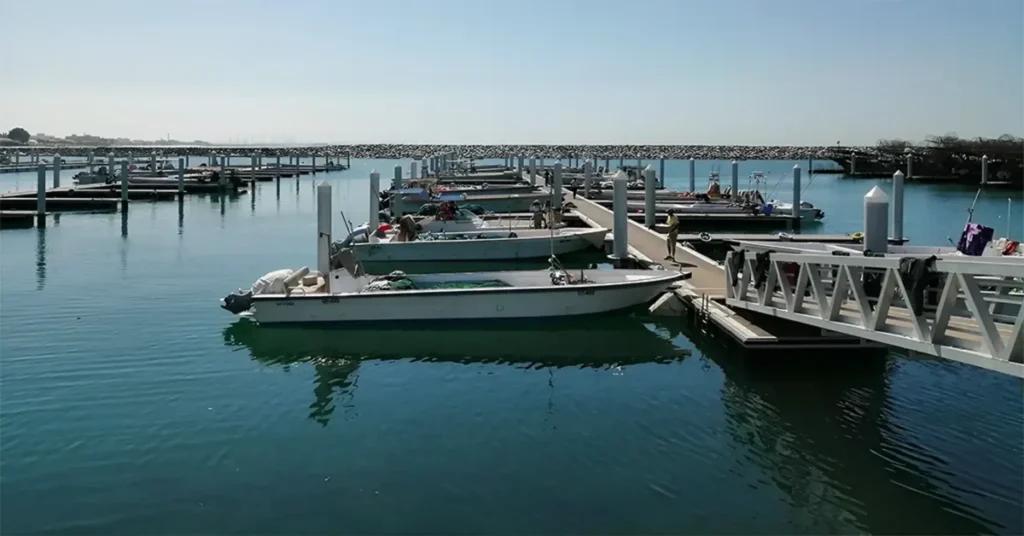
UAQ Marine Club is one of the best places in Umm Al Quwain for those who want to experience the emirate from the water. It’s a popular destination not only among tourists but also among residents of neighboring emirates, who come here for fishing trips, boat excursions, water activities, family weekends, and peaceful moments by the coast. Unlike the large, glamorous marinas of Dubai, Umm Al Quwain’s marine club feels more intimate and authentic – less about showcasing luxury and more about genuine connections with the sea, boats, fishermen, and everyday coastal life.
For travelers exploring the top attractions in Umm Al Quwain and looking to diversify their itinerary beyond museums and beaches, UAQ Marine Club is a natural addition. It is particularly appealing to those seeking active experiences in Umm Al Quwain, whether that means fishing, boating, water sports, or family-friendly leisure by the shore.
UAQ Marine Club is best approached not as a traditional sightseeing attraction, but as a destination for maritime experiences. To truly enjoy what it offers, plan to spend at least a few hours here.
The marine club also complements many of the best places to visit in Umm Al Quwain. For example, you could begin the day with a fishing trip or a boat excursion, continue with a visit to the National Museum, and finish the evening at Mangrove Beach or a waterfront restaurant.
Location and How to Get There
UAQ Marine Club is situated along the emirate’s coastline, in an area where urban development gradually gives way to lagoons, beaches, and open sea routes. Its location makes it an easy addition to a coastal itinerary, particularly if you’re traveling by car.
The drive from Dubai typically takes around 55-75 minutes, while travelers from Sharjah can expect a journey of approximately 40-55 minutes. From Ajman, the trip usually takes 30-45 minutes, and if you’re already staying in central Umm Al Quwain, the club is generally only 10-20 minutes away by car or taxi.
| Departure Point | Approximate Travel Time | Recommended Option | Estimated Cost |
|---|---|---|---|
| Dubai | 55-75 minutes | Car or taxi | Taxi approximately $75-125 one way |
| Sharjah | 40-55 minutes | Car or taxi | Taxi approximately $45-80 |
| Ajman | 30-45 minutes | Car or taxi | Taxi approximately $30-60 |
| Central Umm Al Quwain | 10-20 minutes | Car or taxi | Taxi approximately $5-15 |
If you’re traveling from Dubai without a private vehicle, it’s worth checking public transportation options in advance through the Dubai Roads and Transport Authority. In reality, however, reaching Umm Al Quwain’s coastal attractions is far more convenient by rental car, allowing greater flexibility, easier transport of personal belongings, and less reliance on finding taxis after water-based activities.
General travel advice, tourism guidelines, and visitor etiquette can be found through the official UAE Government Portal, while local updates and public services are available via the Umm Al Quwain Government Portal.
Practical tip: If you’re planning a fishing excursion, boat tour, or equipment rental, it’s advisable to contact the club ahead of time. Availability may be more limited on weekends and during peak travel periods.
What to See and Do
The main appeal of UAQ Marine Club lies in the opportunity to experience the coastline in a more active way than a typical beach visit allows. Rather than simply relaxing by the shore, visitors can venture out to sea, organize fishing trips, rent boats, or participate in various water activities depending on seasonal conditions and weather.
Some of the most popular experiences include:
- Boat excursions – an excellent way to admire Umm Al Quwain’s coastline from the water.
- Fishing trips – one of the emirate’s most beloved pastimes, deeply rooted in local culture and traditions.
- Boat rentals – ideal for families, groups, or travelers interested in customized experiences with a captain.
- Water activities – subject to weather conditions, seasonal availability, and the club’s operational policies.
- Family-friendly coastal leisure – offering a relaxed atmosphere without the intensity of larger urban destinations.
- Wildlife and coastal observation – particularly enjoyable when routes pass near lagoons and mangrove areas.
For visitors interested in understanding the emirate’s relationship with the sea, UAQ Marine Club provides valuable insight into an important aspect of local life. Historically, Umm Al Quwain developed as a coastal community, where fishing, boatbuilding, maritime trade, and sea routes played a central role. In this sense, the marine club represents more than just recreation – it reflects a contemporary continuation of that maritime heritage.
Important: All marine activities depend on weather conditions, wind levels, sea conditions, and safety regulations. Even confirmed bookings may be rescheduled or adjusted if conditions are unsuitable.
Families traveling with children may prefer gentler activities, such as short boat rides, relaxing by the water, or participating in easy family-oriented excursions. If you’re planning a fishing trip, it is advisable to confirm the duration of the excursion, the availability of life jackets, minimum age requirements, and cancellation policies related to adverse weather conditions.
UAQ Marine Club can also be combined with other attractions on a one-day itinerary in Umm Al Quwain. A balanced schedule might include a morning spent on the water, followed by lunch and relaxation, with a late-afternoon visit to Mangrove Beach or Kite Beach Center. This approach allows visitors to enjoy the emirate without overloading the day, preserving the slower pace that draws so many people to Umm Al Quwain in the first place.
Costs and Opening Hours
The cost of visiting UAQ Marine Club depends largely on the type of experience you choose. Casual access to the waterfront area may be inexpensive, while private boat rentals, fishing trips, and customized excursions naturally require a larger budget. Prices may vary depending on the season, the day of the week, group size, and the duration of the activity.
| Service or Expense | Estimated Cost |
|---|---|
| General access or basic entry | Free of charge or approximately $5-15 |
| Short boat excursion | Approximately $25-60 per person |
| Group fishing experience | Around $50-120 per person |
| Private boat rental with captain | From $150-350+ for several hours |
| Water-based activities | Approximately $20-80, depending on the activity |
| Light refreshments and drinks | Around $10-20 per person |
| Taxi from central Umm Al Quwain | Approximately $5-15 |
| Taxi from Dubai (one way) | Approximately $75-125 |
Opening hours and activity schedules should always be confirmed in advance. Marine experiences are influenced not only by the club’s operating hours but also by external factors such as weather conditions, tides, wind, boat maintenance schedules, private events, and safety requirements.
The most comfortable season to visit is between November and March, when temperatures are ideal for spending extended periods by the water. April, May, September, and October can also offer enjoyable conditions, particularly during the early morning or late afternoon. During the summer months – especially from June through August – midday heat can make prolonged outdoor activities uncomfortable.
The best time for a boat excursion or fishing trip is early in the morning, when temperatures are cooler, the light is softer, and conditions on the water are often at their most pleasant.
Before your visit, keep the following recommendations in mind:
- Reserve boat trips, fishing excursions, and water activities in advance.
- Confirm whether life jackets, fishing equipment, drinking water, and captain services are included in the price.
- Bring a hat, sunscreen, sunglasses, and sufficient drinking water.
- Wear non-slip footwear suitable for boats and marina environments.
- Never head out to sea without confirming weather conditions.
- Respect local customs and avoid photographing strangers without permission.
- If participating in fishing activities, make sure you understand any current regulations or restrictions.
UAQ Marine Club is one of the finest places in Umm Al Quwain for travelers looking to embrace the emirate’s maritime identity. Here, it becomes clear that life in Umm Al Quwain revolves around more than beaches alone – it is equally shaped by boats, fishing traditions, lagoons, and a slower, sea-oriented lifestyle. For families, groups of friends, and anyone drawn to active coastal experiences, the marine club is a practical and rewarding addition to any itinerary, bringing greater variety and authenticity to a journey through the emirate.
7. Falaj Al Mualla Fort
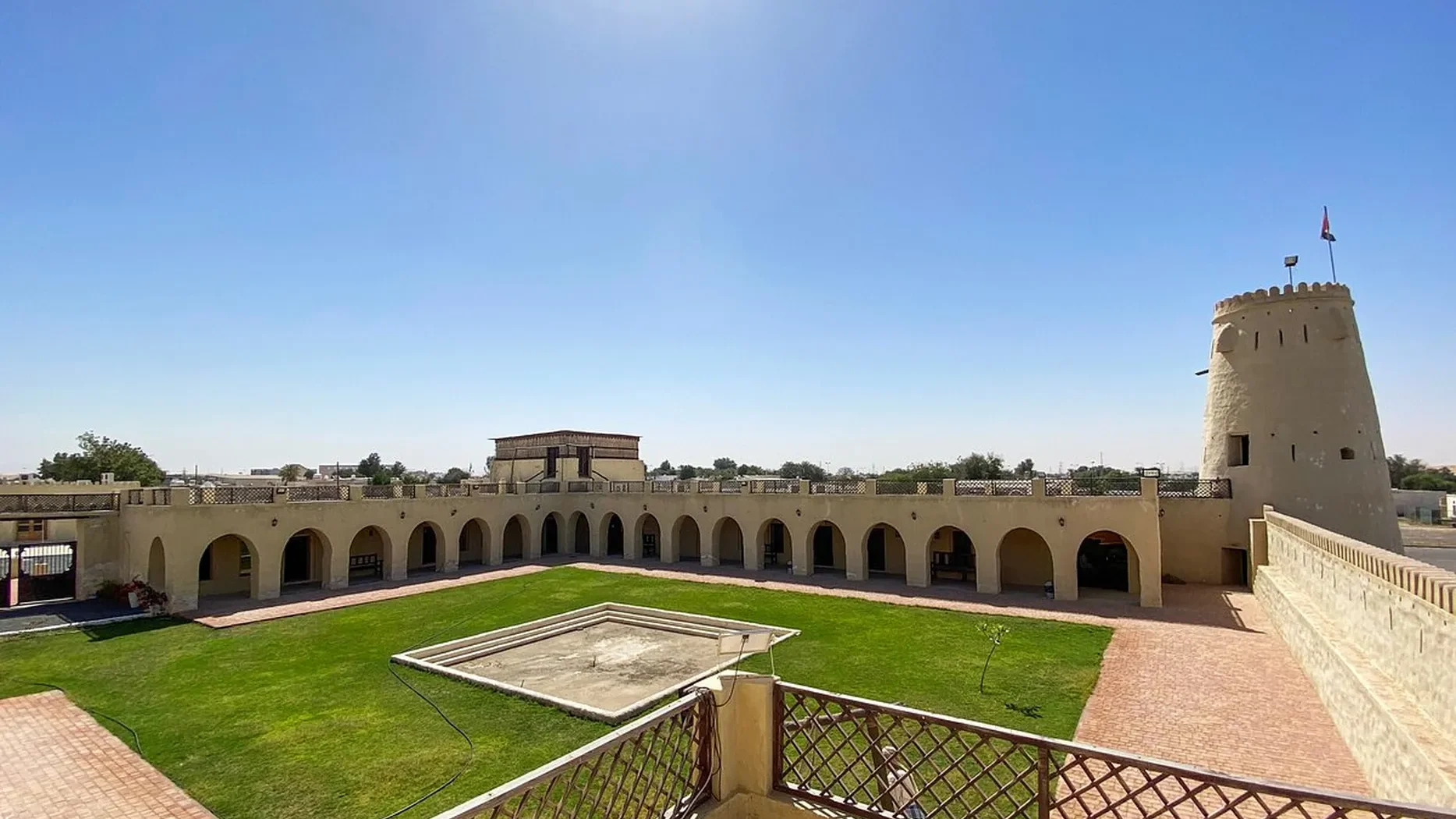
Falaj Al Mualla Fort is one of Umm Al Quwain’s most fascinating historical landmarks, revealing a side of the emirate that extends far beyond its coastline, beaches, and mangrove forests. Unlike the fort located in the center of Umm Al Quwain, this site stands inland, in the settlement of Falaj Al Mualla, an area historically shaped by agriculture, water sources, and the strategic control of caravan routes.
The fort is considered an important part of the emirate’s cultural heritage and is often included in itineraries designed for travelers interested in the history of the UAE, traditional fort architecture, and quieter destinations removed from the main tourist trail. If you are compiling a list of things to do in Umm Al Quwain beyond beaches and water parks, Falaj Al Mualla Fort deserves a dedicated stop.
What makes Falaj Al Mualla Fort particularly compelling is its ability to showcase the “inland” character of Umm Al Quwain – a landscape defined by oases, watchtowers, and communities that once flourished far from the sea.
Location and How to Get There
The fort is located in the settlement of Falaj Al Mualla, approximately 30-35 kilometers from Umm Al Quwain’s coastal areas. Unlike the emirate’s beachfront attractions, reaching this site involves a journey through quieter districts marked by farms, open landscapes, and a lower density of development.
From central Umm Al Quwain, the drive typically takes 25-35 minutes. Travelers departing from Dubai can expect a journey of approximately 1 to 1.5 hours, while those coming from Sharjah usually require around 50-70 minutes. From Ajman, the trip generally takes 40-60 minutes, depending on traffic conditions and the chosen route.
| Departure Point | Approximate Travel Time | Recommended Option | Estimated Cost |
|---|---|---|---|
| Central Umm Al Quwain | 25-35 minutes | Car or taxi | Taxi approximately $20-40 |
| Dubai | 60-90 minutes | Rental car or taxi | Taxi approximately $90-150 one way |
| Sharjah | 50-70 minutes | Car or taxi | Taxi approximately $60-100 |
| Ajman | 40-60 minutes | Car or taxi | Taxi approximately $45-80 |
For this type of excursion, renting a car is by far the most practical choice. Public transportation options to the emirate’s inland areas may be limited, and arranging return transportation can be less predictable than in larger cities such as Dubai or Sharjah. If you begin your journey in Dubai, you can review available public transit connections through Dubai Roads and Transport Authority services, although the final stretch to Falaj Al Mualla is usually easiest to complete by taxi or private vehicle.
General travel guidelines and visitor recommendations can be found through the official UAE Government Portal, while local updates and information about Umm Al Quwain are available via the emirate’s official government website.
Practical tip: If Falaj Al Mualla Fort is part of your itinerary, it is best paired with other historical attractions rather than treated as a spontaneous stop between beach visits. The site lies away from the emirate’s main coastal tourism corridor.
What to See
Falaj Al Mualla Fort is valued primarily for its architecture and historical significance. This defensive structure reflects the realities of life in an inland settlement, where access to water, agricultural productivity, and territorial security were essential. Throughout the UAE, forts like this served not only as military strongholds but also as administrative centers, observation posts, and symbols of local authority.
During your visit, pay particular attention to:
- The watchtowers – iconic elements of the region’s defensive architecture.
- The thick walls and central courtyard – offering insight into how the fort functioned in everyday life.
- Traditional building techniques and materials – carefully adapted to the harsh desert climate.
- The surrounding Falaj Al Mualla landscape – representing a quieter, more rural side of the emirate.
- The settlement’s historical atmosphere – where life away from the coast becomes easier to imagine.
- Exterior photography opportunities – especially during the early morning or just before sunset, when the fort is at its most striking.
Falaj Al Mualla Fort can also be viewed as a complement to the National Museum of Umm Al Quwain. While the museum housed within the coastal fort explores the emirate’s maritime heritage, Falaj Al Mualla highlights another dimension of its history – one centered around inland communities, oasis environments, and the strategic importance of freshwater resources.
Important: Falaj Al Mualla is not an entertainment venue. Visitors come here for cultural insight, historical architecture, and a tranquil atmosphere rather than elaborate tourist infrastructure.
For families traveling with children, the fort can provide an engaging educational experience if its historical context is introduced beforehand. Explaining why watchtowers were built, why water sources were so valuable, and how people lived before the rise of modern cities can make the visit more meaningful. Most travelers spend approximately 40-60 minutes exploring the site, making it easy to incorporate into a broader itinerary without overwhelming the day.
If your interest extends to the cultural and historical attractions of Umm Al Quwain, Falaj Al Mualla Fort pairs well with Ed-Dur Archaeological Site, Umm Al Quwain Fort, and the National Museum. Together, these landmarks trace the emirate’s evolution from ancient settlements to traditional fortified communities.
Costs and Opening Hours
Visiting Falaj Al Mualla Fort is generally considered one of the emirate’s more affordable cultural experiences. However, admission fees and opening schedules may vary depending on the season, the fort’s operational status, restoration projects, public holidays, and the month of Ramadan.
| Information | Estimated Details |
|---|---|
| Admission fee | Free of charge or approximately $1-3 |
| Recommended visit duration | 40-60 minutes |
| Guided tours | When available, approximately $20-50 per group |
| Taxi from central Umm Al Quwain | Around $20-40 |
| Taxi from Dubai (one way) | Approximately $90-150 |
| One-day car rental | From $25-45, excluding fuel and insurance |
Opening hours should always be confirmed in advance. Historical sites in smaller emirates may operate on less predictable schedules than the major museums of Dubai or Abu Dhabi. Temporary closures, midday breaks, shorter Friday hours, Ramadan adjustments, and maintenance periods are all possible.
The most comfortable times to visit are during the morning or late afternoon. From November through March, cooler temperatures make exploration significantly more enjoyable. During the summer months, midday visits are best avoided, as exposed areas heat up quickly and shaded spaces may be limited.
Before setting out, it is advisable to verify both opening hours and accessibility. Even if the fort itself is temporarily closed to visitors, it can still be appreciated as an architectural and historical landmark from the outside.
When visiting the site, it is important to observe a few basic guidelines:
- Wear modest clothing that covers the shoulders and knees.
- Bring drinking water, particularly during the warmer months.
- Avoid entering restricted areas or maintenance zones.
- Do not touch historical masonry or exhibition elements.
- Refrain from flying drones without the appropriate permissions.
- Photograph local residents only after obtaining their consent.
Falaj Al Mualla Fort is an essential stop for travelers who wish to discover the historical and cultural dimensions of Umm Al Quwain beyond its beaches. The site offers valuable insight into how communities in the emirate once developed away from the coast – shaped by access to water, the need for protection, agricultural traditions, and the rhythms of life in smaller inland settlements. Among the top places to visit in Umm Al Quwain, the fort occupies a unique position, adding depth and perspective to an itinerary that might otherwise focus solely on the shoreline.
8. Ed-Dur Archaeological Site
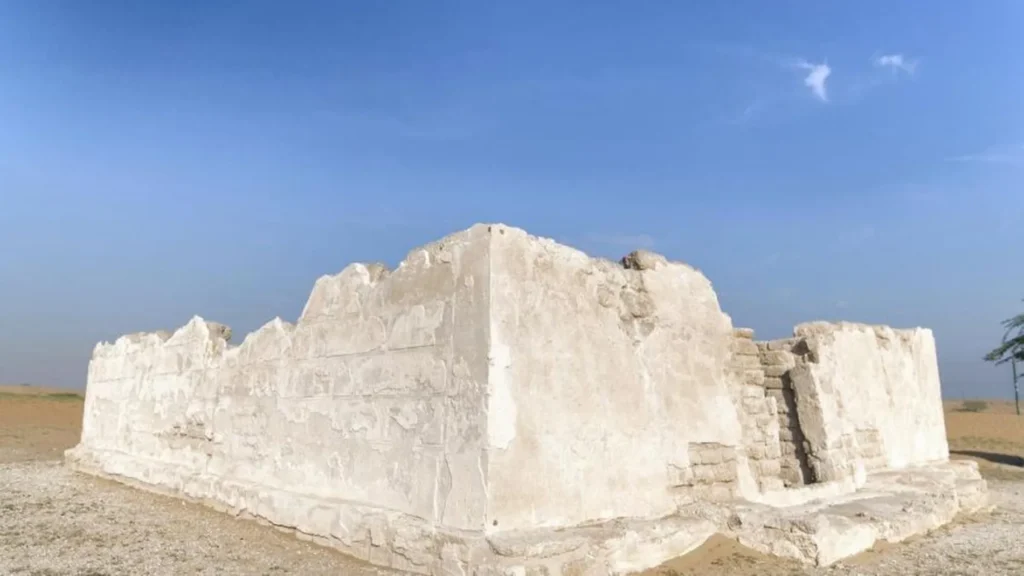
The Ed-Dur Archaeological Site is one of the most important historical landmarks not only in Umm Al Quwain but across the Northern Emirates as a whole. Closely tied to the ancient history of the Arabian Gulf, this remarkable site demonstrates that life in what is now the United Arab Emirates flourished long before the oil era, the rise of modern skyscrapers, and the development of luxury beach resorts. For travelers seeking a deeper understanding of the attractions of Umm Al Quwain, Ed-Dur represents an essential stop on the journey.
Ed-Dur is widely recognized as the remains of a major ancient settlement that once played a significant role in regional trade, maritime networks, craftsmanship, and cultural exchange. Archaeological excavations have uncovered traces of residential structures, burial sites, pottery, coins, jewelry, and numerous everyday objects that allow researchers to reconstruct the lives of people who inhabited this area nearly two thousand years ago.
Ed-Dur is not an entertainment destination but an archaeological monument. Its true value lies in its historical significance rather than its tourism infrastructure.
If you are putting together an itinerary featuring the top places to visit in Umm Al Quwain, Ed-Dur deserves a place alongside Umm Al Quwain Fort, the National Museum, and Falaj Al Mualla Fort. Together, these sites illustrate the emirate’s evolution – from ancient settlements to traditional defensive architecture and, ultimately, the modern coastal lifestyle seen today.
Location and How to Get There
The Ed-Dur Archaeological Site is located within the Emirate of Umm Al Quwain, away from the emirate’s main urban centers and beach areas. Since the site occupies an open landscape, it is advisable to plan your visit in advance, taking both transportation and weather conditions into consideration.
From central Umm Al Quwain, the site can typically be reached in 20-30 minutes by car. Travelers coming from Dubai should expect a journey of approximately 60-90 minutes, while those departing from Sharjah will usually require 50-70 minutes. From Ajman, the drive generally takes 40-60 minutes, depending on traffic conditions and the selected route.
| Departure Point | Approximate Travel Time | Recommended Option | Estimated Cost |
|---|---|---|---|
| Central Umm Al Quwain | 20-30 minutes | Car or taxi | Approximately $15-35 |
| Dubai | 60-90 minutes | Rental car or taxi | Taxi approximately $90-150 one way |
| Sharjah | 50-70 minutes | Car or taxi | Taxi approximately $60-100 |
| Ajman | 40-60 minutes | Car or taxi | Taxi approximately $45-80 |
The most practical way to visit Ed-Dur is by rental car. Public transportation to archaeological areas may be limited, and securing a return taxi in more remote locations can sometimes prove challenging. If you are traveling from Dubai, urban transport connections can be reviewed through Dubai Roads and Transport Authority services, although the final stage of the journey is generally far more convenient by private vehicle.
General travel recommendations and visitor guidelines can be found on the official UAE Government Portal, while local information regarding Umm Al Quwain and any access restrictions should be confirmed through the emirate’s official government website.
Practical tip: Before setting out, check whether Ed-Dur is open to independent visitors. Archaeological sites may occasionally have restricted access due to ongoing research, restoration work, or conservation measures.
What to See
Ed-Dur is best appreciated as an archaeological landscape rather than a conventional museum. There are no multimedia exhibits, polished display cases, or elaborate visitor experiences. Instead, the site invites travelers to engage directly with the physical traces of the past – exploring open terrain marked by the remains of ancient buildings and reflecting on the fact that this area was once a thriving center of commerce and cultural interaction.
Among the most significant features of the site are:
- The remains of ancient structures – offering insight into the layout and organization of the settlement.
- Burial complexes – valuable sources of information about social structures, customs, and funerary traditions.
- Pottery fragments and domestic artifacts – revealing aspects of daily life among Ed-Dur’s inhabitants.
- Coins and trade-related objects – evidence of the region’s extensive commercial connections with neighboring territories.
- Traces of temples and public buildings – highlighting the cultural and religious importance of the settlement.
- The open archaeological landscape itself – providing a rare opportunity to encounter history outside the walls of a traditional museum.
For visitors unfamiliar with archaeology, Ed-Dur may initially appear understated. There are no dramatic presentations or extensive guided programs to frame the experience. For this reason, it is helpful to familiarize yourself with the site’s history beforehand or visit with a knowledgeable guide. Doing so transforms the ruins from what might otherwise seem like “stones in the desert” into powerful reminders of the Arabian Gulf’s rich and interconnected past.
Important: Ed-Dur is a protected cultural heritage site. Visitors must not remove pottery fragments, stones, shells, coins, or any other objects found within the archaeological area.
Ed-Dur is especially rewarding for travelers with a strong interest in history. One possible itinerary could include Falaj Al Mualla Fort in the morning, followed by Ed-Dur, and concluding with a visit to the National Museum of Umm Al Quwain. Experiencing these sites together creates a compelling narrative that connects the region’s ancient civilizations, traditional architecture, and preserved museum collections.
Families traveling with children may find the experience more engaging by introducing the site’s significance beforehand. Younger visitors often respond well to simple questions: Who lived here? What goods did they trade? How did they prepare food? Where did they store water? Why did communities need defensive structures? Framing archaeology through everyday life helps bring the distant past into sharper focus.
Costs and Opening Hours
The cost of visiting Ed-Dur may vary depending on the site’s current status, the level of access permitted, the availability of guided tours, and local administrative regulations. In some cases, the surrounding area may be accessible free of charge, while guided visits or organized tours involve additional fees.
| Information | Estimated Details |
|---|---|
| Site admission | Free of charge or approximately $1-5 |
| Guided group tour | Approximately $30-80 per group |
| Private historical tour | From $100-200+ |
| Recommended visit duration | 40-90 minutes |
| Taxi from central Umm Al Quwain | Approximately $15-35 |
| Taxi from Dubai (one way) | Approximately $90-150 |
| One-day car rental | From $25-45, excluding fuel and insurance |
Opening hours and access policies should always be confirmed before traveling. Archaeological sites may close temporarily due to research projects, maintenance work, restoration efforts, or safety considerations. Operating schedules may also change during public holidays, on Fridays, or throughout the month of Ramadan.
The best time to visit is between November and March, when temperatures are comfortable for exploring outdoor sites. During April, May, September, and October, early mornings or late afternoons offer more pleasant conditions. In the height of summer, midday visits are strongly discouraged, as temperatures can become extreme and shaded areas are often limited.
The ideal time to explore Ed-Dur is before 10:00 a.m. or later in the afternoon, close to sunset. Visiting during these periods minimizes heat exposure and makes the experience considerably more comfortable.
Before your visit, it is advisable to prepare accordingly:
- Bring water, a hat, sunglasses, and SPF sunscreen.
- Wear comfortable closed-toe shoes suitable for uneven terrain.
- Avoid entering restricted areas or excavation zones.
- Do not touch archaeological remains or exposed artifacts.
- Refrain from flying drones without official authorization.
- Respect local customs by choosing modest clothing.
- Confirm photography regulations in advance.
The Ed-Dur Archaeological Site is one of Umm Al Quwain’s most rewarding attractions for travelers interested in history, culture, and the development of the region long before the emergence of the modern UAE. Visiting the site requires a thoughtful and respectful approach, yet it is precisely this experience that adds depth to any journey through the emirate. After exploring Ed-Dur, Umm Al Quwain reveals itself as far more than a peaceful coastal destination – it emerges as a place shaped by centuries of trade, cultural exchange, and a remarkable archaeological legacy.
9. Umm Al Quwain Fish Market

The Umm Al Quwain Fish Market is one of the emirate’s most vibrant and authentic destinations. It is neither a museum nor a beach club, nor is it a purpose-built tourist attraction. Instead, it forms an integral part of everyday local life. Residents come here to buy fresh fish, shrimp, crabs, and other seafood; to discuss the morning’s catch, negotiate prices, and select ingredients for family meals. It is also one of the easiest places to understand just how deeply life in Umm Al Quwain remains connected to the sea.
For travelers looking for things to do in Umm Al Quwain beyond the usual attractions, the fish market offers a brief yet highly revealing experience. It pairs naturally with visits to Umm Al Quwain Fort, the National Museum, UAQ Marine Club, or a leisurely walk along the waterfront. Together, these places paint a complete picture of the emirate’s identity – calm, maritime, and strongly centered around family life.
The best time to visit the Umm Al Quwain Fish Market is in the morning, when the selection of seafood is at its widest, the atmosphere is at its liveliest, and the market feels most authentic.
Location and How to Get There
The fish market is located within the urban area of Umm Al Quwain, close to the waterfront and easily accessible from the city’s main roads. It can be conveniently incorporated into a half-day itinerary: visit the market first, continue to Umm Al Quwain Fort or the National Museum, and later unwind at Mangrove Beach, Kite Beach Center, or one of the emirate’s local restaurants.
From central Umm Al Quwain, the market can usually be reached in 5-15 minutes by car or taxi. The journey from Dubai takes approximately 55-75 minutes, while travelers from Sharjah can expect a drive of 40-55 minutes. From Ajman, the trip typically takes 30-45 minutes, depending on traffic conditions and departure points.
| Departure Point | Approximate Travel Time | Recommended Option | Estimated Cost |
|---|---|---|---|
| Central Umm Al Quwain | 5-15 minutes | Taxi or car | Approximately $5-10 |
| Dubai | 55-75 minutes | Car or taxi | Taxi approximately $75-125 one way |
| Sharjah | 40-55 minutes | Car or taxi | Taxi approximately $45-80 |
| Ajman | 30-45 minutes | Car or taxi | Taxi approximately $30-60 |
If you are traveling from Dubai without a car, it is advisable to review available routes through Dubai Roads and Transport Authority services beforehand. However, for those planning to visit the fish market along with other attractions in Umm Al Quwain, renting a vehicle offers significantly greater convenience and flexibility.
General travel information and visitor guidance can be found through the official UAE Government Portal, while local updates regarding the emirate are available on the Umm Al Quwain Government Portal.
Practical tip: If you intend to purchase seafood, consider bringing an insulated cooler bag or ask in advance whether nearby restaurants can prepare your freshly bought fish for you.
What to See
The market’s greatest attraction is not its architecture but its atmosphere. Here, visitors can witness the morning rhythm of a coastal emirate: vendors arranging fish on beds of ice, customers carefully inspecting freshness by checking the gills and eyes, lively yet respectful negotiations taking place, and shoppers carrying their purchases away for family meals. For travelers, it is one of the simplest and most genuine ways to experience Umm Al Quwain beyond carefully curated tourist settings.
While exploring the market, pay particular attention to:
- Fresh local fish – including hamour, Sultan Ibrahim, kingfish, snapper, and other species commonly found in Gulf waters.
- Shrimp, crabs, and squid – with availability varying according to the season and the morning catch.
- The process of selecting and bargaining – negotiation is common in traditional markets but should always remain polite and respectful.
- Daily local life – the market offers valuable insight into the emirate’s culinary habits and routines.
- Fish cleaning and preparation services – many vendors can prepare seafood for cooking immediately after purchase.
- The surrounding waterfront area – perfect for a stroll after your visit.
For travelers with an interest in gastronomy, the Umm Al Quwain Fish Market can be just as fascinating as any restaurant. It provides a direct glimpse into the ingredients that genuinely define local cuisine. Seafood continues to play an important role in the diet of coastal communities throughout the UAE, and the market serves as a reminder that long before the development of modern infrastructure, the sea was one of the region’s primary sources of livelihood and prosperity.
Important: Always ask for permission before photographing vendors, customers, or market workers. Respect for personal privacy is an important aspect of local etiquette in the UAE.
Even if you have no intention of purchasing seafood, the market is still worth visiting for 20-30 minutes simply to observe local life in motion. Those planning to buy seafood and arrange for it to be cooked later should allow 40-60 minutes for the experience.
Costs and Opening Hours
Entry to the fish market is generally free of charge. Most expenses are associated with purchasing seafood, transportation, parking, or optional fish cleaning services. Prices vary depending on the season, species, size, freshness, quantity purchased, and the time of day. Early mornings tend to offer the widest selection, while vendors may become more flexible on pricing closer to closing time.
| Expense | Estimated Cost |
|---|---|
| Market entry | Free |
| Small purchase of fish or shrimp | Approximately $8-20 |
| Seafood purchase for a family meal | Around $25-60 |
| Fish cleaning and preparation | Approximately $1-5 |
| Taxi from central Umm Al Quwain | Around $5-10 |
| Taxi from Dubai (one way) | Approximately $75-125 |
| One-day car rental | From $25-45, excluding fuel and insurance |
Although operating hours may vary, fish markets across the UAE are generally at their busiest early in the morning. The ideal time to visit is between 7:00 a.m. and 10:00 a.m. During these hours, the selection is freshest, trading activity is at its peak, and visitors can observe the market in its most authentic state. By midday, the range of available products may be more limited, and some vendors may have already concluded their business for the day.
Weekday mornings are often the best time to visit, as they tend to be less crowded and allow for a more relaxed exploration of the market. On weekends and in the lead-up to public holidays, the atmosphere can become noticeably busier.
Before your visit, it is worth confirming current opening hours, especially during Ramadan, public holidays, and Fridays, when schedules for many businesses and attractions in the UAE may differ from usual.
A few practical considerations can help ensure a comfortable experience:
- Wear closed, comfortable footwear, as market floors may be wet.
- Bring small denominations of cash, although some vendors may accept card payments.
- Avoid touching seafood without the vendor’s permission.
- Negotiate respectfully and without excessive pressure.
- Dress modestly in keeping with local customs.
- Dispose of any packaging or waste responsibly.
- If purchasing seafood, plan ahead for storage and transportation.
The Umm Al Quwain Fish Market may be a relatively modest stop on an itinerary through the emirate, but it offers something truly distinctive. It reveals not the polished, curated image of the destination, but its authentic everyday character – busy, practical, deeply connected to the sea, and unmistakably local. Among the attractions of Umm Al Quwain, the market stands out because it showcases neither history nor entertainment, but rather the living culture that continues to shape the emirate’s calm and enduring coastal way of life.
10. The Zoo Wildlife Park
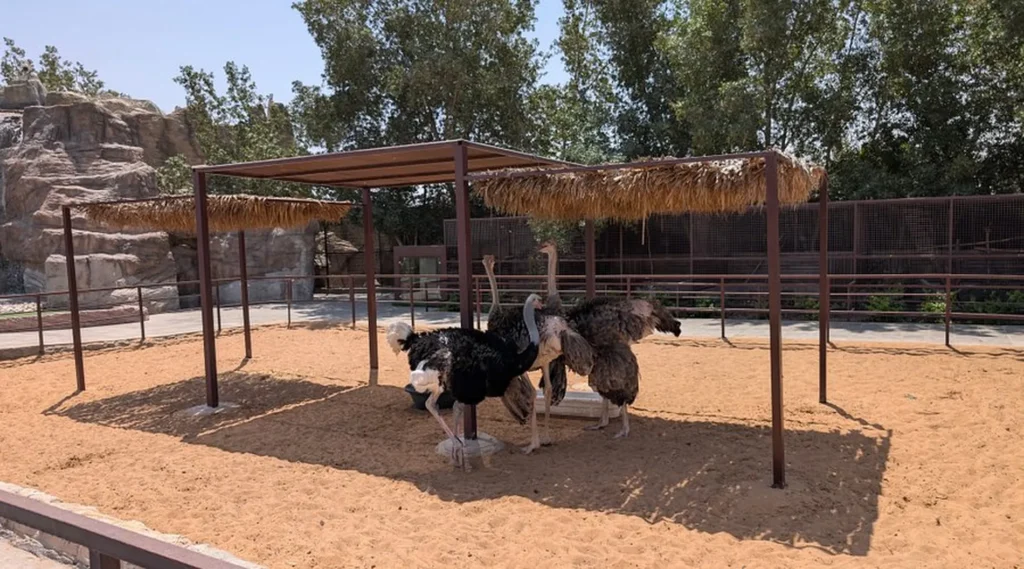
The Zoo Wildlife Park is a family-friendly animal park in Umm Al Quwain that is especially popular with travelers visiting with children. Rather than being a sprawling metropolitan zoo designed for an entire day of exploration, it offers a more compact and accessible experience – ideal for a relaxed stroll, close encounters with animals, and a short family outing. For those wondering where to go in Umm Al Quwain with children, the park serves as an excellent complement to Dreamland Aqua Park, the emirate’s beaches, and leisurely walks along the waterfront.
One of The Zoo Wildlife Park’s greatest advantages is the simplicity of the experience. A visit can comfortably fit into 1.5 to 3 hours, allowing families to enjoy the attraction without the fatigue of long transfers or an overly packed itinerary. It is particularly well suited to travelers looking to diversify their Umm Al Quwain holiday, perhaps spending the morning by the sea, the afternoon among the animals, and the evening unwinding at Mangrove Beach or in a waterfront café.
The Zoo Wildlife Park is best viewed as a family-oriented stop on an Umm Al Quwain itinerary – a place where children are naturally engaged, while adults appreciate the convenience of a visit that requires only a modest time commitment.
Location and How to Get There
The Zoo Wildlife Park is located within the Emirate of Umm Al Quwain, away from its busiest tourist areas. The easiest way to reach the park is by car or taxi. If you plan to explore several attractions in Umm Al Quwain in a single day, renting a vehicle is the most practical option. Distances between points of interest are relatively short, while public transportation is not as extensive as it is in Dubai.
Travel times are generally as follows:
| Departure Point | Approximate Travel Time | Recommended Option | Estimated Cost |
|---|---|---|---|
| Central Umm Al Quwain | 15-25 minutes | Car or taxi | Approximately $8-20 |
| Dubai | 60-80 minutes | Rental car or taxi | Taxi approximately $80-130 one way |
| Sharjah | 45-60 minutes | Car or taxi | Taxi approximately $50-85 |
| Ajman | 35-50 minutes | Car or taxi | Taxi approximately $35-65 |
If you are traveling from Dubai and considering public transportation, it is advisable to review current routes and transfer options through the Dubai Roads and Transport Authority in advance. General travel guidance for visitors to the UAE can be found on the official UAE Government Portal, while local information related to Umm Al Quwain is available through the emirate’s government website.
Practical tip: If you are visiting with children, plan your trip for the morning or later in the afternoon. Temperatures tend to be more comfortable during these periods, particularly in the warmer months.
What to See
The Zoo Wildlife Park is designed primarily with families in mind. It offers an opportunity to observe a variety of animals, enjoy time outdoors, and add diversity to your itinerary through the emirate. The park is especially appealing to younger children, who often find smaller wildlife attractions easier to navigate and more engaging than large-scale zoos with extensive walking routes and numerous exhibition halls.
Highlights of the park may include:
- Animal enclosures – the main focus of the visitor experience.
- Birds and smaller animals – often among the favorites of younger guests, who enjoy observing them up close.
- Family-friendly walking areas – ideal for a relaxed pace of exploration.
- Photo opportunities – provided that park guidelines are respected and flash photography is avoided near animals.
- Interactive experiences – availability may vary and should be confirmed in advance.
- Rest areas – particularly valuable for families traveling with young children.
The Zoo Wildlife Park fits naturally into a broader family itinerary. One possible schedule might include Dreamland Aqua Park in the morning, a visit to the zoo after lunch, followed by an evening at the beach or a relaxed family dinner. This approach works particularly well for travelers planning a family holiday in Umm Al Quwain who prefer not to overwhelm younger children with lengthy historical visits or extensive sightseeing.
Important: Rules regarding interaction with animals, feeding opportunities, and photography should always be confirmed on-site. Visitors should never feed animals with outside food, tap on enclosures, attempt to frighten the animals, or enter restricted areas.
To ensure a comfortable visit, it is wise to prepare in advance. Even during the winter months, the UAE sun can be intense, so visitors should bring water, hats, sunscreen, comfortable footwear, and lightweight clothing that provides adequate coverage. Families traveling with small children may also find it useful to pack snacks, wet wipes, and a spare change of clothes.
The Zoo Wildlife Park can serve as a welcome “soft pause” between more demanding activities. After museums, forts, or extended drives, children often benefit from an experience that is engaging, familiar, and emotionally rewarding – and animal encounters tend to provide exactly that.
Admission Fees and Opening Hours
Admission prices at The Zoo Wildlife Park may vary depending on the season, visitors’ ages, public holidays, and any additional services offered. Before planning your visit, it is advisable to verify current ticket prices and operating hours through the park’s official channels or by contacting the venue directly.
| Expense | Estimated Cost |
|---|---|
| Adult admission ticket | Approximately $10-20 |
| Child admission ticket | Approximately $8-15 |
| Younger children | Sometimes free or offered at reduced rates |
| Drinks and light refreshments | Around $5-15 per person |
| Taxi from central Umm Al Quwain | Approximately $8-20 |
| Taxi from Dubai (one way) | Approximately $80-130 |
| One-day car rental | From $25-45, excluding fuel and insurance |
Most visitors find that 1.5 to 3 hours is sufficient to enjoy the park. Families with younger children should avoid scheduling an overly demanding program afterward, as outdoor activities in warm weather can become more tiring than expected.
Opening hours should always be checked before visiting. Family attractions across the UAE may adjust their schedules based on the season, day of the week, public holidays, school vacations, or the holy month of Ramadan. During the hottest months of the year, certain activities may also be limited during peak daytime temperatures.
The most pleasant period to visit is from November through March, when temperatures are ideal for outdoor activities. April, May, September, and October remain suitable, although early mornings and late afternoons are generally preferable. During the summer months – particularly from June to August – midday visits may be uncomfortable due to the intense heat.
The ideal time to visit is shortly after opening in the morning or closer to sunset. These periods tend to be more comfortable for children, adults, and the animals themselves.
Before your visit, keep the following recommendations in mind:
- Confirm current opening hours and ticket prices in advance.
- Do not feed animals without staff permission.
- Respect barriers and maintain an appropriate distance from enclosures.
- Supervise children at all times throughout the park.
- Wear comfortable, closed-toe footwear.
- Bring drinking water and adequate sun protection.
- Avoid using flash photography around animals.
- Follow local etiquette and maintain considerate public behavior.
The Zoo Wildlife Park is a practical family attraction and one of the more convenient options for traveling with children in the UAE outside the country’s larger tourist hubs. Within any list of the Top 10 places to visit in Umm Al Quwain, the park fulfills a clear role: it adds a lighthearted, child-friendly, and emotionally engaging element to the journey. For families seeking a few unhurried hours together while exploring some of the best places in Umm Al Quwain, The Zoo Wildlife Park is certainly worth including in the itinerary.
Conclusion
Umm Al Quwain is the perfect emirate for those who want to experience a different side of the UAE – one free from the usual rush, heavy traffic, and constant tourist crowds. Here, it’s easy to combine the beaches of Umm Al Quwain, peaceful walks through mangrove landscapes, and family-friendly attractions such as Dreamland Aqua Park and The Zoo Wildlife Park with a deeper exploration of the emirate’s heritage through Umm Al Quwain Fort, the National Museum, and the archaeological site of Ed-Dur. Umm Al Quwain does not seek to impress through grandeur or spectacle. Instead, its appeal lies elsewhere: in its slower pace of life, close connection to nature, maritime character, and the opportunity to spend a day in a way that leaves you with a genuine sense of rest and renewal.
If you are considering not only a visit but also purchasing property in Umm Al Quwain, feel free to get in touch with us. We will take the time to understand your goals, budget, and personal preferences before selecting several up-to-date property options for you to compare. There are no exaggerated promises – just practical guidance to help you navigate the local market, understand the different areas, evaluate pricing, and gain clarity on the buying process, so that you can make your decision with confidence and based on reliable information.
 Real estate in Georgia
 Real estate in Cyprus
 Real estate in Montenegro
 Real estate in Bali
 Real estate in Thailand
 Real estate in Spain
 Real estate in Saudi Arabia
 Real estate in Turkey
 Real estate in Zanzibar
 +971 50 108 6910
 hello@baytique-uae.com
 UAE, Dubai, Dubai Hills Estate, Park Heights Square 1


 Get catalogue of TOP-7 objects