
 +971 52 110 0777


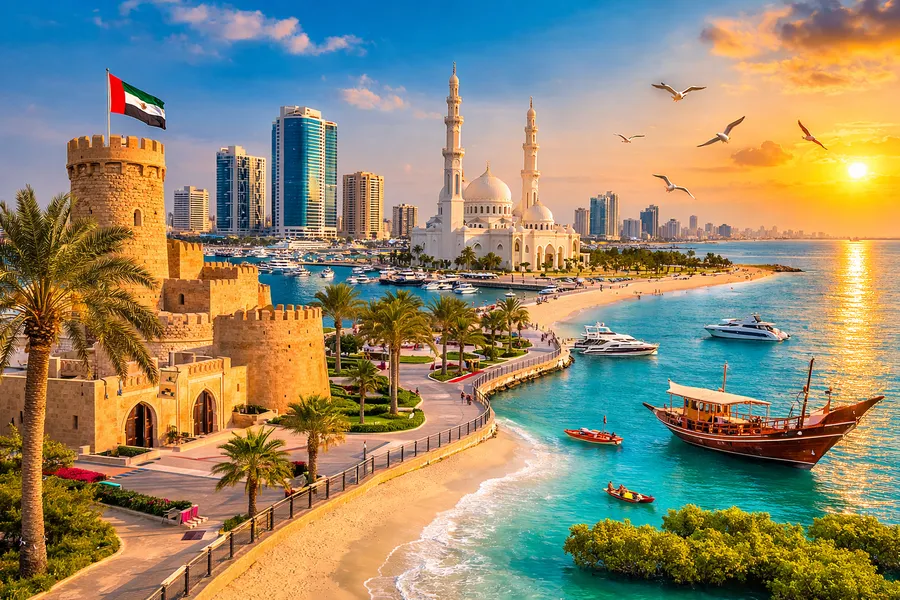

Ajman may be the smallest emirate in the UAE, but when it comes to comfort for everyday living and short getaways, it often exceeds expectations. Here, the sea, long waterfront promenades, a historic town center, family-friendly infrastructure, natural landscapes, and a calmer pace of life all converge in one place—qualities that are often harder to find in the neighboring megacities.
If you are exploring attractions in Ajman not only as a tourist but also as a potential resident, it helps to look at the city from a broader perspective. Consider the waterfront promenades and beaches for daily walks, museums and heritage sites that shape the identity of local neighborhoods, and parks and mangrove lagoons that offer peaceful weekend escapes. In this sense, Ajman attractions represent more than sightseeing—they reflect a lifestyle and highlight the qualities that make certain areas appealing places to live.
Residential complexes in UAE


 Wadi Al Safa 5 (Dubai)
 from 43м²


Another key advantage is Ajman’s proximity to Dubai and Sharjah, which allows residents to strike a balance: working or meeting in the region’s major business hubs while enjoying a quieter coastal lifestyle at home.
Below is a structured “first orientation” guide to the main places to visit in Ajman and things to do in Ajman, designed to help you understand how Ajman UAE attractions contribute to a comfortable and well-rounded living environment.
Key idea: You are not choosing just an apartment—you are choosing an environment: the sea, promenades, parks, and cultural landmarks within walking distance.
For reference: Basic information about the emirate can be found on the official UAE government portal in the Ajman section of u.ae (UAE Government). A curated overview of Ajman tourist attractions is available on Visit Ajman, the emirate’s official tourism platform.
Location and How to Get There
Ajman lies just north of Dubai and directly borders Sharjah—together forming part of a continuous urban corridor, though Ajman itself maintains a noticeably calmer pace.
From Dubai (DXB Airport, Deira, or Business Bay):
- Taxi: approximately 30–50 minutes, depending on traffic, typically around $25–$40.
- Intercity bus (RTA routes such as E400 to Ajman Bus Station): about 45–70 minutes, with tickets usually costing $3–$5.
From Sharjah (city center or Al Majaz):
- Taxi: roughly 15–25 minutes, costing about $8–$15.
- Bus: typically 20–40 minutes, with fares around $2–$3.
Getting around Ajman:
Many areas—particularly the waterfront and central districts—are easy to explore on foot thanks to continuous promenades and compact urban planning. Short trips within the emirate are usually made by taxi or ride-hailing services. Suggested routes and ideas for Ajman sightseeing can also be found on the Visit Ajman tourism portal.
Important: Ajman’s close proximity to Dubai and Sharjah makes it a practical base for commuting to work or university while still enjoying coastal living by the sea.
1. Ajman Museum

Ajman Museum, housed in a historic fort, is one of the emirate’s most significant cultural landmarks and a natural starting point for anyone exploring Ajman attractions. The exhibitions within the fortress walls provide valuable context for understanding the region’s past: how a trading port developed along the Persian Gulf, how fishermen and pearl divers lived, and what daily life looked like before the modern construction boom transformed the coastline.
According to the official tourism portal, Visit Ajman — Ajman Museum, the museum brings together a collection of artifacts, life-size dioramas, and reconstructed interiors that depict traditional Emirati life. The fort itself is part of the experience—its architecture serves as a living exhibit, allowing visitors to step directly into the historical environment of the emirate.
For those considering living in Ajman, UAE, the museum is more than simply another stop on a list of things to do in Ajman. It offers insight into the cultural identity of the area and helps explain how the city evolved into what it is today.
Important: Ajman Museum helps explain why the sea, traditional crafts, and maritime trade are so deeply embedded in the emirate’s DNA. Understanding this context highlights the value of Ajman’s historic center not only as a destination for Ajman sightseeing, but also as a meaningful environment for everyday living.
Location and How to Get There
The museum is located inside the historic fort in the very heart of the city, surrounded by the older urban fabric of Ajman and within walking distance of the Corniche. As a reference point, it sits in central Ajman just a few blocks from the waterfront and key administrative buildings.
From Dubai (DXB Airport, Deira, or Business Bay):
- Taxi: approximately 30–50 minutes, costing roughly $25–$40 depending on traffic.
- Public transport: inter-emirate RTA buses to Ajman Bus Station, followed by a short 5–10 minute taxi ride to the museum.
From Sharjah (Al Majaz or city center):
- Taxi: about 15–25 minutes, typically $8–$15.
- Bus: around 20–40 minutes, with fares approximately $2–$3.
Parking:
Street parking and municipal parking areas are available around the historic district, with standard city parking fees.
Location advantage: The museum is only about 10–15 minutes on foot from Ajman Corniche, making it easy to combine both stops in a single route—museum exploration followed by a waterfront walk.
What to See
Inside, visitors will find a carefully curated narrative of the emirate’s past, with a strong emphasis on maritime heritage, commerce, and everyday life. Key highlights include:
- Historic fort architecture: coral-stone walls, heavy wooden doors, a central courtyard, and traditional defensive elements.
- Recreations of traditional interiors: a merchant’s room, women’s quarters, kitchen spaces, children’s games, and displays illustrating wedding customs.
- Maritime heritage: pearl diving tools, models of traditional boats, fishermen’s equipment, and maps showing historical Gulf trade routes.
- Traditional crafts and trade: palm-frond weaving, textiles, pottery, and everyday household objects.
- Archaeology and historical documents: early regional artifacts, maps, correspondence, and archival photographs.
- Immersive dioramas: scenes depicting market life, harbor activity, and family traditions—particularly engaging for families visiting with children.
Tip: Begin your visit by exploring the outer perimeter and courtyard of the fort. This helps establish a chronological sense of the site before moving inside to the galleries dedicated to maritime history and trade.
Admission Fees and Opening Hours
Ticket prices and opening hours may vary depending on the season, so it is advisable to check official sources before visiting—particularly the emirate section on u.ae — Government of the UAE (Ajman) and the museum page on Visit Ajman — Ajman Museum.
- Admission: typically around $1–$3 for adults, with discounted or free entry for children and group visits according to museum policies.
- Opening hours: generally open daily from morning until evening; on Fridays, opening usually begins in the afternoon. The best time to visit is early in the morning, when the courtyard is quieter and the natural light is softer.
- Additional activities: occasional cultural events and exhibitions are held on-site; some may be free, while others may require a small fee.
Note: Several exhibits are reconstructed in situ, so be sure to allow time to explore the courtyard and architectural details of the fort itself. A relaxed visit typically takes 60–90 minutes.
2. Ajman Corniche
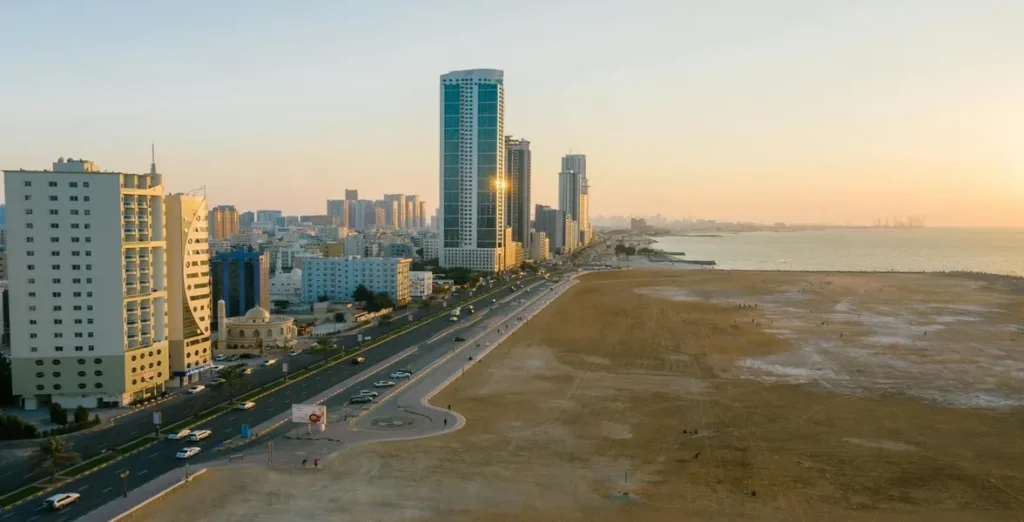
Ajman Corniche is one of the emirate’s defining Ajman attractions and a true showcase of everyday life in the city. This long waterfront promenade stretches along the coastline, combining pedestrian avenues, beach access, cafés, and sweeping views of the Persian Gulf. According to the official tourism portal Visit Ajman — Corniche, the Corniche consistently ranks among the top places to visit in Ajman for walking, sports, and family leisure.
For those choosing where to live, the Corniche is valuable not only as an Ajman tourist attraction, but also as part of the city’s daily infrastructure. It is a place where residents jog in the morning, watch sunsets over the Gulf, enjoy coffee by the water, and spend relaxed evenings with their families. The location is further enhanced by Ajman’s proximity to Sharjah and Dubai: while the emirate maintains a calm and residential atmosphere, it remains closely connected to the wider metropolitan area—a relationship also highlighted in the UAE government’s official overview of the emirate on u.ae — Ajman.
Key point: The Corniche is a free, 24/7 open waterfront promenade with steady foot traffic from residents and visitors, which increases the appeal of nearby coastal neighborhoods for long-term rentals and everyday living.
Location and How to Get There
The promenade runs along Ajman’s shoreline, forming a continuous public waterfront space that stretches from the central beaches to districts lined with cafés and family-friendly leisure areas.
From Dubai (Deira, Business Bay, or DXB Airport):
- Taxi: approximately 30–50 minutes, typically $25–$40 depending on traffic.
- Public transport: inter-emirate buses to Ajman Bus Station, followed by a 5–10 minute taxi ride to the waterfront.
From Sharjah (Al Majaz or city center):
- Taxi: about 15–25 minutes, costing around $8–$15.
- Bus: roughly 20–40 minutes, with tickets typically $2–$3.
Parking:
Municipal parking areas are available along the Corniche, with paid zones operating under standard city parking rates.
Accessibility:
The promenade features wide sidewalks, ramps for accessibility, and evening lighting for comfortable nighttime walks. Updated directions, events, and visitor information can be found on Visit Ajman.
Tip: The best times to visit are early morning and sunset, when temperatures are more comfortable and the waterfront becomes especially photogenic.
What to See
The Corniche is not a single landmark but rather a linear stage for everyday Ajman sightseeing. Over several kilometers, visitors encounter a range of experiences along the waterfront:
- Wide pedestrian promenades and jogging routes running parallel to the sea.
- Public beach areas with direct access to the Gulf and uninterrupted coastal views.
- Cafés and bistros offering waterside breakfasts, evening desserts, and tea by the sea.
- Family-friendly spaces, including playgrounds and landscaped green areas for relaxed walks.
- A lively evening atmosphere, with soft lighting, street activity, and a generally safe environment for nighttime strolls.
Typical ways to experience the Corniche include:
- Morning activity: a 3–5 km jog followed by coffee overlooking the water.
- Midday relaxation: a shaded walk under palm trees and a short beach break.
- Evening outings: sunset photography, dinner at a seaside café, and a leisurely stroll along the promenade.
Tip: Combine a walk along the Corniche with a visit to Ajman Museum—just 10–15 minutes away on foot or by taxi—for a balanced route that blends culture and seaside views.
Costs and Opening Hours
The Corniche is a public urban space, open to everyone.
- Access: free, open 24/7.
- Beach areas: generally free; umbrellas and sunbeds (where provided by private operators) typically cost $5–$15 per day.
- Parking: municipal rates typically range from $1–$3 per hour, depending on the zone.
- Rentals: bicycles or scooters may be available through private providers along the promenade, usually around $5–$10 per hour.
- Cafés and bistros: drinks usually range from $3–$6, with light meals around $8–$15.
- Visitor flow: weekday mornings are typically quieter, while weekends (Saturday–Sunday) attract more families and evening walkers.
- Public guidelines: behavior and public etiquette follow UAE national standards; general information about regulations and the emirate’s profile can be found on u.ae — Ajman.
Reminder: The Corniche is one of the best free things to do in Ajman—offering the sea, scenic walks, and family-friendly activities without mandatory spending, which helps reduce daily living costs and enhances the long-term appeal of the surrounding neighborhoods for both residents and investors.
3. Al Zorah Nature Reserve

Al Zorah Nature Reserve is the emirate’s premier natural destination and one of the most distinctive Ajman nature attractions. Mangrove forests, tranquil lagoons, sandy spits, and dozens of bird species—including flamingos—create a rare contrast to the urban landscapes typically associated with the UAE. According to the official tourism portal Visit Ajman — Al Zorah Nature Reserve, the reserve is ideal for quiet walks, kayaking, and birdwatching. The ecological importance of mangrove ecosystems is also emphasized in federal environmental resources from the UAE Ministry of Climate Change and Environment, such as MOCCAE — Nature & Biodiversity.
For those considering living in Ajman, UAE, Al Zorah represents more than another item on the list of things to do in Ajman. It serves as a clear indicator of a slower, nature-oriented lifestyle by the water—an increasingly valued quality in modern coastal cities.
Key idea: Al Zorah offers a true “peaceful escape” on the shoreline, where waterfront landscapes, mangrove ecosystems, and quiet surroundings define the foundation of Ajman’s emerging eco-lifestyle.
Location and How to Get There
The reserve lies along Ajman’s northwestern coastline, in the Al Zorah district, approximately 10–20 minutes from the city center and the Corniche.
From Dubai (Deira, Business Bay, or DXB Airport):
- Taxi: about 35–55 minutes, costing roughly $25–$45 depending on traffic.
- Public transport: inter-emirate buses to Ajman Bus Station, followed by a 10–15 minute taxi ride.
From Sharjah (Al Majaz or city center):
- Taxi: approximately 20–30 minutes, typically $10–$18.
- Bus: around 25–45 minutes for $2–$3, then a short taxi ride to the reserve.
Navigation:
Look for directions to Al Zorah, with signage pointing toward the Nature Reserve and nearby Marina. Updated navigation details, visitor information, and event listings can be found on Visit Ajman.
Parking:
Both municipal and private parking areas are available within the district, typically costing $1–$3 per hour.
Best time to visit: Early morning or sunset—when temperatures are cooler, bird activity is higher, and the light across the lagoons is particularly beautiful.
What to See
Al Zorah unfolds as a natural landscape with several layers of observation and recreation:
- Mangrove forests and lagoons: dense mangrove groves and calm waterways where herons, waders, and flamingos are often visible.
- Birdwatching areas: observation points and natural hideouts where migrating species can be seen, particularly during peak migration seasons.
- Kayaking and paddleboarding routes: gentle waterways winding through the mangroves, accessible even for beginners.
- Walking and photography: trails along the water, sandy spits, and panoramic views combining lush mangroves with turquoise lagoons.
- Nearby beach areas: quiet spots suitable for relaxation, picnics (in designated areas), and sunset views.
Typical visit scenarios include:
- “Morning kayak and coffee”: 1.5–2 hours on the water followed by a short shoreline walk.
- “Relaxed birdwatching session”: 60–90 minutes near observation points with binoculars and a camera.
- “Family eco-day”: short nature trails, photography opportunities, and a picnic by the water in permitted areas.
Tip: High tide makes kayaking through the narrow mangrove channels easier, while sunset transforms the lagoons into one of the most photogenic landscapes in Ajman.
Costs and Opening Hours
Access to the natural area itself is generally free, while activities organized by private operators—such as tours or equipment rentals—are paid services. Up-to-date details can be found on Visit Ajman — Al Zorah Nature Reserve, along with general emirate information on u.ae — Ajman.
- Shoreline walks: free access, though visits are recommended during daylight hours.
- Kayaking or paddleboard tours: typically $30–$60 per person for a 1.5–2 hour session, depending on the operator, group size, and time of day.
- Private eco-tours or guided boat trips: roughly $25–$80 per person, usually including equipment and safety briefing.
- Parking: generally $1–$3 per hour in nearby municipal or private lots.
- Visiting hours: the natural area is accessible daily, with the best experience between sunrise and sunset. Private tours usually operate on scheduled departures and require advance booking.
- Safety and etiquette: modest clothing, respect for wildlife, and strict avoidance of litter or noise are expected. Mangroves are a protected ecosystem, as highlighted in environmental guidance from MOCCAE on biodiversity protection.
Reminder: Al Zorah is one of the best examples of Ajman UAE attractions where nature and waterfront living come together to create a premium yet quietly relaxed lifestyle environment.
4. Ajman Beach
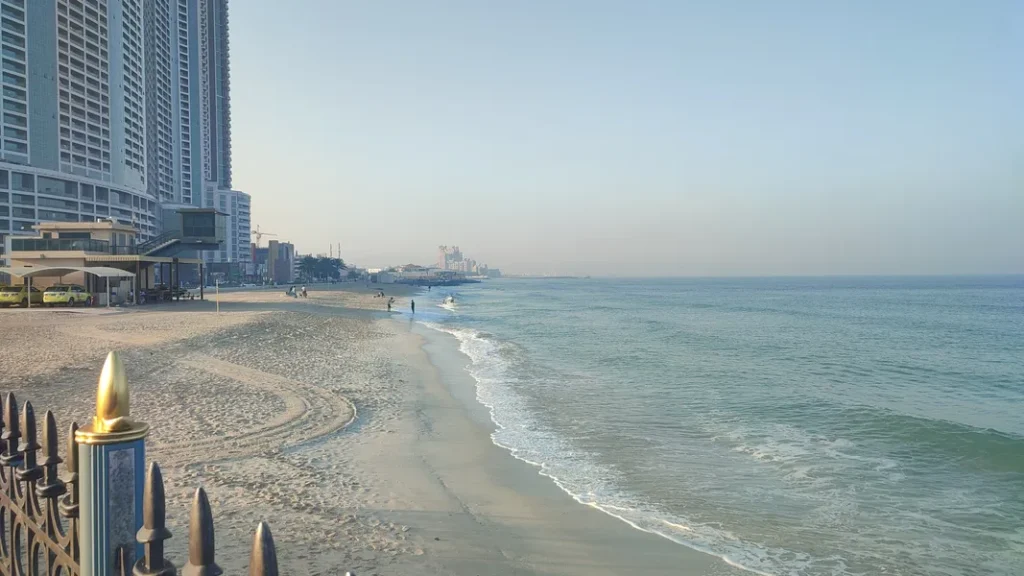
Ajman Beach is one of the emirate’s defining Ajman attractions and a signature element of its coastal lifestyle. A long stretch of sandy shoreline with direct access to the Persian Gulf, gentle sunsets, and a relaxed atmosphere free from big-city bustle makes it one of the most appealing places to unwind in the emirate. On the official tourism portal Visit Ajman, the beaches are consistently highlighted among the main places to visit in Ajman for seaside walks, family outings, and everyday leisure. Additional context about the emirate’s geography and its close proximity to Dubai and Sharjah is confirmed by the federal portal u.ae — Ajman.
Key point: Ajman Beach forms the open and accessible front line of the emirate’s waterfront lifestyle—a place where the sea becomes part of everyday life, from morning runs and family walks to evening swims.
Location and How to Get There
The beach stretches along the city’s coastal edge and connects naturally with Ajman Corniche, together forming a continuous public waterfront.
From Dubai (Deira, Business Bay, or DXB Airport):
- Taxi: about 30–50 minutes, typically $25–$40.
- Public transport: inter-emirate buses to Ajman Bus Station, followed by a 5–10 minute taxi ride.
From Sharjah (Al Majaz or the city center):
- Taxi: roughly 15–25 minutes, costing around $8–$15.
- Bus: about 20–40 minutes, with fares around $2–$3, followed by a short taxi ride.
Parking:
Municipal parking areas are available along the waterfront, with city parking rates starting from approximately $1–$3 per hour.
Accessibility:
The beach and promenade areas include pedestrian pathways, ramps, and evening lighting. Updated tourist information and directions are available on Visit Ajman.
Best time to visit: early morning or sunset, when temperatures are more comfortable, the light is softer, and road traffic is lighter.
What to See
Ajman Beach represents the classic seaside experience of Ajman sightseeing—a place for simple, everyday enjoyment of the waterfront.
Highlights include:
- A sandy shoreline with a gentle entry into the water, making it particularly suitable for families with children.
- Seaside promenades that run parallel to parts of the Corniche.
- Quiet relaxation areas and informal picnic spots (in designated zones).
- Sunset views over the Gulf, as well as peaceful early-morning sunrises.
- Cafés and bistros by the water, ideal for post-run coffee, a relaxed breakfast, or a light dinner.
- Water activities—depending on private operators in the area—including paddleboards, kayaks, and beach equipment rentals.
Typical ways to enjoy the beach include:
- “Morning by the sea”: a 3–5 km jog along the waterfront followed by a refreshing swim.
- “Family weekend outing”: a walk along the shore, sand play for children, and a café stop for snacks.
- “Sunset hour”: barefoot walks along the waterline and photographs with the open horizon.
Note: Ajman’s beaches are noticeably calmer than those in neighboring megacities—a major advantage for families and anyone seeking a slower, more relaxed daily rhythm.
Costs and Opening Hours
The beaches are public urban spaces, while certain amenities are provided by private operators. Updated information on facilities and events can be found on Visit Ajman, while general background on the emirate is available on u.ae — Ajman.
- Beach access: free, with walks possible at any time of day; swimming is recommended during daylight hours.
- Facilities (where available through private operators):
- Sunbeds and umbrellas: $5–$15 per day.
- Paddleboard or kayak rentals: $20–$40 per hour.
- Lockers or showers (where available): $2–$5.
- Parking: municipal parking from $1–$3 per hour.
- Cafés and bistros: coffee or drinks typically $3–$6, light meals $8–$15.
- Best visiting hours: sunrise to morning and sunset to early evening; weekends tend to be busier.
Etiquette and safety guidelines:
- Swimwear is appropriate on the beach, but modest dress is recommended when entering public areas nearby.
- Follow lifeguard instructions and warning signs, and do not swim beyond designated buoys.
- Respect the environment: avoid littering and observe boundaries around private areas.
Planning tip: Many activities at Ajman Beach fall under the category of “free things to do in Ajman.” The combination of accessible seaside recreation and minimal daily expenses significantly enhances the appeal of nearby coastal neighborhoods for both residents and rental investors.
5. Ajman Marina
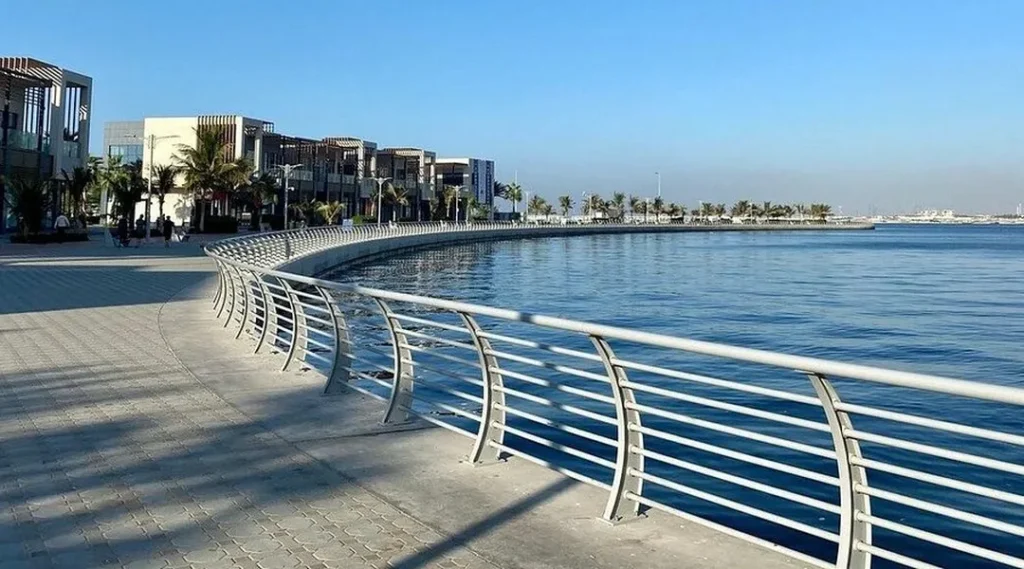
Ajman Marina is a contemporary waterfront district with a promenade, views of moored yachts, and a relaxed evening atmosphere that complements the more traditional Ajman attractions. This relatively new public space is designed in a modern waterfront lifestyle format: waterside walks, cafés, cycling paths, sunset photo spots, and occasional leisure events. The official tourism portal of the emirate, Visit Ajman, highlights the marina among the city’s appealing coastal areas for recreation and seaside strolls. From the perspective of everyday life and the evolving Ajman lifestyle, the Marina demonstrates that the emirate offers not only beaches and a historic center but also a comfortable and modern urban environment.
Key point: Ajman Marina is all about waterfront experiences, safe evening walks, and the convenience of living by the water—a setting that strengthens the appeal of nearby coastal neighborhoods for both residents and visitors.
Location and How to Get There
Ajman Marina is situated along the city’s shoreline and is conveniently connected—either on foot or by a short drive—to Ajman Corniche and the central beach areas.
From Dubai (Deira, Business Bay, or DXB Airport):
- Taxi: approximately 30–50 minutes, costing about $25–$40.
- Public transport: inter-emirate buses to Ajman Bus Station, followed by a 5–10 minute taxi ride.
From Sharjah (Al Majaz or the city center):
- Taxi: around 15–25 minutes, typically $8–$15.
- Bus: approximately 20–40 minutes, with fares about $2–$3, followed by a short taxi ride.
Parking:
Municipal parking areas are available along the waterfront, with typical rates of $1–$3 per hour.
Up-to-date information on waterfront locations and events can be found on the official emirate portal Visit Ajman. General background on the emirate itself is available on the federal resource u.ae — Ajman.
Best time to visit: sunset and the early evening, when the light is softer, temperatures are comfortable, and the marina offers particularly photogenic views of the water and yachts.
What to See
Ajman Marina functions as a linear public space centered around waterfront leisure:
- Promenades and cycling paths running along the marina berths.
- Views of the water and yacht moorings, creating classic waterfront scenes.
- Cafés and bistros by the water, ideal for breakfast, post-run coffee, or a relaxed dinner.
- Evening lighting and a calm atmosphere, making it comfortable and safe for nighttime walks.
- Occasional activities from private operators, such as short boat trips or coastal cruises.
- Proximity to Corniche and city beaches, making it easy to combine several waterfront locations in one outing.
Typical ways to experience the marina include:
- “Morning city rhythm”: a run along the promenade followed by coffee with a view.
- “Midday pause”: a leisurely stroll with photographs of the yachts and lagoon.
- “Sunset promenade”: dinner at a waterside café and a relaxed walk along the illuminated docks.
Tip: Combine a visit to Ajman Marina with a walk along Ajman Corniche—a route that blends a modern waterfront setting with the emirate’s classic seaside promenade, appealing to both visitors and residents.
Costs and Opening Hours
The marina is a public urban space, with free general access. Paid services are provided by private operators and individual venues.
- Access: free, open 24/7.
- Parking: municipal parking from $1–$3 per hour.
- Waterfront cafés and bistros:
- Drinks: $3–$6.
- Light meals: $8–$18.
- Boat rides or short cruises (if available through local providers): typically $20–$60 per person for 45–90 minutes.
- Bicycle or scooter rentals (where available): approximately $5–$10 per hour.
- Operating hours for private services: generally from morning until late evening; schedules can vary, so check locally or through announcements on Visit Ajman. General public-space guidelines in the UAE can be found on the federal portal u.ae — Ajman.
Reminder: Ajman Marina is one of the most attractive free things to do in Ajman, offering premium waterfront views at no cost. Visitors pay only for optional services—such as food, rentals, or boat trips—making the marina a convenient destination for everyday leisure and a compelling part of Ajman’s coastal living experience.
6. Dhow Yard
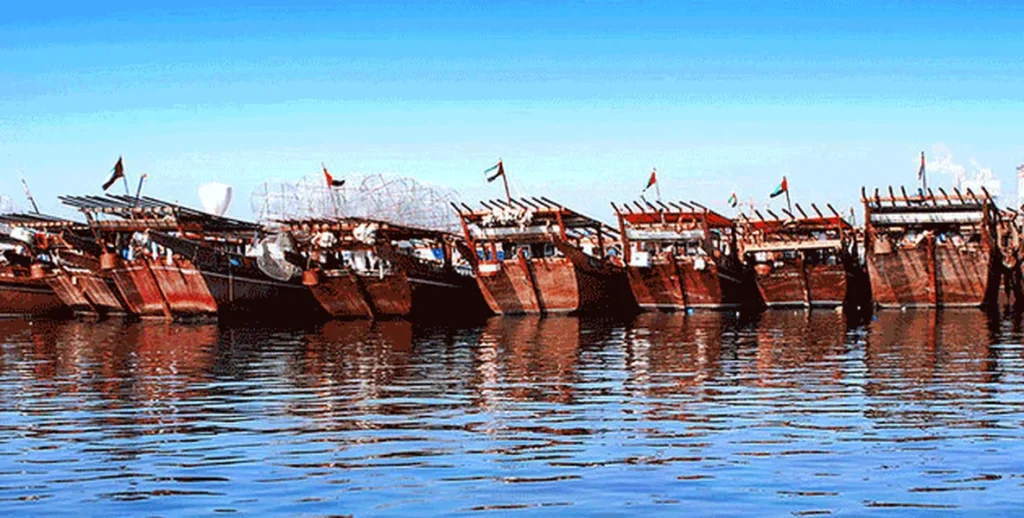
Dhow Yard is one of the most authentic Ajman attractions and a key Ajman cultural landmark, where the tradition of wooden shipbuilding continues to thrive today. Rather than a museum, it is a functioning shipyard where craftsmen assemble traditional wooden dhow boats by hand, using techniques refined over decades. According to the official tourism portal Visit Ajman, the Dhow Yard is listed among the emirate’s most distinctive Ajman tourist places, reflecting the region’s maritime heritage and the historic importance of coastal trade in shaping the emirate’s identity. Additional context about Ajman as a coastal region closely connected to the sea and neighboring metropolitan centers can be found on the federal portal u.ae — Ajman.
Important: Dhow Yard is a living craft, not an exhibit behind glass. Visitors can observe the boat-building process in real time—hearing the rhythm of hammers, smelling fresh timber and resin, and witnessing a rare example of traditional craftsmanship that still survives even in a modern country like the UAE.
Location and How to Get There
The shipyard is located along Ajman’s coastline, not far from the waterfront districts and fishing harbor. This location makes it easy to combine a visit with nearby attractions such as Ajman Corniche or Ajman Marina.
From Dubai (Deira, Business Bay, or DXB Airport):
- Taxi: approximately 30–50 minutes, costing around $25–$40.
- Public transport: inter-emirate buses to Ajman Bus Station, followed by a 10–15 minute taxi ride.
From Sharjah (Al Majaz or the city center):
- Taxi: about 15–25 minutes, typically $8–$15.
- Bus: roughly 20–40 minutes, with fares around $2–$3, followed by a short taxi ride.
Parking:
Street parking and municipal parking areas are available near the harbor zone, generally costing $1–$3 per hour.
Navigation details and further background on the location can be found on the official tourism portal Visit Ajman.
Tip: Plan your visit for weekday mornings, when you are most likely to see craftsmen actively working on the boats.
What to See
Dhow Yard reveals Ajman’s maritime heritage from the practical, working side of the city:
- Dhow construction in progress: the assembly of the wooden frame, hull planking, timber selection—including teak elements—and the use of traditional fastening techniques.
- Tools and materials: hand saws, hammers, wooden wedges, natural resins, and modern composite materials—demonstrating a fascinating dialogue between tradition and practicality.
- Stages of construction: from marking the keel to final hull finishing, sometimes including decorative painting and the installation of masts and rigging.
- A working maritime environment: views of the harbor, active docks, and boats resting on slipways, creating a vivid context among Ajman landmarks.
- Observation etiquette: photography and video are usually acceptable, but it is polite to ask craftsmen for permission. Visitors should not enter active work areas without an invitation.
Possible visit scenarios include:
- “Short overview” (30–45 minutes): walking along the slipways, capturing wide-angle photographs, and briefly observing the construction process.
- “In-depth exploration” (60–90 minutes): focusing on specific stages of boatbuilding, examining tools and materials in detail, and taking close-up photographs.
Important: Dhow Yard is not a theme park. Maintain a respectful distance, avoid interfering with the workflow, and follow basic safety guidelines on site.
Costs and Opening Hours
Dhow Yard is a working open-air shipyard, and there is typically no formal admission fee. Visitors can usually observe the area respectfully while craftsmen carry out their work. Updated details on visiting conditions and events can be found on Visit Ajman, while general information about the emirate and public guidelines is available on u.ae — Ajman.
- Access: usually free for brief external visits during daylight hours.
- Private tours or guided visits: when available through local operators, typically $10–$25 per person for 45–60 minutes, depending on group size and language.
- Active working hours: generally weekday mornings and afternoons; during hotter seasons, work may start earlier in the day.
- Parking: municipal zones typically cost $1–$3 per hour.
Safety guidelines:
- Do not climb onto slipways or enter restricted areas without permission.
- Ask for consent before taking close-up portraits of workers.
- Be cautious around tools, equipment, and electrical cables.
Key takeaway: Dhow Yard adds a sense of authentic character to Ajman tourist attractions, highlighting the emirate’s independent identity and enduring connection to the sea—an important element in how its coastal districts are perceived as genuine, lived-in urban neighborhoods rather than purely touristic spaces.
7. Al-Murabbaa Watchtower
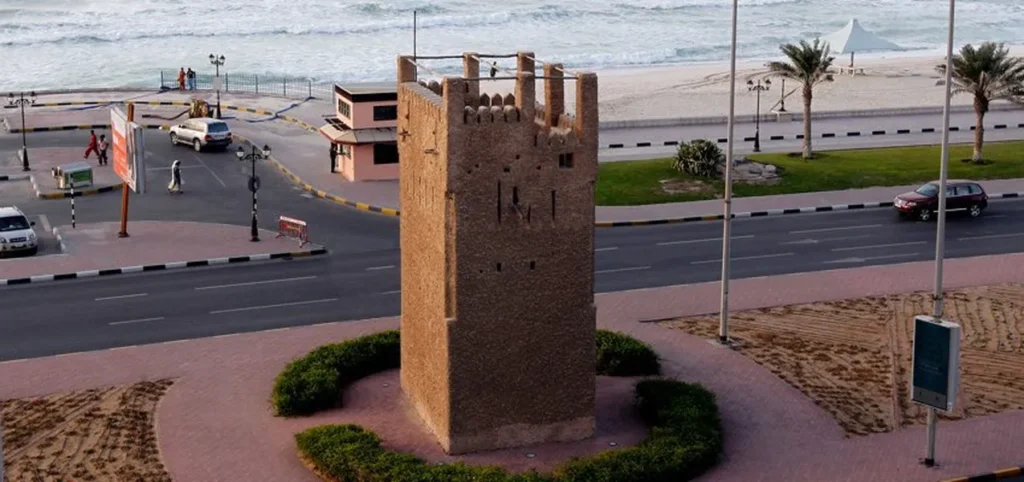
Al-Murabbaa Watchtower is a compact yet iconic guard tower located in the very heart of Ajman. Though modest in scale, it adds an important historical layer to Ajman attractions and Ajman sightseeing, serving as a reminder of the emirate’s coastal defenses, historic trade routes, and the early development of its urban center. According to the official tourism portal Visit Ajman, the tower is listed among the emirate’s key Ajman landmarks, while the federal portal u.ae — Ajman highlights the region as a place where history coexists naturally with modern waterfront promenades and residential neighborhoods. A visit to the tower is best combined with a walk along Ajman Corniche and a stop at Ajman Museum, creating a cohesive route that blends heritage and seaside scenery.
Key idea: Al-Murabbaa is a small but meaningful “beacon of memory” from old Ajman—unassuming in scale yet essential for understanding the city’s character and its maritime past.
Location and How to Get There
The watchtower stands in central Ajman, near the historic district and within walking distance of the Corniche waterfront, making it easy to include in a broader exploration of the city’s Ajman tourist attractions.
From Dubai (Deira, Business Bay, or DXB Airport):
- Taxi: about 30–50 minutes, costing roughly $25–$40.
- Public transport: inter-emirate buses to Ajman Bus Station, followed by a 5–10 minute taxi ride.
From Sharjah (Al Majaz or city center):
- Taxi: approximately 15–25 minutes, typically $8–$15.
- Bus: around 20–40 minutes, with fares about $2–$3, followed by a short taxi ride.
On foot:
- From Ajman Museum: about 10–15 minutes.
- To Ajman Corniche: approximately 10–15 minutes, making it easy to continue the route toward the waterfront.
Parking:
Municipal parking areas are available nearby, typically costing $1–$3 per hour. Maps of coastal districts and visitor directions can be found on Visit Ajman.
Important: Its central location makes the tower a convenient stop during either a daytime exploration or an evening walk, with easy access to nearby cafés and the waterfront promenade.
What to See
Al-Murabbaa Watchtower condenses the defensive and maritime heritage of the city into a single historic structure.
Highlights include:
- Architecture: a square-plan tower built from coral and shell stone, finished with traditional plaster. It features heavy wooden doors, narrow defensive slits, and a crenellated parapet typical of historic Gulf fortifications.
- Architectural details: carefully restored masonry joints, traces of conservation work, and striking contrasts of light and shadow on the façade—particularly attractive during the golden hour for photography.
- Historical context: the tower reflects Ajman’s earlier coastal defenses and its strategic position along historic trade routes, linking Ajman heritage with the city’s maritime identity.
- Surroundings: small pedestrian areas, shaded palm trees, and proximity to the city’s main streets make the site ideal for a brief stop within a larger sightseeing route.
Recommended visiting approach:
- Allow 15–30 minutes for a short visit and photography.
- Visit at sunrise or sunset for the most atmospheric lighting.
- Combine the tower with Ajman Museum and Ajman Corniche for a complete “history + sea” experience.
Tip: A short cultural walk—“Museum → Watchtower → Corniche”—offers an excellent overview of Ajman’s key attractions in just 1.5–2 hours.
Admission and Opening Information
The watchtower is an outdoor historical landmark, typically viewed from the outside. Access to the exterior area is generally unrestricted, while interior access may depend on heritage programs or city events.
- Exterior viewing: free, accessible during daylight hours and when evening lighting is active.
- Guided tours (through local operators): approximately $10–$25 per person for a 45–60 minute cultural walk through the historic center.
- Parking: municipal parking areas from $1–$3 per hour.
- Best visiting time: sunrise or the golden hour before sunset, when the lighting is soft and temperatures are comfortable.
Updates on visiting conditions and cultural programs are available on Visit Ajman, while broader background about the emirate can be found on u.ae — Ajman.
Reminder: Although Al-Murabbaa Watchtower is a compact and understated site, it completes the broader picture of Ajman attractions, adding a vertical historical dimension alongside the modern waterfront and residential districts that define the city today.
8. Sheikh Zayed Mosque Ajman
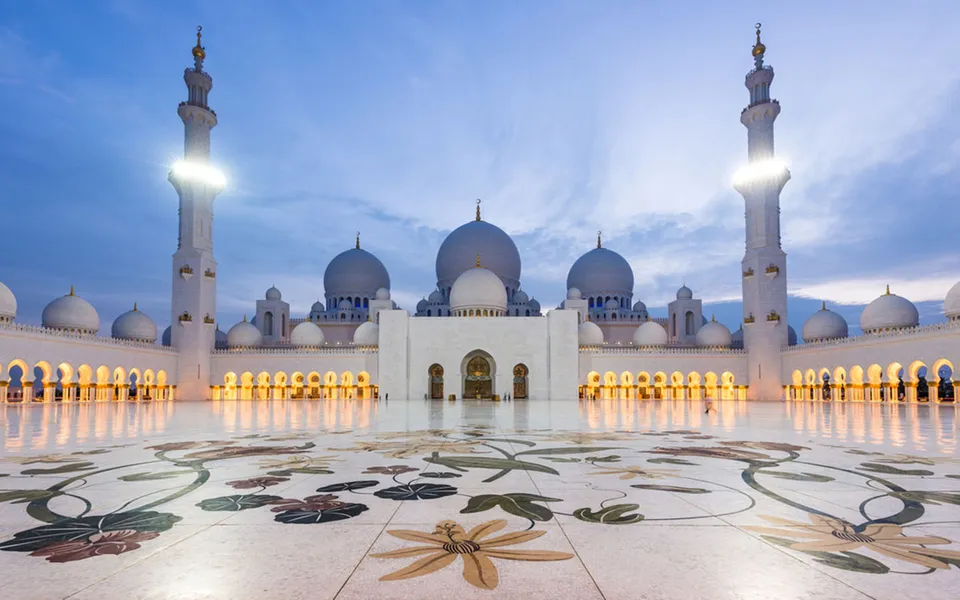
Sheikh Zayed Mosque Ajman is one of the emirate’s most recognizable Ajman attractions and an important landmark among Ajman landmarks. Its pristine white domes, slender minarets, and elegant arcades create a calm and harmonious silhouette on the skyline, highlighting the cultural identity of the emirate. Official tourism guides regularly include the mosque among the key Ajman tourist attractions, presenting it as a place suited for thoughtful exploration and quiet walks around the complex. Consolidated information about the site can be found on the tourism portal Visit Ajman and in the federal overview of the emirate on u.ae — Ajman.
Important: The mosque is an active place of worship, not a museum. Visits are therefore governed by prayer schedules and respectful behavioral guidelines.
Location and How to Get There
The mosque is located within Ajman’s urban area and is conveniently connected to both the Corniche waterfront and the city center.
From Dubai (Deira, Business Bay, or DXB Airport):
- Taxi: approximately 30–50 minutes, typically $25–$40.
- Public transport: inter-emirate buses to Ajman Bus Station, followed by a 10–15 minute taxi ride.
From Sharjah (Al Majaz or city center):
- Taxi: around 15–25 minutes, costing $8–$15.
- Bus: approximately 20–40 minutes, with fares about $2–$3, followed by a short taxi ride.
From Ajman Corniche or the city center:
- Taxi: about 10–15 minutes, typically $4–$8.
Parking:
Municipal and nearby parking areas are available, generally costing $1–$3 per hour.
General information about navigating the city and guidelines for visiting public spaces can be found on the federal portal u.ae — Ajman.
Tip: The best time for photography is early morning or the golden hour before sunset. In the evening, subtle architectural lighting adds a soft glow to the mosque’s white façade.
What to See
Sheikh Zayed Mosque Ajman is appreciated for its refined white architecture and calm visual language.
Highlights include:
- Architectural silhouette: white domes and minarets, balanced symmetry, and clean architectural lines.
- Decorative elements: geometric patterns, Arabic calligraphy, and intricately carved wooden doors.
- Arcades and galleries: shaded passageways and columned corridors that create strong perspectives and photogenic compositions.
- Courtyard and landscaping: quiet spaces designed for contemplative walks, with elegant illumination after dark.
- Interior spaces (if accessible to non-Muslim visitors at the time): carpeted prayer halls, chandeliers, and ornamental details. Shoes must be removed before entering, and a modest dress code must be observed.
Recommendations for visitors:
- Respect the prayer schedule; on Fridays (Jumu’ah prayer) it is advisable for non-worshippers to visit at a different time.
- Photography within the complex is generally permitted if done respectfully and without taking close-up images of people without their consent.
- If interior access is permitted:
- Women should wear a headscarf and clothing that covers shoulders and knees.
- Men should also ensure shoulders and knees are covered.
Reminder: This is a spiritual space. Keep phones on silent mode, speak quietly, and avoid posing for photographs in inappropriate or overly theatrical ways.
Admission and Opening Information
Access to the mosque’s exterior grounds is generally free of charge, while entry to the interior is regulated by the administration and may depend on prayer schedules.
- Admission: free for viewing the exterior. Interior access for non-Muslim visitors may be restricted and depends on current policies.
- Opening times: the mosque remains open for worshippers during prayer times. For cultural visits, quieter hours outside prayer periods are recommended. Fridays typically see higher visitor numbers during the midday Jumu’ah prayer.
- Private cultural tours or guided walks (which may include a stop at the mosque): typically $10–$25 per person for a 60–90 minute route through the city.
- Parking: approximately $1–$3 per hour in nearby municipal or adjacent parking areas.
Up-to-date information about Ajman sightseeing and major attractions can be found on Visit Ajman, while broader background about the emirate and general visitor guidelines are available on u.ae — Ajman.
Key reminder: Follow the mosque’s dress code and behavioral guidelines—modest clothing with covered shoulders and knees, and a headscarf for women when entering interior areas. Respect for these traditions ensures a comfortable visit and demonstrates cultural sensitivity.
9. Al Zorah Golf Club

Al Zorah Golf Club is the flagship leisure destination in Ajman and one of the emirate’s most prestigious Ajman attractions. What sets it apart is its championship-level 18-hole course designed by Nicklaus Design, scenic fairways that run alongside tidal mangrove lagoons, and a distinctive sense of eco-luxury located just ten minutes from the city’s beaches. On the official tourism portal Visit Ajman — Al Zorah Golf Club, the club is highlighted among the top places to visit in Ajman for those seeking active recreation and premium leisure experiences. Meanwhile, the federal resource u.ae — Ajman confirms the emirate’s convenient location relative to Dubai and Sharjah, making it an easily accessible destination.
Key point: Al Zorah Golf Club represents Ajman’s upscale leisure scene—a refined waterfront experience surrounded by mangroves and a comfortable living environment close to the course.
Location and How to Get There
The club is located in the Al Zorah coastal district, adjacent to protected mangrove lagoons and approximately 10–20 minutes from central Ajman and the Corniche.
From Dubai (Deira, Business Bay, or DXB Airport):
- Taxi: approximately 35–55 minutes, costing around $25–$45 depending on traffic.
- Public transport: inter-emirate buses to Ajman Bus Station, followed by a 10–15 minute taxi ride.
From Sharjah (Al Majaz or city center):
- Taxi: about 20–30 minutes, typically $10–$18.
- Bus: roughly 25–45 minutes, costing around $2–$3, followed by a short taxi ride.
Parking:
Spacious parking is available at the clubhouse and is generally free for visitors.
Navigation details and current announcements for coastal districts are available on Visit Ajman.
Best playing times: early morning or twilight rounds at sunset, when temperatures are more comfortable and the soft light creates spectacular views over the mangroves.
What to See
Even for visitors who do not plan to play golf, the location is striking thanks to its natural setting and contemporary clubhouse architecture.
Highlights include:
- The course and mangrove landscape: signature holes run along tidal channels, and during high tide the fairways appear to merge visually with the surrounding lagoons, reinforcing the waterfront atmosphere.
- Panoramic viewpoints and photography spots: the golden hour before sunset is ideal for capturing reflections of mangrove domes and the elegant lines of the fairways.
- The clubhouse: modern architectural design with a terrace overlooking the lagoons and sunset views.
- Practice facilities: a driving range, putting greens, and a dedicated short-game area—perfect for quick practice sessions before a round.
- Pro Shop and services: equipment fitting, accessories, and rental clubs are available.
- Dining options: the clubhouse café or restaurant offers breakfast before a round, as well as lunch or dinner on the terrace with panoramic views.
Recommendations:
- Reserve tee times in advance, especially during peak season.
- Follow golf etiquette and respect the surrounding mangrove ecosystem.
Reminder: Al Zorah is a rare example of a golf course integrated into a protected mangrove ecosystem. Enjoy the scenery while observing environmental guidelines and respecting the natural habitat.
Prices and Opening Hours
Rates and operating hours vary depending on the season and time of day. Current visitor information and event announcements are published on Visit Ajman — Al Zorah Golf Club, while general background about the emirate can be found on u.ae — Ajman.
- Green fee (18 holes): approximately $100–$200, depending on the season and tee time (morning, daytime, or twilight).
- Twilight or seasonal offers: roughly $70–$140.
- Club rental: about $40–$70 per round.
- Golf cart: often included in the green fee; if charged separately, typically $20–$40.
- Driving range or practice sessions: around $10–$25, depending on the number of balls or session length.
- Private lessons with a professional: approximately $80–$150 for 45–60 minutes.
- Clubhouse café or restaurant: drinks $3–$8, main dishes $12–$25.
Opening hours:
The club generally operates daily from sunrise to sunset, although in the summer months there may be scheduled maintenance periods for turf care.
Dress code:
Golf attire is required, typically including a collared shirt, golf shoes or soft spikes, and golf-style shorts or trousers.
Planning tip: Booking tee times in advance and choosing twilight rates can help optimize costs while offering some of the most spectacular views of the mangroves in the soft evening light.
10. Masfout: Ajman Beyond the Coast

Masfout is the mountainous enclave of the Emirate of Ajman, revealing a side of the region far removed from the shoreline. Here you’ll find dry wadi beds, rocky hills, a hilltop fortress, and unhurried walks through pockets of greenery and oasis landscapes. It offers a striking contrast to the coastal atmosphere of Ajman Beach and Ajman Corniche—less noise, more open space, and a slower pace that makes it ideal for a day trip or family picnic.
The federal portal u.ae — Ajman provides an overview of Masfout as part of the emirate and outlines its historical context, while practical visitor guidance and suggested routes are available on the official tourism website Visit Ajman — Masfout.
Key idea: Masfout highlights the natural diversity of Ajman UAE attractions—mountains, wadis, and historic sites located just a couple of hours from the sea.
Location and How to Get There
Masfout is an inland enclave of Ajman situated in the southeastern part of the UAE, near the foothills of the Hajar Mountains, approximately 110–130 km from Ajman’s coastal districts.
From Ajman (city center or Corniche):
- Car or taxi: about 1 hour 40 minutes to 2 hours via highways E311/E611, connecting to regional roads. Taxi fares are typically around $60–$100 one way, depending on traffic and time of day.
- Car rental: approximately $35–$60 per day for an economy vehicle—often the most convenient option if you plan to stop at wadis or scenic viewpoints.
From Sharjah or Dubai:
- Car or taxi: roughly 1.5–2.5 hours, depending on your starting point within the city. Pricing is generally comparable to a trip from Ajman.
Public transport:
- Inter-emirate buses operate to nearby transport hubs, but reaching Masfout itself usually requires a taxi or ride-hailing service for the final stretch. Renting a car offers greater flexibility and faster travel.
Navigation tips and points of interest in the area can be found on Visit Ajman — Masfout.
Important: The roads are generally in good condition, but wadis are natural environments. After rainfall, some sections may remain damp or slippery. Plan visits during daylight hours and check the weather forecast before traveling.
What to See
Masfout is valued for its tranquil landscape, historical highlights, and relaxed, family-friendly atmosphere.
Key sights include:
- Masfout Castle: a small hilltop fortress offering panoramic views over the valley. The walk to the top typically takes 10–20 minutes, depending on the trail.
- Masfout Gate: the symbolic entrance arch to the area, often used as a landmark and photo spot at the start of a visit.
- Wadis and hiking trails: dry riverbeds and walking paths at the base of the hills provide easy hikes of 2–6 km, best explored during daylight hours.
- Picnic areas and family spaces: grassy or shaded zones with views of the surrounding hills—choose designated areas for picnicking.
- Seasonal photography spots: landscapes appear especially vivid in spring after rainfall, while sunset offers a warm golden glow across the hills.
Suggested visit scenarios:
- “Day hike and castle visit”: a 60–90 minute walk along the trails, followed by a short climb to the castle and a relaxed picnic.
- “Family day trip”: short walking loops near the foothills, outdoor games on the grass, and an early dinner in a local café.
- “Photography outing”: sunrise or sunset visits to scenic viewpoints capturing the fortress, wadis, and mountain backdrop.
Tip: The most comfortable months to visit are October through April, when temperatures are cooler. Bring water, a hat, and sturdy walking shoes with good traction.
Costs and Opening Hours
Masfout is an open natural area, and most activities are free. Fees may apply only for certain private tours or occasional cultural programs held at the fortress.
- Walking trails and wadi exploration: free, accessible daily; the best time is between sunrise and sunset.
- Masfout Castle:
- Exterior viewing: free.
- Interior access or local cultural events (when available): approximately $1–$3, depending on current programming.
- Guided tours or private excursions: typically $15–$40 per person for a 2–3 hour experience, often combining hiking routes with a visit to the castle.
- Parking: near popular viewpoints parking is often free, while municipal parking within town or near parks may cost $1–$3 per hour.
Event schedules and visitor updates can be checked on Visit Ajman — Masfout, while general information about the emirate is available on u.ae — Ajman.
Reminder: Masfout is one of the most appealing free things to do in Ajman—offering nature, scenic views, and gentle hiking without mandatory expenses, making it an ideal destination for a relaxed weekend outing or family adventure.
Conclusion
Ajman clearly demonstrates that even a small emirate can offer a wide range of lifestyle experiences. Here, the sea and waterfront promenades (Ajman Beach, Corniche), cultural landmarks (Ajman Museum, Al-Murabbaa Watchtower), modern waterfront districts (Ajman Marina), a tranquil natural retreat among mangroves (Al Zorah Nature Reserve), and day trips to the mountainous enclave of Masfout all coexist within one compact region. Together, these elements create a comfortable environment for both family life and work, while maintaining convenient access to Dubai and Sharjah.
For planning visits and confirming the status of attractions, consult the official emirate tourism portal Visit Ajman and the federal reference guide u.ae — Ajman.
As for weekend budgeting, many activities remain free—such as the beaches and waterfront promenades. Museum entry typically costs around $1–$3, kayaking in the mangroves $30–$60, and a round of golf approximately $100–$200. Dining at a waterfront café generally averages $8–$15 per dish.
The key takeaway: attractions are not only about what to see—they are also indicators of the quality of life around your home: walkable waterfronts, access to the sea, cultural depth, and a calm, balanced pace of living.
Submit a Request — We’ll Help You Find the Right Property
Residential complexes in UAE
If you are considering living in the UAE, we can help you identify the neighborhood that best matches your lifestyle: by the water (Corniche, Marina, Ajman Beach), near the eco-zone of Al Zorah, or closer to the historic city center. We offer property options tailored for families, expatriates, and investors—taking into account proximity to key Ajman attractions, schools, and convenient transport routes to Dubai and Sharjah.
Our consultation is free, and we organize property viewings and tailored selections quickly and efficiently.
Key point: submit a request and we will recommend locations close to waterfront areas and cultural landmarks—factors that significantly enhance both rental liquidity and everyday quality of life.
 +971 52 110 0777
 hello@baytique-uae.com
 UAE, Dubai, Dubai Hills Estate, Park Heights Square 1


 Get catalogue of TOP-7 objects