
 +971 52 110 0777


Core Drivers Behind Dubai’s Market Appeal
Dubai stands out as one of the most dynamic and transparent real estate markets in the Middle East. Foreign buyers enjoy unrestricted ownership in designated freehold zones, while the city’s advanced infrastructure supports an exceptional standard of living. The market is defined by steady demand, clearly regulated transaction procedures via the Dubai Land Department (DLD), and a stable legal environment. For buyers, this translates into predictable timelines, transparent costs, and highly liquid assets.
Key point: the UAE imposes no annual property tax. In Dubai, a one-time DLD transfer fee—typically 4% of the purchase price—is charged when ownership is transferred.
What Buying Property in Dubai Offers
- Access to one of the region’s largest rental markets, with high occupancy in areas near metro stations and waterfronts.
- A straightforward title registration process through DLD, with digital title issuance.
- A wide range of options: from high-rise apartments to villas in green residential communities.
- Eligibility for long-term residency visas tied to property ownership, subject to minimum value thresholds (see current regulations).
The Legal Framework for Foreigners: Freehold and Leasehold
Foreign nationals may purchase property in specifically designated freehold zones, granting them full private ownership rights. Official guidance for expats is published on the UAE Government Portal: u.ae (Real Estate Ownership).
Practical Considerations
- Purchases are available to foreign individuals as well as companies, provided ownership-structure requirements are met.
- All transactions are registered with the DLD, which issues digital title deeds.
- Outside freehold zones, foreigners may purchase on a leasehold basis; such areas tend to be less popular among private investors.
Dubai’s Districts: Lifestyle, Property Types, and Price Benchmarks
Below is an at-a-glance overview of major districts, typical property formats, and indicative price ranges. Actual pricing varies by view, floor level, project stage, developer, and proximity to the metro or the waterfront.
| District | Property Type | Price Guide (USD) | Best Suited For |
|---|---|---|---|
| Downtown Dubai | 1–2 BR apartments | $550,000 – $1,000,000+ | Prestige, walkability, landmark proximity |
| Dubai Marina / JBR | Waterfront apartments | $350,000 – $800,000 | Rental yield, resort-style living |
| Palm Jumeirah | Villas, penthouses | $3,000,000 – $20,000,000+ | Ultra-luxury, private beachfront access |
| Business Bay | Urban apartments | $300,000 – $700,000 | Central work hubs, strong rental demand |
| Jumeirah / Umm Suqeim | Coastal villas | $2,000,000 – $8,000,000+ | Family living, top schools, beach access |
| Dubai Hills Estate | Villas, townhouses | $900,000 – $2,500,000 | Green communities, golf, families |
| Arabian Ranches | Villas | $1,200,000 – $3,000,000 | Privacy, quiet, family-oriented amenities |
| JVC (Jumeirah Village Circle) | Apartments | $180,000 – $400,000 | Accessible entry point, solid yields |
| Dubai Creek Harbour | Lagoon-front apartments | $350,000 – $800,000 | Emerging district, early-stage projects |
| Dubai South (Expo City) | Apartments / townhouses | $180,000 – $450,000 | Growth potential near major infrastructure hubs |
Orientation tip: locations near metro lines, Sheikh Zayed Road, or waterfronts historically deliver strong liquidity and stable rental demand.
Snapshot of Key Districts
- Downtown Dubai: the city’s core, flagship landmarks, premium rentals.
- Dubai Marina / JBR: walkable beachfront living with extensive leisure promenades.
- Palm Jumeirah: iconic shoreline, luxury resorts, ultra-prime segment.
- Business Bay: next-generation business district within walking distance of Downtown.
- Jumeirah / Umm Suqeim: prestigious villa communities with top schools and low-rise beachfront living.
- Dubai Hills / Arabian Ranches: green master-planned communities with golf courses and family-focused amenities.
- JVC / Creek / South: accessible entry points and early-stage districts appealing to investors.

Dubai’s Infrastructure: Mobility and Urban Comfort
Urban mobility is supported by an automated metro system, tram network, extensive bus routes, and major expressways. Current information on routes and new projects is available from the Roads & Transport Authority: RTA Dubai. Even outer communities remain well connected: most key business and leisure hubs are reachable within 20–30 minutes by car.
Daily comfort is elevated by climate-controlled public spaces, covered parking, and seamless last-mile delivery and mobility services—standard features across new developments.
Social and Business Ecosystem
- International schools (British, American, Indian curricula), medical centers, and private clinics.
- Major retail and entertainment destinations—including year-round leisure facilities—along with parks, waterfront promenades, and cycling routes.
- A business-friendly environment with free-zone benefits and growing office clusters integrated into residential districts.
Bottom line: Dubai combines transaction transparency, a high-quality urban environment, and a diverse range of districts—making it equally compelling for lifestyle buyers and long-term investors.
Below is a refined, publication-ready English version of your text. The meaning and intent are fully preserved, but the writing has been elevated to natural, polished, native-level English.
Dubai has established itself as a stable, technology-driven market designed with private investors in mind. Transparent deal registration through the Dubai Land Department, a competitive tax environment, and strong demand from the city’s international resident and tourist base all contribute to its appeal. According to the UAE’s official national data portal, foreigners account for well over 80% of the population—creating a deep, consistently active rental market with robust resale liquidity (u.ae — Facts & Figures).
Legal Framework for Foreigners Purchasing Property in Dubai
Dubai offers foreign nationals a clear, formalized legal framework for property ownership within designated zones. The rules and public services governing these transactions are detailed on the UAE’s official portal u.ae (Real Estate Ownership) and implemented through the Dubai Land Department (DLD)—the authority responsible for title registration, escrow accounts, and transaction oversight.
Key point: Foreigners are permitted to purchase property in Dubai on a full freehold basis within designated zones, with every transaction recorded in DLD’s electronic registry and accompanied by an official digital title deed.
Freehold vs. Leasehold: What Foreign Buyers Should Know
| Criteria | Freehold (Full Ownership) | Leasehold (Long-Term Lease, up to 99 Years) |
|---|---|---|
| Rights to the Property and Land | Full ownership of the unit and a proportional share of the land within the project boundaries | Leasehold rights with the ability to assign or resell the remaining lease term |
| Term | Perpetual | Fixed term (commonly 50–99 years) |
| Inheritance | Transfers to heirs; non-residents are advised to prepare a UAE-compliant will (e.g., DIFC Wills) | Transfers subject to the remaining lease duration |
| Resale | Freely resalable under current DLD regulations | Resale permitted, but the asset transferred is a leasehold interest |
| Mortgage Availability | Local bank mortgages available if eligibility criteria are met | Limited; depends on individual bank policy |
| Service Charges | Paid by the owner in accordance with the project’s annual service fee (per sqm) | Similar structure; charges set by the property management company |
Important: Freehold zones are specifically designated by the Emirate; outside these areas, foreigners may only purchase on a leasehold basis.
Where Foreigners Can Buy: Examples of Freehold Zones
- Downtown Dubai, Business Bay — central high-rise business districts.
- Dubai Marina, JBR — waterfront lifestyle areas with extensive amenities.
- Palm Jumeirah — premium villas and apartments on the iconic man-made island.
- Dubai Hills Estate, Arabian Ranches, JVC — family-oriented communities and accessible apartment clusters.
Practice note: Choosing a freehold location determines not only the legal status of the asset but also its market liquidity, mortgage accessibility, and rental appeal.
Purchasing Off-Plan and Ready Properties: Registration and Escrow
- Off-plan (primary market): Buyer payments are protected through an escrow account; developers may access funds only as construction milestones are completed. Project obligations are registered with DLD and assigned unique registration identifiers.
- Secondary market (completed units): Ownership transfers are processed at DLD/Trustee centers. Both parties provide original documents, settle the required fees, and receive a digital title deed.
Buyer protection: All transactions and payment flows operate within regulated procedures administered by the DLD, mitigating risks such as project non-completion or duplicate sales.
Completing the Transaction: Documents and Fees (For Orientation)
- Documents: Buyer’s passport; seller’s current Title Deed; corporate documents for company purchases; bank approval for mortgage transactions.
- Key fees: one-time DLD transfer fee (typically 4% of the price), administrative registration fees (tens to hundreds of dollars), and a developer-issued NOC for secondary sales (typically USD 600–1,400).
- Example: For a USD 500,000 property, the DLD transfer fee would be approximately USD 20,000; NOC USD 600–1,400; administrative charges up to ~USD 200.
Process: Standard property transfers in Dubai do not require a notary; registration and title issuance occur through DLD’s digital services and onsite centers.
Conditions and Restrictions for Foreign Buyers
- A residency visa is not required to purchase property; non-residents may buy using a foreign passport (u.ae).
- Age requirements follow general legal norms (must be of legal age); properties may be purchased individually or through approved corporate structures.
- Freehold ownership is unavailable outside designated zones—leasehold applies instead.
- Resale, leasing, and mortgage registration follow standard DLD rules; some buildings may impose restrictions on short-term rentals.
- Inheritance for non-residents: preparing a UAE-compliant will (e.g., through the DIFC Wills Service Centre) is recommended for clear succession planning.
Conclusion: Dubai’s legal framework offers foreign buyers a clear choice between full ownership in freehold zones and long-term leasehold elsewhere, with all rights centralized and standardized through the DLD. The system’s structure and digitalization ensure a predictable and secure ownership experience.
Infrastructure and Lifestyle in Dubai

Dubai has built a comprehensive urban ecosystem: high-speed transport networks, international schools and medical facilities, advanced digital government services, and highly efficient last-mile logistics. Together, these elements sustain strong property liquidity and stable rental demand, while offering residents a consistently high quality of life.
Key insight: Dubai relies on an automated metro system, a modern tram network, high-capacity highways, smart city services, and expanding green public spaces. Even outlying districts remain within a 20–30 minute drive of the city’s core.
Transport and Mobility
- Dubai’s fully automated metro, tram system, marine transport, and extensive bus network are coordinated by the RTA Dubai. Development plans include expanding lines and improving interchange hubs.
- A new Blue Line is scheduled for completion by 2029, increasing connectivity across emerging clusters and supporting demand in surrounding areas.
- Major highways—including Sheikh Zayed Rd, Al Khail Rd, and Mohammed Bin Zayed Rd—provide fast, reliable inter-district connectivity. Most communities offer covered parking as standard.
- Metro fares are zone-based, typically ~$1–$3 per trip. Taxis and car-sharing services are widely available, and the marine tram system connects key coastal neighborhoods.
Resident tip: Proximity to metro or tram stations significantly enhances both property liquidity and rental demand.


 Al Barsha (Dubai)
 from 107м²


Education: Schools and Early Learning
- Private schools in Dubai are overseen by the KHDA (Knowledge and Human Development Authority), offering British, American, IB, Indian, and other international curricula.
- In family-oriented districts such as Dubai Hills, Arabian Ranches, and Jumeirah, schools, nurseries, and enrichment centers are typically 10–20 minutes away.
- Cost guidelines: private schools range from ~$5,000 to $25,000 per year per child, depending on level and curriculum, with transport and uniforms charged separately.
Important:KHDA publishes school ratings and quality reports, making it easier for families to make an informed choice.
Healthcare and Insurance
- The healthcare system is regulated by the Dubai Health Authority (DHA), with municipal and private hospitals, clinics, and 24/7 urgent care centers available across the city.
- Health insurance is mandatory for residents; policies vary in coverage—outpatient care, inpatient treatment, dental, maternity, and more.
- Cost guidelines: basic plans for adults start at ~$800–$1,500 per year, while comprehensive plans are higher. Without insurance, consultations typically range from ~$60–$120.
Service quality:DHA licenses all medical providers and supports digital patient records and unified service standards.
Everyday Comfort and City Services
- Climate adaptation: centralized air-conditioning (including district cooling in some developments), shaded walkways, and covered pedestrian connections.
- Last-mile delivery: groceries, pharmaceuticals, restaurants, and household services typically arrive within 30–60 minutes.
- Retail and leisure infrastructure: major malls featuring year-round attractions (ice rinks, indoor parks, even a ski slope), waterfront promenades, beaches, parks, and cultural venues.
- Safety: comprehensive CCTV coverage and consistently high urban safety standards.
Typical Monthly/Annual Living Costs (USD)
| Category | Range | Notes |
|---|---|---|
| Utilities (1–2 BR apartments) | $120 – $220/month | Electricity/water; higher in summer due to cooling |
| District cooling (if applicable) | $60 – $150/month | Depends on management company and unit size |
| Internet + mobile | $60 – $110/month | Fixed internet + unlimited phone plans |
| Public transport | $1 – $3/trip | Metro/tram; fares by zone (RTA) |
| Parking (public zones) | $0.5 – $1.5/hour | RTA tariff grid; residential parking depends on building rules |
| Fitness membership | $600 – $1,200/year | Mid-range gyms; personal training charged separately |
| Health insurance (adult) | $800 – $1,500/year | Basic plans; extended coverage is higher |
| Private school | $5,000 – $25,000/year | Varies by curriculum and level; ratings available via KHDA |
Budget note:Service charges in new developments should be budgeted separately; rates vary widely by district and building class.
Green Initiatives and the Smart City Vision
- Dubai continues to expand green areas, parks, promenades, and cycling/walking paths, while upgrading transport nodes to support sustainable mobility.
- Smart services include paperless government processes, digital property titles, and mobile apps for parking, transport, and fines (RTA).
- New transit lines and highway reconfigurations help sustain demand and liquidity in early-stage districts such as Dubai Creek Harbour and Dubai South.
Buyer Takeaways
- If mobility and rental demand are priorities: choose clusters near metro/tram access (Business Bay, Dubai Marina, Downtown).
- For a family-oriented lifestyle: look for green communities with schools and clinics nearby (Dubai Hills, Arabian Ranches, Jumeirah).
- For a relaxed, resort-style rhythm: consider coastal areas with developed waterfronts (JBR, Palm Jumeirah), while accounting for higher service charges.
- Assess how local infrastructure aligns with your living or rental strategy: commute times during peak hours, parking availability, sports and children’s facilities, and building management fees.
Bottom line: Dubai’s balanced infrastructure—from RTA transport systems to KHDA-regulated schools and DHA-licensed clinics—creates a predictable, highly convenient environment for residents and strengthens long-term liquidity and rental performance for investors.
Successful Transactions and Real Experiences of Foreign Buyers
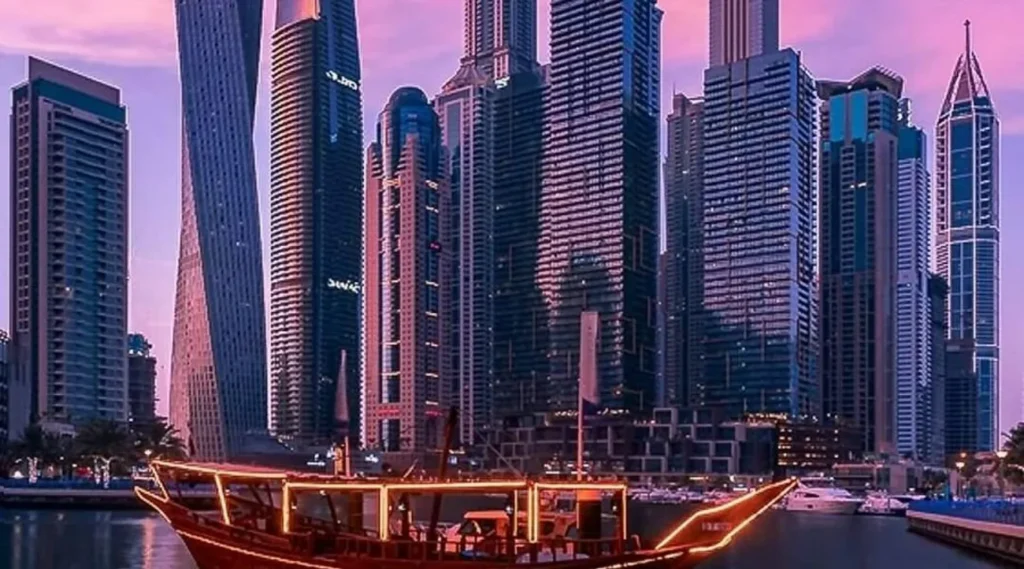
Real-life case studies show how different strategies—rental income, family relocation, or buying early in an off-plan project—operate in practice. All examples were completed through the Dubai Land Department (DLD), with full title registration and standard transfer payments.
Important: Every transaction is recorded in DLD’s electronic registry. For completed properties, the title deed is typically issued on the day of settlement, once mandatory fees have been paid and all documents verified.
Case Study 1. Investor from Germany: Business Bay Apartment for Rental Income
The buyer acquired a one-bedroom apartment in Business Bay on the secondary market at a price of USD 380,000. The full transaction—including obtaining the developer’s NOC and registering the transfer with DLD—took 28 days.
The unit rents for approximately USD 2,100 per month, with an average occupancy rate of ~94% on long-term leases. Annual service charges total around USD 4,500, while property management costs amount to 5% of yearly rental income.
In this case, the one-time acquisition costs included the DLD transfer fee of USD 15,200 (4% of the price), a 2% agency commission of USD 7,600, an estimated USD 1,000 for the developer’s NOC, and roughly USD 200 in administrative fees. In total, the buyer spent around USD 24,000 in upfront costs—about 6.3% of the purchase price.
Gross rental income reached USD 25,200 per year, producing an estimated gross yield of around 6.6%. After subtracting service charges and management, the net yield stabilised at approximately 5.1%.
Takeaway: Business Bay offers a strong balance of entry price and rental demand. Its proximity to Downtown Dubai supports both liquidity and stable occupancy, even in moderate market cycles.
Case Study 2. Family from Kazakhstan: A Primary Residence in Dubai Hills Estate
A family purchased a four-bedroom villa in Dubai Hills Estate for USD 1,650,000, financed with a 60% loan-to-value mortgage from a local bank. The process—including mortgage approval and valuation—took around 45 days. The mortgage itself was formally registered with DLD.
The location was chosen primarily for its family-friendly environment: international-curriculum schools within 10–20 minutes, extensive green areas, and close proximity to medical clusters. School quality ratings were reviewed through the KHDA website.
The one-time costs included the DLD transfer fee of USD 66,000, an agency commission of roughly USD 33,000, a mortgage registration charge of about USD 2,475 (0.25% of the loan amount), and USD 1,000–1,500 for valuation and administrative procedures. Total upfront costs amounted to approximately USD 102,500—around 6.2% of the purchase price, plus mortgage-related fees.
The family subsequently obtained UAE residency visas tied to property ownership, in accordance with the thresholds and conditions published on u.ae.
Takeaway: For families, the key factors are school accessibility, KHDA ratings, predictable service charges, and transportation convenience. Property ownership may also provide a pathway to residency, subject to the criteria outlined on u.ae.
Case Study 3. Investor from France: Off-Plan Purchase in Dubai Creek Harbour with a Capital-Growth Strategy
This investor secured a one-bedroom off-plan apartment in Dubai Creek Harbour for USD 420,000, following a 70/30 payment plan (with 30% due upon handover). All obligations and payments were safeguarded through an escrow account under DLD’s regulatory framework.
Over a development horizon of approximately 24 months, the market price of the property rose to around USD 495,000—an estimated capital gain of ~18% by handover.
The buyer paid a DLD transfer fee of USD 16,800 (4%) as per the terms of the SPA and registration.
The planned post-handover strategy involves renting the property out long-term for USD 1,900–2,200 per month for one to two years, followed by a resale once rental yields stabilise.
Takeaway: Entering a major waterfront project early—especially one with strong infrastructure potential—can generate capital appreciation. Risks are mitigated through escrow protection and DLD registration, but market cycles and construction timelines must be factored into the decision.
Summary of Investment Strategies
- Rental-income strategy (ready units): Areas such as Business Bay and Dubai Marina offer high occupancy rates and manageable service charges.
- Family-living strategy (villas): Districts like Dubai Hills and Arabian Ranches provide access to KHDA-rated schools, parks, and medical clusters.
- Capital-growth strategy (off-plan): Dubai Creek Harbour and Dubai South offer upside potential during early development phases.
Overall conclusion: Transparent title registration through DLD, access to international-standard infrastructure, and clearly defined one-time acquisition costs create favorable conditions for a range of strategies—from rental apartments to family villas and early-stage investments in emerging districts (u.ae).
Conclusion:
Dubai brings together a transparent legal environment, advanced urban infrastructure, and a diverse range of districts—from business hubs and family-oriented communities to ultra-luxury waterfront enclaves. The market benefits from strong, consistent rental demand and clearly defined acquisition costs, while digital title-registration procedures make the process straightforward for foreign buyers. With the right choice of location, a clear understanding of service charges, and proper document checks, a purchase can be completed in just a few weeks, delivering predictable results—whether the goal is rental income, capital preservation, or family relocation.
Core message: Define your objective, match it with the right district and budget, and follow the standardized registration process. This ensures a fast, secure, and financially sound outcome.
We are ready to help you find the best options. Leave a request on our website—our team will contact you within one business day, provide a free consultation, prepare a curated shortlist of properties, and guide your transaction through registration smoothly and efficiently.
 +971 52 110 0777
 hello@baytique-uae.com
 UAE, Dubai, Dubai Hills Estate, Park Heights Square 1


 Get catalogue of TOP-7 objects