
 +971 50 108 6910


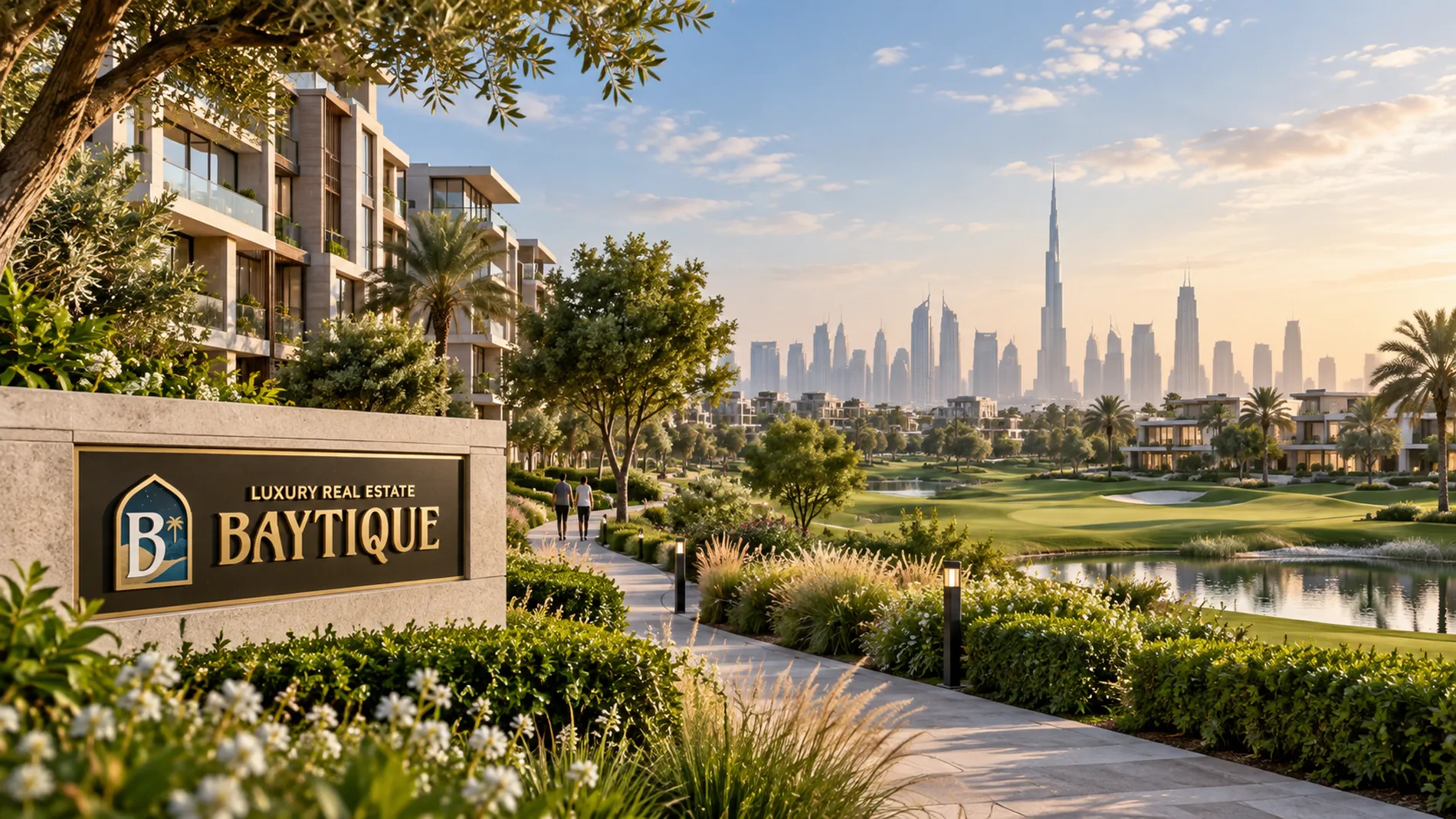
Dubai Hills Estate is not the kind of standalone residential development that simply happens to sit next to a well-placed park. It was designed from the outset as a fully integrated district, with homes, roads, schools, healthcare facilities, retail, and large green spaces all incorporated into a single master plan rather than added piecemeal over time. As a result, the community functions very differently from neighborhoods that have grown around a single tower or an isolated development.
The difference becomes especially clear in the details that rarely appear in promotional imagery: how far a particular building is from the nearest park entrance, how long the school run takes on a weekday, and which everyday services are genuinely within walking distance versus those that still require a car.
This guide looks at Dubai Hills Estate from exactly that practical perspective — not as a collection of attractive properties, but as an environment where people actually live, or where an owner may plan to rent out a home. If you are only beginning to explore Dubai’s property market more broadly, a useful companion piece is this overview of Dubai’s real estate districts and infrastructure, which places Dubai Hills Estate in the context of the city’s other major communities.
Dubai Hills Estate at a Glance
- Main trade-off: the quality of walkability and access to amenities varies significantly between individual clusters.
- Best suited to: families, professionals and buyers looking for a lower-density master-planned community.
- Housing: apartments, townhouses and villas.
- Green infrastructure: Dubai Hills Park, landscaped open spaces and an 18-hole golf course.
- Everyday amenities: Dubai Hills Mall, schools, nurseries and King’s College Hospital Dubai.
- Transport: strong road access via Al Khail Road and Umm Suqeim Street; no metro station inside the community.
What Is Dubai Hills Estate?
Dubai Hills Estate is one of Dubai’s largest master-planned communities, developed through a joint venture between Emaar Properties and Meraas. Located between Al Khail Road and Umm Suqeim Street, the development spans about 2,700 acres, or more than 11 million sq m, according to Emaar, and includes multiple residential clusters connected by shared infrastructure.
The term “master-planned community” is not just marketing language in this case. Unlike districts where housing emerged first and schools, shops, and services followed later, Dubai Hills Estate was planned as an integrated whole. Its road network, green corridors, commercial zones, and social infrastructure were designed alongside the residential neighborhoods from the beginning.
That planning is visible in the small details of everyday life. In parts of the community, landscaped pedestrian and cycling routes connect residential areas with parks and public spaces without requiring residents to use the main arterial roads. Retail and healthcare facilities are also distributed across the wider community rather than concentrated around a single residential project.
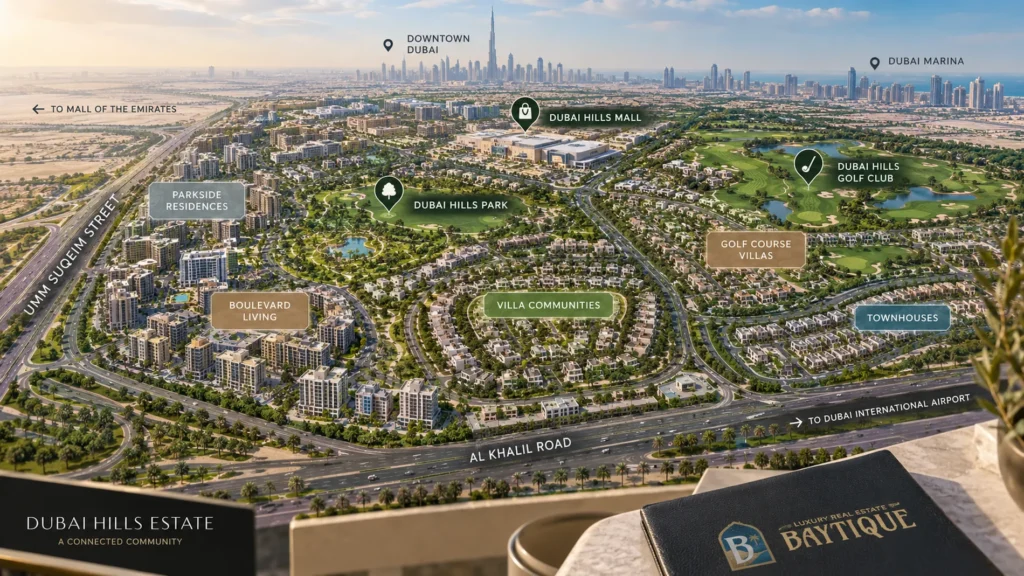
Dubai Hills Estate offers three main residential formats — apartments, townhouses, and villas — which sets it apart from areas aimed at a single type of buyer. Apartment buildings are common around the more urban parts of the community, while townhouse and villa developments are spread across lower-density residential areas. Some villa and townhouse clusters are positioned around or overlook the golf course.
The three defining elements of the master plan are Dubai Hills Park, Dubai Hills Golf Club, and Dubai Hills Mall. Their role goes well beyond recreation. The park and golf-course landscape create the district’s green and visual backbone, reducing development density through its central areas, while the mall serves as a major everyday retail and leisure hub for residents and also attracts visitors from other parts of Dubai, with supermarkets, pharmacies, children’s facilities, and household services.
Dubai Hills Estate has a strong residential orientation, reflected in its schools, healthcare facilities, parks, and mix of apartments, townhouses, and villas. Its infrastructure is designed to support everyday residential life rather than functioning solely as a collection of standalone developments.
Table 1. Dubai Hills Estate at a Glance
| Category | What It Means for Residents |
|---|---|
| Community type | A master-planned district combining housing, infrastructure, and green spaces within a single development concept |
| Property types | Apartments, townhouses, and villas, offering different price points and levels of privacy within the same community |
| Healthcare | King’s College Hospital Dubai and additional clinics located within the community |
| Main road connections | Al Khail Road and Umm Suqeim Street, with onward access to Dubai’s key districts |
| Category | Key Fact |
|---|---|
| Total master plan | About 2,700 acres / more than 11 million sq m |
| Parks and open spaces | 1,450,000 sq m |
| Dubai Hills Park | 180,000 sq m |
| Golf | 18-hole championship golf course |
| Dubai Hills Mall | 282,000 sq m |
| Education | 3 schools listed by Emaar within the master plan |
| Cycling infrastructure | 54 km bicycle route |
| Property types | Apartments, townhouses and villas |
| Main road access | Al Khail Road and Umm Suqeim Street |
These master-plan figures are published by Emaar Properties and describe the wider Dubai Hills Estate development rather than the facilities available within every individual residential cluster.
Location and Transport
Dubai Hills Estate sits roughly midway between Dubai’s established and newer business hubs — Downtown Dubai and Dubai Marina. That makes the area convenient for residents who work in different parts of the city, but for many cross-city and everyday journeys, a car or taxi remains the most convenient option. The community is also served by bus connections to the metro, including the DH1 route to Equiti Metro Station, although public transport does not provide the same level of convenience for every cluster.
The district’s main transport artery is Al Khail Road, which connects Dubai Hills Estate with Business Bay, Downtown Dubai, and onward to the city’s coastal districts. The second key connection is Umm Suqeim Street, which leads toward Mall of the Emirates and then on to Dubai Marina. The RTA has confirmed that Dubai Hills Mall is served by dedicated interchanges specifically designed to distribute traffic during peak periods — a clear indication of the volume of car traffic anticipated in the area.
Travel times to Downtown Dubai, Dubai Marina, and other parts of the city vary significantly depending on traffic, the time of day, and the exact starting point within Dubai Hills Estate. Live navigation should be checked for the relevant route and time of travel. Actual journey times depend on where exactly you start within Dubai Hills Estate — the community stretches across several kilometres — as well as the time of day, congestion on Al Khail Road during rush hour, and any ongoing roadworks.
RTA continues to implement upgrades along the wider Umm Suqeim Street corridor, including works that serve Dubai Hills and surrounding districts. However, any benefits from the project should be viewed as future improvements rather than something already fully reflected in current travel times.
Driving time to Dubai International Airport varies with traffic and the exact starting point within the community, so current navigation data is more useful than a fixed estimate.
Dubai Hills Estate does not currently have a metro line running through the community itself. This is worth considering realistically: the area is not designed around a car-free lifestyle, and most everyday journeys — commuting to work, taking children to school, shopping, or running errands — will typically involve driving.
Bus routes connect certain parts of the community with nearby metro stations, but for daily mobility they generally do not replace the convenience of a private car.
What to check before choosing a specific property from a transport perspective:
- how long it typically takes to exit the specific cluster onto Al Khail Road or Umm Suqeim Street during peak hours;
- whether there are active roadworks nearby that could temporarily make access more difficult;
- how far the property is from the nearest entrance or exit to the community;
- whether guest parking is available, particularly if this matters for your household;
- how important metro access is if someone in the family does not drive.
Why Dubai Hills Estate Is Considered a Green Community
The term “green community” is often used loosely in real estate marketing, sometimes simply because a development has a single park. In Dubai Hills Estate, however, the description is supported by the scale and layout of the master plan: green space is not an isolated amenity but one of the elements that ties the entire community together.
Emaar states that the wider Dubai Hills Estate master plan includes approximately 1.45 million sq m of parks and open spaces, including the 180,000 sq m Dubai Hills Park, as well as a 54 km bicycle route. These figures help explain why greenery plays a structural role in the master plan rather than functioning as a single isolated amenity.
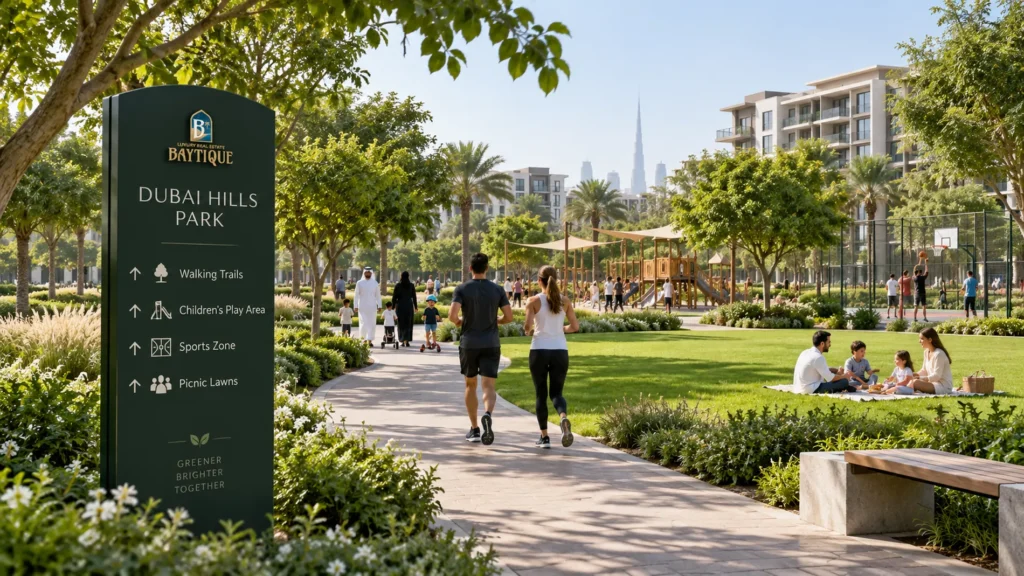
Dubai Hills Park is a large landscaped park with running areas, cycling tracks, sports facilities, and children’s play zones. Its size and central location mean that many residential clusters border landscaped open space directly rather than being separated from it by several blocks of development.
The master plan is also built around an 18-hole championship golf course, another major component of the community’s open-space structure.
Nearby is Dubai Hills Golf Club, whose course creates broad open viewscapes for surrounding villa communities and some townhouse clusters.
Beyond the park and golf course, the neighbourhood incorporates landscaped streets and tree-lined boulevards and landscaped pedestrian routes, although the amount of shade varies by location. In Dubai’s climate, this is a practical feature rather than a purely decorative one.
Cycling infrastructure and walking paths also connect individual residential clusters with one another and with public spaces, allowing pedestrians to move through parts of the community without having to rely on major roads.
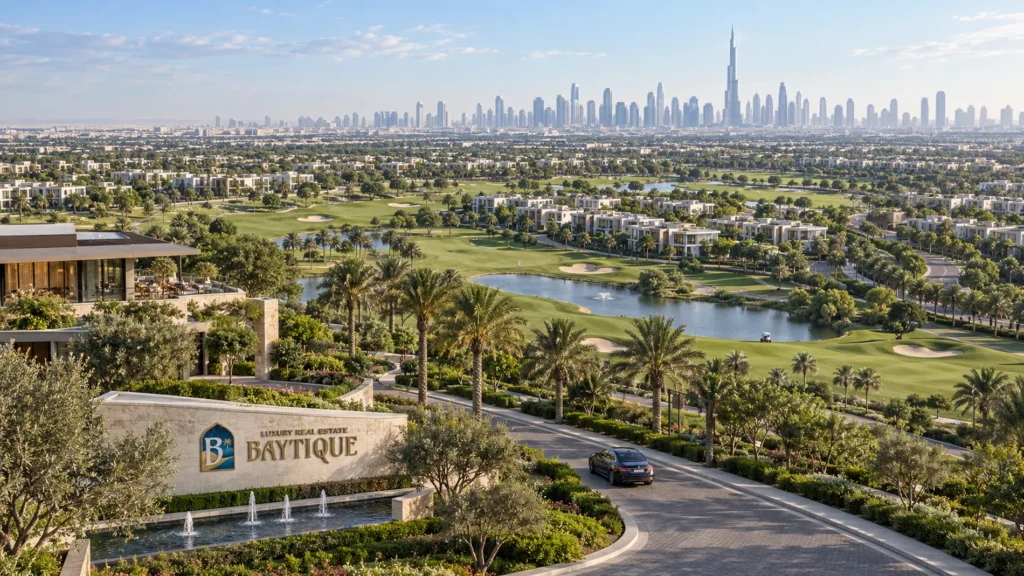
When choosing a home in a “green community,” it is important to distinguish between three things that are often confused:
- A view of green space — an apartment or villa may overlook a park or golf course without offering direct pedestrian access to it.
- Actual walkable access — the real distance from the building entrance or villa gate to the nearest park entrance, measured in minutes on foot rather than simply by whether the property is located within the wider community.
- Landscaped grounds within the residential development itself — greenery belonging to a specific building or cluster, which may be private and may not connect directly to the public park.
When choosing a property in a “green community,” it is more important to look beyond the overall master plan and check the actual distance from the specific building or villa to the park, walking routes, and everyday amenities.
This distinction is especially noticeable for families with young children and dog owners. In practice, even a relatively small difference in walking distance can materially affect how convenient regular access to the park feels in everyday life.
It is also worth remembering that parts of Dubai Hills Estate are still under development. Living next to an active construction site may temporarily restrict access to certain landscaped areas or alter the usual walking route through the neighbourhood.
Everyday Life and Infrastructure
To assess the area realistically, it is more useful to look at it not as a collection of attractions, but as a network of services residents rely on every week.
Shops, Cafés, and Dubai Hills Mall
Dubai Hills Mall is a major shopping destination, but its role in everyday life is very different from that of malls in Dubai’s tourist districts. It includes a supermarket, pharmacies, children’s entertainment areas, a cinema, and a wide range of casual cafés and restaurants — in other words, places a family may use several times a week rather than only occasionally.
Beyond the mall itself, residential clusters across the community also feature local street-level retail, including small grocery stores, coffee shops, and service outlets within walking distance of some homes. This helps reduce dependence on a car for smaller everyday errands.
Schools and Healthcare
Educational infrastructure is one of the factors that most often determines which residential cluster families with children choose. Dubai Hills Estate and the immediately surrounding area offer several schools and nurseries following different curricula.
When selecting a school, it is worth checking its current status and curriculum through the official KHDA directory, as the range and status of schools in developing communities can change over time.
It is also important to check the distance to a specific school from the exact property address rather than relying on the broader area name. Dubai Hills Estate stretches across several kilometres, so the fact that a school is technically “within the community” does not necessarily mean the daily journey will be convenient from every part of the development.
The area’s healthcare infrastructure includes King’s College Hospital Dubai, a multidisciplinary hospital located within the community. The presence of a full-service hospital within the community can reduce travel time for routine appointments and urgent medical visits, particularly for households with children or elderly relatives.
Sports and Leisure
In addition to the park and golf course, the community offers running and cycling routes, outdoor sports facilities, and children’s play areas distributed across different clusters.
Residents who enjoy running or cycling, for example, can often start their route directly from home without having to reach busy main roads first.
A typical day for a Dubai Hills Estate resident might look like this:
- an early-morning run or dog walk along a nearby boulevard before leaving for work;
- a commute by car via Al Khail Road, allowing for morning traffic;
- stopping at Dubai Hills Mall or a local grocery store on the way home;
- picking up a child from school in the evening if the school is located within the community;
- an evening walk in Dubai Hills Park during the cooler months;
- a weekend spent at a boulevard café, followed by time at a children’s playground or on the golf course.
Property Types in Dubai Hills Estate
The three main residential formats in Dubai Hills Estate cater to different lifestyles, and the differences go well beyond the number of bedrooms.
Apartments are concentrated closer to the community’s retail and commercial core, often within walking distance of Dubai Hills Mall. This format suits couples, single professionals, and smaller families who value convenient access to everyday services and are comfortable with less privacy and shared building amenities.
Apartments often have a lower purchase price than villas, which can make them accessible to a broader range of buyers. Their suitability for long-term rental investment should be assessed using current data for the specific building and unit type.
Townhouses occupy the middle-density residential zones. They offer more private space than apartments, typically including a small garden, courtyard, or terrace, and often occupy a price segment between apartments and larger villas, although actual prices vary substantially by project, size, and location.
Townhouses are often chosen by families with one or two children who want a private entrance and some outdoor space but do not want the higher purchase price and maintenance responsibilities associated with a villa.
Villas are found in the community’s most spacious and private clusters, many of which border the golf course or quieter internal areas. This format is aimed at larger families and buyers for whom privacy, a private plot, and views over open space matter more than immediate proximity to the shopping mall.
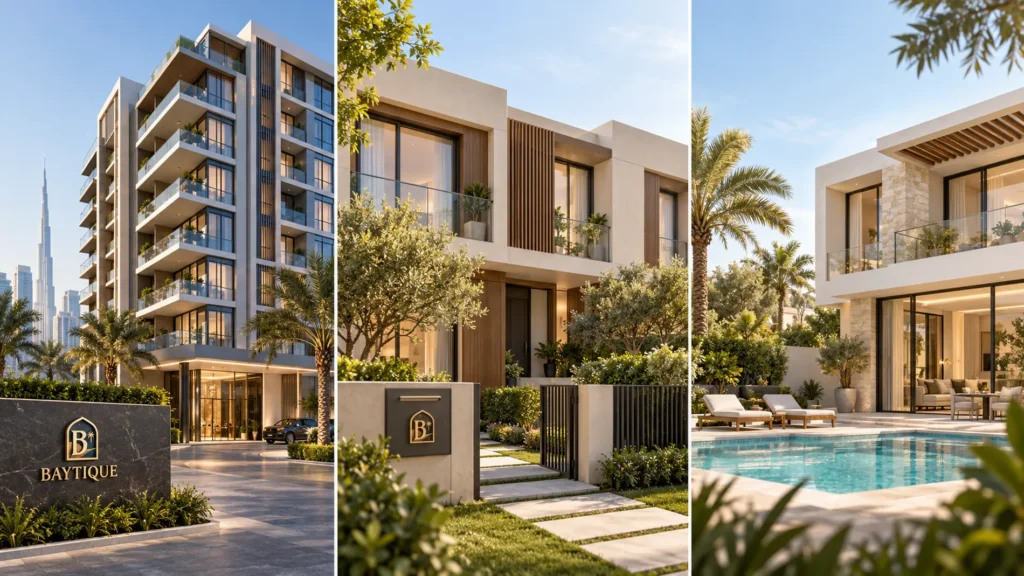
The villa segment generally involves a significantly higher purchase budget than apartments and serves a different buyer and tenant profile, with greater emphasis on space, privacy, and private outdoor areas.
When choosing a specific property in any of these three categories, it makes sense to consider more than just floor area and layout. Buyers should also look at the actual distance from the property to the park, school, and shopping centre, the condition of the building if it has already been completed, and the level of nearby construction activity if the property is being purchased off-plan.
Table 2. Apartments, Townhouses, and Villas
| Property Type | Best Suited To | Key Strengths | What to Check |
|---|---|---|---|
| Apartments | Couples, professionals, small families, and rental investors | Proximity to the mall and everyday services; lower entry budget | Service charges, floor and view, sound insulation, parking allocation |
| Townhouses | Families with one or two children seeking privacy without a villa-level budget | Private entrance, small garden or terrace, medium-density setting | Distance to schools and parks, condition of shared cluster areas |
| Villas | Larger families and buyers who value privacy | Generous plots, views over the golf course or open space | Total cost of ownership, distance to the mall, and access to main roads |
Key Residential Areas in Dubai Hills Estate
Dubai Hills Estate is made up of multiple residential developments rather than one uniform neighbourhood. The differences are not limited to architecture: density, proximity to the park or golf course, road access and the balance between apartments and family housing vary across the master plan.
Park Heights and the areas around Dubai Hills Park have a more urban character, with apartment buildings and relatively convenient access to the park, retail and community facilities.
Maple is associated primarily with townhouse living and appeals to households that want a private entrance and outdoor space without moving into the larger villa segment.
Sidra represents a lower-density villa environment, with larger homes and private outdoor space.
Golf Place and other golf-oriented villa developments place greater emphasis on space, privacy and the landscape around Dubai Hills Golf Club.
Newer apartment developments continue to expand the residential stock around established parts of Dubai Hills Estate. For this reason, buyers should not assume that two properties carrying the same “Dubai Hills Estate” address provide the same living environment.
Rather than ranking these locations from best to worst, it is more useful to match them to a specific priority: walkability to the park, proximity to retail, villa privacy, school access or a faster road connection.
How to Choose the Right Part of Dubai Hills Estate
One of the most common practical mistakes when choosing property in Dubai Hills Estate is treating the community as a single point on the map. In reality, the day-to-day living experience can vary significantly depending on how a specific property is positioned in relation to the park, the mall, the golf course, major road connections, schools, the hospital, and areas of active construction.
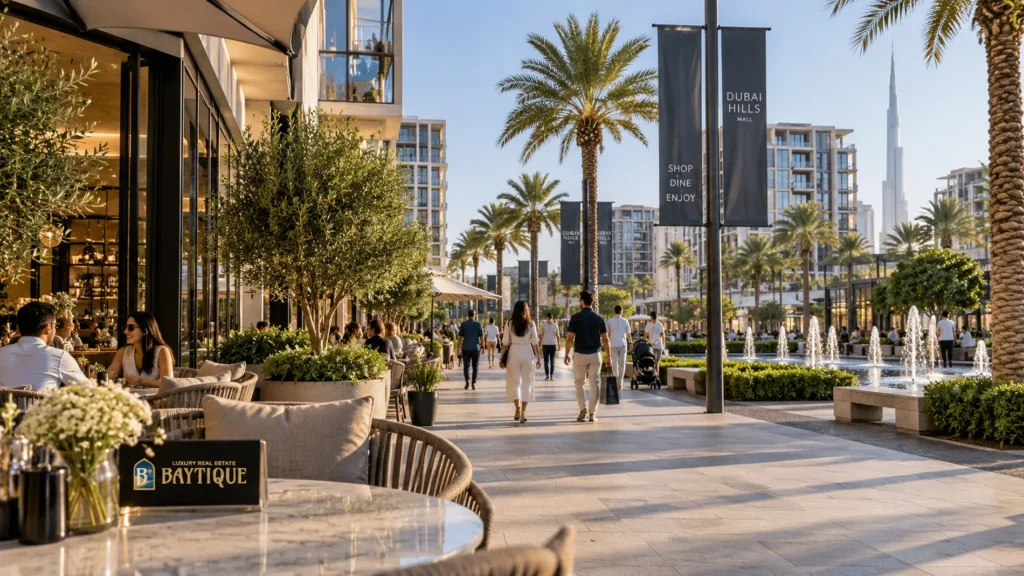
Clusters close to Dubai Hills Mall can offer convenient access to shopping, dining, and services, although some locations may experience more traffic and visitor activity at busy times. Areas near the golf course provide a quieter, more private setting with open views, although residents may need to drive farther for daily errands. Some villa clusters offer greater privacy and a quieter setting, but road access varies significantly by location. The actual route to Al Khail Road or Umm Suqeim Street should be checked for the specific property. None of these options is objectively “better” than the others—the right choice depends on the priorities of the individual family or investor.
It is also important to remember that parts of Dubai Hills Estate remain under active development. Living next to a construction site may mean temporary noise, dust, and restricted access to certain public areas. These conditions are best assessed in person rather than relying solely on the master plan shown on the developer’s website.
Table 3. Choosing the Right Micro-Location
| Priority | What to Look For | Possible Trade-Off |
|---|---|---|
| Walking access to the park | Clusters directly bordering Dubai Hills Park | Park-facing or highly walkable properties may command a premium, but this should be checked against current transactions for the specific building or cluster. |
| Mall and everyday services nearby | Apartments and townhouses close to Dubai Hills Mall | More noise and traffic during peak hours |
| Maximum privacy | Lower-density villa clusters | Greater distance from some everyday amenities depending on the exact location |
| Golf-course setting | Villas and townhouses overlooking the golf course | Limited inventory and a higher budget requirement |
| Fast road access | Clusters close to major interchanges connecting to Al Khail Road | Higher exposure to traffic noise |
| Family with school-age children | A location within a reasonable commute of the family’s chosen school | May not coincide with the greenest or most private parts of the community |
Questions worth checking when viewing a specific property:
- How many minutes does it actually take to walk to the nearest park entrance or public transport stop—not simply to the neighbourhood in general?
- How active is the construction within sight and hearing distance of the property?
- What is the real driving route from this specific cluster to Al Khail Road or Umm Suqeim Street?
- How long is the actual commute to the specific school the family is considering?
- Does the cluster include private recreation areas and children’s play spaces in addition to the main community park?
- How is the property positioned in relation to the golf course—is there simply a visual outlook, or is there direct access?
- What parking provision is available for residents and visitors in the specific building or street?
Buying Property in Dubai Hills Estate
Dubai Hills Estate appeals to several distinct types of buyers, and it is important not to treat their decision-making criteria as if they were the same. For families planning to live in Dubai for several years, the main priorities are typically access to schools, proximity to parks, and convenient medical infrastructure. For investors focused on long-term rentals, the liquidity of the property type and the consistency of end-user tenant demand often matter more than headline yield potential alone. Buyers of premium villas, meanwhile, may place greater value on privacy and golf-course views than on proximity to the mall.

 Al Jaddaf (Dubai)
 from 50м²

It is also essential not to assess the apartment and villa markets using the same framework. They operate at different price points, attract different buyer and tenant profiles, have different levels of supply, and respond differently to shifts in demand. Liquidity should be assessed using current transaction data for the specific property type and micro-location.
When evaluating a particular property, it is useful to distinguish between ready homes and off-plan projects. Ready properties allow buyers to assess the actual condition of the building, the quality of the finishes, and the real character of the surrounding courtyard, street, or community before making a decision. Some off-plan projects offer developer payment schedules that differ from the financing structure of ready properties, but they require closer scrutiny of the developer, the expected handover timeline, and the likelihood of continued construction activity nearby over the next several years.
Buyers should also consider a number of practical factors that are rarely highlighted in marketing materials but can have a direct impact on the ownership experience. These include service charges for apartments and townhouses, unit orientation and views, the availability and convenience of parking, the condition of common areas in completed buildings, and the proximity of active construction sites in the case of off-plan developments.
Dubai Land Department’s 2024 annual report identified Dubai Hills Estate among areas experiencing strong demand for luxury residential property. This is historical market evidence for 2024 and should not be treated as a forecast for 2026 or later years. Any purchase decision should be based on market conditions prevailing at the time of the transaction rather than on historical data alone.
If you are deciding between an apartment, townhouse, or villa in Dubai Hills Estate, you can use our property selection tool to narrow down the options based on your budget, purchase goals, and location requirements.
Neither price growth, a specific level of return, nor guaranteed tenant demand can be promised in advance. Real estate performance remains dependent on a wide range of factors, including the broader economic environment, the volume of new supply entering the area, and changes to transport and social infrastructure.
Pros and Trade-Offs
An assessment of the area is far more useful when it does not try to prove that Dubai Hills Estate is equally suitable for everyone.
Table 4. Strengths and Potential Trade-Offs
| Strengths | Potential Trade-Offs |
|---|---|
| A cohesive master-planned approach to housing, roads, and everyday services | A car remains an essential part of day-to-day mobility |
| Extensive green spaces, including the park and golf course | Sharing the same community name does not mean every property has equally convenient walking access to them |
| A broad mix of housing options, from apartments and townhouses to villas | The villa segment requires a substantially higher budget than apartments |
| Family-oriented infrastructure, including schools, nurseries, King’s College Hospital Dubai, and additional medical facilities | Ongoing development in newer phases may temporarily affect the immediate surroundings of certain properties |
| Retail and healthcare are integrated into the community rather than merely located nearby | Actual travel times vary during peak hours and depend heavily on the starting point within the area |
| Strong road connectivity via Al Khail Road and Umm Suqeim Street | Access to specific amenities can vary significantly depending on the exact micro-location within the community |
Dubai Hills Estate is particularly well suited to people who are comfortable treating a car as part of everyday life and who value the combination of generous green space and strong family-oriented infrastructure. Those for whom walkable metro access or a fully pedestrian lifestyle without a car is a priority would be better served by comparing the area with denser, more central parts of Dubai. Those locations typically offer less greenery, but stronger pedestrian connectivity and easier access to public transport.
Buyers with a lower budget may also compare Dubai Hills Estate with communities such as Jumeirah Village Circle. Current prices should be checked at the time of purchase, as affordability varies by property type, project, and market conditions.
Who Should Live in Dubai Hills Estate?
Segmenting the area by buyer or resident profile makes it easier to narrow down the most suitable parts of the community.
- Families with children — schools, the park, and healthcare facilities within the community can reduce the need for frequent long-distance trips.
- Couples and professionals — apartments near Dubai Hills Mall offer a practical balance between an urban lifestyle and easy access to green space.
- Buyers looking for a spacious primary residence — townhouses and villas provide privacy and outdoor space that are harder to find in more central parts of Dubai.
- People who enjoy an active outdoor lifestyle — running and cycling routes, the golf course, and the park are designed for regular use rather than occasional visits.
- Apartment-focused investors — generally lower purchase budgets than villas, with rental suitability that should be assessed using current rents, vacancy levels, service charges, and tenant demand for the specific building.
- Buyers in the premium villa segment — private clusters around the golf course appeal to those who value views, space, and tranquillity more than immediate proximity to the mall.
Those looking for a lively nightlife scene within walking distance, or complete freedom from car ownership through direct metro access, may find that more central areas of Dubai are a better fit. Dubai Hills Estate was designed around a different model of urban living.
Dubai Hills Estate is best understood not as a single residential project, but as a large community made up of several distinct living environments — from apartment clusters close to urban amenities to quiet villa neighbourhoods.
Conclusion
The value of Dubai Hills Estate does not come from any single feature — not just the park, the mall, or the golf course — but from the way these elements are integrated with a range of residential formats and family-oriented infrastructure within one cohesive master plan. It is this combination that sets the community apart from standalone residential developments, where amenities are often added gradually and not always in a consistent or coordinated way.
At the same time, the name of the community alone is not enough to justify choosing a particular property. The distance to the park, the actual time needed to reach a main road, proximity to ongoing construction, and access to the right school can vary significantly within the same community. The final decision should therefore be made at the level of the specific micro-location and individual building, rather than on the basis of a general impression of Dubai Hills Estate as a whole.
If you have already narrowed your search to Dubai Hills Estate but have not yet decided on a specific cluster or property type, property selection can help match your budget and priorities with the options currently available on the market.
 Real estate in Georgia
 Real estate in Cyprus
 Real estate in Montenegro
 Real estate in Bali
 Real estate in Thailand
 Real estate in Spain
 Real estate in Saudi Arabia
 Real estate in Turkey
 Real estate in Zanzibar
 +971 50 108 6910
 hello@baytique-uae.com
 UAE, Dubai, Dubai Hills Estate, Park Heights Square 1


 Get catalogue of TOP-7 objects