
 +971 50 108 6910


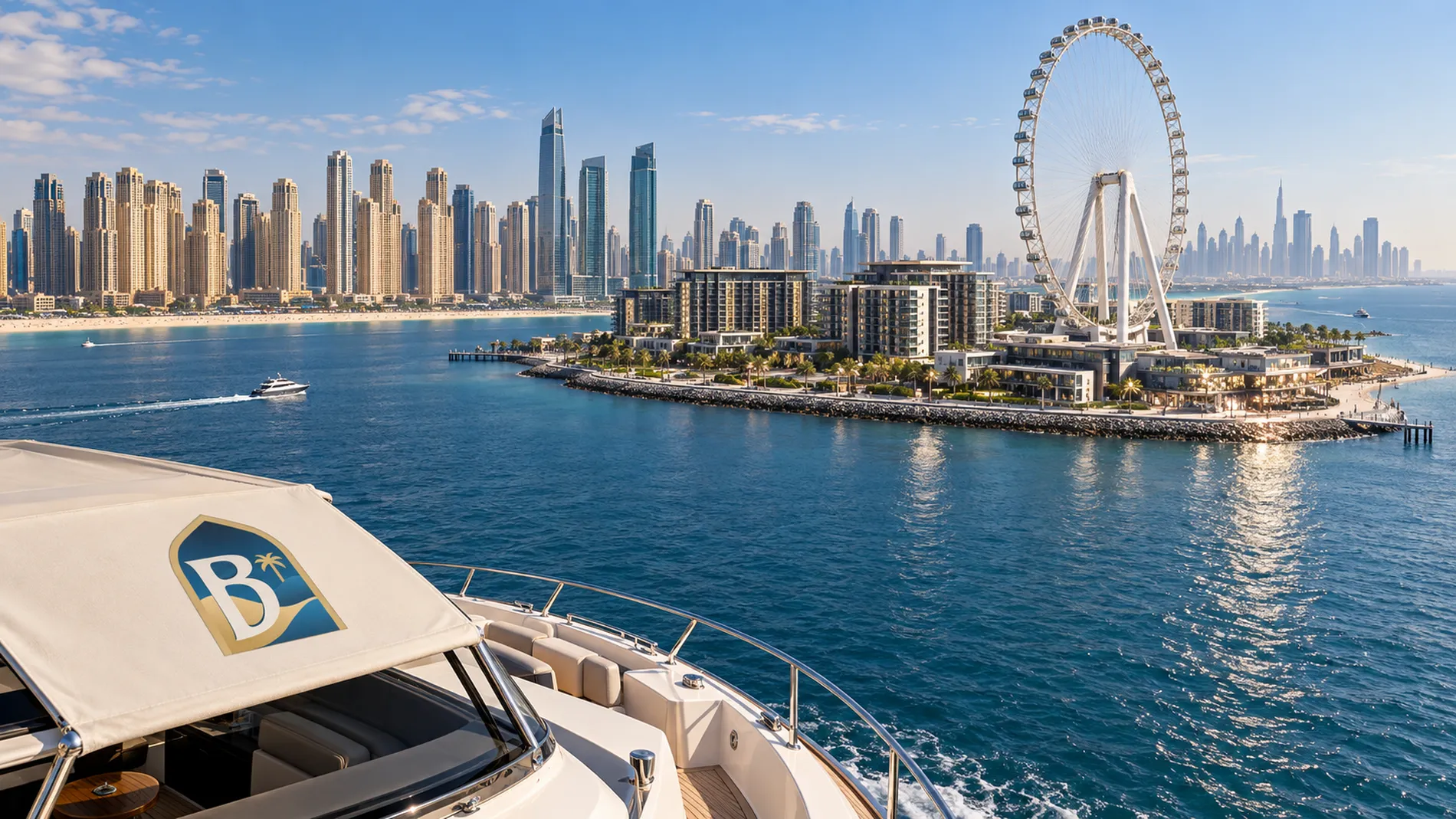
Ain Dubai can be seen from almost anywhere in Dubai Marina, which is why Bluewaters Island is often thought of primarily as a tourist destination — somewhere to come for dinner, take a walk along the waterfront, snap a few photos, and then head back to the mainland. For someone considering living here or buying an apartment, however, the island looks quite different. Bluewaters is a man-made island just off the coast of Jumeirah Beach Residence (JBR), combining residential buildings, hotels, restaurants, shops, entertainment venues, and a waterfront promenade within a compact setting.
Bluewaters was developed by Meraas, now part of Dubai Holding, as a premium mixed-use destination, and that concept still defines the island today. Residential, hospitality, retail, and leisure spaces are not separated into distinct districts; instead, they function as part of a single integrated environment. At the same time, the residential stock is relatively limited. Most of the completed housing supply is concentrated in Bluewaters Residences, which means buyers have fewer units to choose from and each individual property requires closer evaluation than it would in a larger district with thousands of broadly similar listings.
The sections below look at Bluewaters not simply as a collection of attractions, but as a place for full-time or seasonal living and as a real estate asset. The focus is on what is available on the island itself, which services require a trip to nearby districts, how transport and connectivity work, and what ultimately determines the value of an individual apartment.
Key points at a glance:
- Bluewaters Island lies a few hundred meters off the JBR coastline and is connected to the mainland by a road bridge linking to Sheikh Zayed Road and a pedestrian bridge leading to JBR.
- The island was designed as a mixed-use district, with residential buildings alongside hotels, restaurants, shops, and Ain Dubai.
- The island has enough infrastructure for many everyday needs, but schools, major medical facilities, and a significant share of practical day-to-day services are located in neighboring areas.
- There is no metro station on Bluewaters itself, but residents have pedestrian access to JBR, as well as nearby tram and metro connections, taxis, and direct road access to one of Dubai’s main transport arteries.
- The residential market is relatively small, so the price of an individual apartment can vary significantly depending on the building, floor, view, condition, and unit type.
- A premium purchase price does not automatically translate into a high rental yield. Buying for lifestyle and buying primarily for investment income are two different strategies.
Where Is Bluewaters Island Located?
Bluewaters Island sits just off the coast of JBR, opposite The Beach and The Walk, on the western side of Dubai. Dubai Marina and JBR lie on one side, while the open sea stretches out on the other; farther along the coastline is Palm Jumeirah. On a map, Bluewaters can look like a separate, almost isolated piece of land, but in practice it sits directly beside one of Dubai’s most densely developed urban clusters.
Road access was developed under a Roads & Transport Authority project. According to the RTA’s description of the Bluewaters bridges project, the main bridge is approximately 1.4 km long, with two lanes in each direction, and connects traffic via ramps to the JBR interchange on Sheikh Zayed Road. For residents, this means reaching Dubai’s main arterial road without having to drive through the internal streets of Dubai Marina.
The second connection is pedestrian. A footbridge links the island directly to The Beach at JBR, making it possible to walk to the beach, restaurants, shops, and other mainland amenities. This feature plays a major role in shaping the character of the area: Bluewaters is physically separated by water, yet functionally operates as an extension of JBR.
The practical effect of this location is mixed. On the one hand, there is no through traffic across the island, so the residential areas tend to feel calmer than neighborhoods deeper inside Dubai Marina. On the other hand, all road access is concentrated through a limited number of entry and exit points, which means journey times can increase noticeably during rush hour or on days when major events are taking place.
| Location or Feature | What It Means for Residents |
|---|---|
| JBR | The nearest mainland district. The beach, restaurants, shops, and tram stops can all be reached on foot via the pedestrian bridge. |
| Dubai Marina | Offers a broader range of everyday services, including supermarkets, clinics, gyms, and other amenities. Reaching them usually requires a short drive or a longer walk. |
| Sheikh Zayed Road | Dubai’s main arterial highway. The bridge provides direct access without having to drive through the internal streets of Marina, although journey times still depend heavily on traffic. |
| Pedestrian access | The footbridge to The Beach at JBR makes it possible to handle some everyday errands and leisure activities without using a car. |
| Public transport | There are no metro or tram stations on the island itself. The nearest stops are located in JBR and Dubai Marina. |
| Beach access | The island has beaches associated with hotels and selected residential developments, while the large public beach at JBR is located across the bridge. |
How the Island Is Laid Out
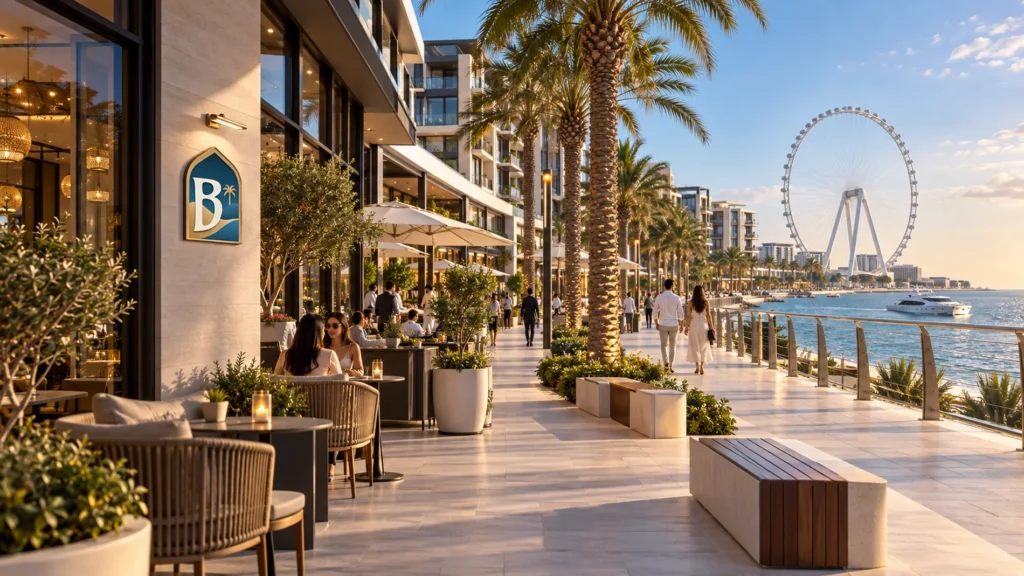
Bluewaters is built around a mixed-use concept: within a relatively compact area, it combines residential buildings, hotels, retail and dining districts, entertainment venues, and public spaces. The district’s official website describes it as a lifestyle destination with residential, retail, hospitality, and entertainment components, and that description closely reflects the way the island is actually planned. The residential buildings are not hidden away behind gates in a separate enclave; instead, they are integrated into the broader urban fabric of the island.
Residential Areas
The main residential component is Bluewaters Residences. According to the developer and the project’s architects, the development comprises ten mid-rise residential buildings with one- to four-bedroom apartments, along with a limited number of penthouses and townhouses. The buildings sit on a landscaped podium with swimming pools, gyms, and children’s play areas reserved for residents. Much of the ground-floor frontage and the surrounding public realm is occupied by shops and cafés, which means that the boundary between private and public space is defined not by the perimeter of the residential district, but by the podium level and the controlled entrances to the individual buildings.
The island also includes hotel-linked residential products, including branded residences associated with Banyan Tree Dubai and serviced apartments available for short- and medium-term stays. For prospective buyers, this is an important distinction: the people sharing the island will include not only permanent residents, but also hotel guests and short-term tenants.
Public Areas
Public life is concentrated along the waterfront and the pedestrian streets. This is where you will find restaurants with outdoor terraces, shops, entertainment venues, and two major hotels — Banyan Tree Dubai and Delano Dubai — both with direct access to the sea. The island’s visual and tourist focal point is Ain Dubai, which rises to around 250 metres and is surrounded by a public plaza designed to accommodate visitors.
Surface-level vehicle traffic is limited across much of the island. Visitors and many residents use underground parking, while most of the above-ground space is designed primarily for pedestrians. This makes Bluewaters pleasant and walkable, but it also shapes the island’s day-to-day logistics: taxis, delivery drivers, and guests are generally directed to designated access points rather than being able to pull up directly outside every residential entrance.
The island’s planning logic can be summarized simply: tourist activity is concentrated along the waterfront, around Ain Dubai, and within the retail and leisure areas, while the residential environment is elevated on a podium and partly separated from these visitor flows. There is no complete physical separation, however, and that is an important factor to consider when choosing a particular building or deciding which side of a building is likely to offer the right balance of privacy, views, and activity.
Infrastructure for Everyday Living
For anyone considering Bluewaters as a place to live, the key question is how well the island meets day-to-day needs. The short answer is that many basic and lifestyle needs can be handled locally, while most of the essential social infrastructure is concentrated in nearby districts.
The island itself has restaurants, cafés, and bakeries, as well as a neighborhood-style supermarket — Franprix is mentioned on the official website — plus clothing and accessory stores, entertainment venues, and prayer facilities. Residents of Bluewaters Residences also have access to private swimming pools, gyms, children’s play areas, and landscaped podium spaces. The hotels add spas, beach clubs, and restaurants, which residents can also use on a commercial basis.
The picture becomes more complicated when it comes to the infrastructure that supports everyday family life. There are no schools on the island, and there are no major medical facilities either. The range of practical services — dry cleaners, repair shops, specialist retailers, and large supermarkets — is also noticeably more limited than in Dubai Marina. For weekly grocery shopping, medical appointments, school runs, and many household errands, residents will need to rely on the mainland.
Beach access deserves separate attention. Hotels on the island have their own private beach areas, while some residential and hospitality properties offer residents access to beaches and swimming pools. However, the terms vary from one building to another. If daily access to the sea is important to you, confirm exactly what residents of the specific property are entitled to use rather than relying on general descriptions of the district.
| Need | On Bluewaters | In Nearby Areas | Practical Takeaway |
|---|---|---|---|
| Groceries | Small supermarket and food outlets | Large supermarkets in JBR and Dubai Marina | Small purchases can be done on foot; larger shops usually mean delivery or a trip off-island |
| Restaurants and cafés | Wide choice, from coffee shops to hotel restaurants | Even more options in JBR, Marina, and Palm Jumeirah | One of the island’s strongest advantages |
| Fitness | Gyms and pools in residential buildings, plus hotel spas | Specialist studios and chain gyms | More than enough for general fitness; niche training usually means going off-island |
| Beach access | Hotel beaches and access through selected properties | Public beach at JBR across the bridge | Access conditions should be checked building by building |
| Household services | Limited range | Full selection in Marina and JLT | Many needs can be handled through delivery and mobile services |
| Healthcare | No major medical facilities | Clinics in Marina and JBR, with hospitals farther across the city | Regular appointments require transport |
| Schools and nurseries | None | In neighboring districts and farther along Sheikh Zayed Road | Families with children need to plan school logistics carefully |
| Walking and space for children | Pedestrian-friendly environment, waterfront, podium play areas | JBR beach and the waterfronts of JBR and Marina | The island works well for walks with children |
Bluewaters does an excellent job of meeting leisure, dining, and outdoor-lifestyle needs, but it is not a substitute for a fully self-contained family district. Premium and self-contained are not the same thing.
Ultimately, whether the island works as a permanent home depends on your lifestyle. For a couple or a professional who works remotely or drives to the office, orders groceries for delivery, and spends evenings dining out, Bluewaters may cover most needs for much of the week. A family with school-age children, a dog, and a busy schedule of extracurricular activities will need carefully planned logistics and, in all likelihood, a car.
Transport and Mobility

Bluewaters is not built around an on-island metro station. Instead, connectivity is provided through the road bridge to the wider Dubai road network, the pedestrian link to JBR, nearby tram and Metro connections, as well as bus and marine transport services.
A car remains the most versatile option. The bridge connects directly to one of Dubai’s main arterial roads, making it relatively convenient to travel toward Palm Jumeirah, Al Sufouh, Dubai Internet City, Downtown Dubai, or Jebel Ali. Any journey-time estimates should be treated as approximate. Outside peak hours, trips to major business districts can be relatively quick, but Sheikh Zayed Road and the interchanges around Marina can become heavily congested during rush hour. Today, Bluewaters combines road access, the pedestrian connection to JBR, bus services and marine transport. For residents, the practical value lies in the range of available options rather than in any single mode of transport.
Taxis and ride-hailing services serve Bluewaters, with pickup and drop-off commonly concentrated around designated access points near hotels, parking areas and key public spaces. On weekend evenings, when restaurant traffic increases, both waiting times and the time needed to leave the island can be longer.
The pedestrian connection to JBR is one of Bluewaters’ most practical advantages. Public transport has also improved beyond the pedestrian connection. As of September 2026, RTA route F57 links Jebel Ali Metro Bus Stop with Bluewaters Island, while marine route FR2 connects Bluewaters Marine Station with Dubai Marina Mall Marine Station. These services do not give Bluewaters the same door-to-door rail convenience as a building next to a Metro station, but they broaden the range of car-free travel options available to residents and visitors. The bridge provides walking access to The Beach, The Walk, and Dubai Tram stops. The tram, in turn, connects with the Red Line metro in the Dubai Marina area. The journey from the island to the metro therefore involves several stages and is less direct than living in a building immediately next to a station.
Parking on Bluewaters is primarily underground. Residential buildings provide spaces for residents, although the number allocated depends on the individual apartment and should be confirmed in the property documentation. Paid parking and valet services are available for visitors, with current terms published on the official Bluewaters website. Bluewaters is also served by RTA marine transport. As of September 2026, the RTA timetable lists route FR2 between Dubai Marina Mall Marine Station and Bluewaters Marine Station. Because marine schedules can change, departure times should be checked with RTA before travelling.
Within the island itself, virtually everything is within walking distance.
A resident with a car probably gets the most balanced experience: a quiet, walkable home environment combined with quick access to the city’s main road network. The main considerations are peak-hour traffic and confirming exactly how many parking spaces are assigned to the property.
A resident without a car can still live comfortably on Bluewaters if work or study is based in JBR, Marina, or districts along the Red Line. Most longer journeys will either involve taxis or a combination of walking across the bridge, taking the tram, and then transferring to the metro.
A tourist or short-term guest will usually arrive by taxi or walk over from JBR. For shorter stays, the island is very convenient: restaurants, the beach, and entertainment are all close at hand, while Dubai’s main attractions can be reached by taxi.
For many families with children, having a car can make daily life considerably easier. School runs, extracurricular activities, medical appointments and larger shopping trips often require travel beyond the island, while walking longer distances becomes less practical during the hottest months.
Bluewaters’ main transport advantage is not an on-island metro station — there isn’t one — but the combination of a walkable internal environment, pedestrian access to JBR, and a direct road connection to Dubai’s wider transport network.
What Life Is Like on Bluewaters
Mornings on the island are generally quieter than the busier afternoon and evening periods. Many leisure and retail venues become more active later in the day, while early mornings are shaped mainly by residents, hotel guests and people using the waterfront for walking or exercise. A run along the waterfront, coffee from a bakery, or a swim in one of the podium-level pools. At this time of day, Bluewaters feels most like a peaceful residential neighborhood by the water.
By afternoon, the pace changes as tourists and day visitors arrive. People come to see Ain Dubai, browse the shops, dine at the restaurants, and walk along the promenade. On weekdays, foot traffic is generally moderate; on weekends and public holidays, it becomes noticeably busier. The observation wheel has long been part of the island’s identity. After an extended closure beginning in 2022, Ain Dubai reopened to visitors in December 2024. As of September 2026, the attraction is operating and the official Ain Dubai website publishes current opening hours and ticket availability. Operating schedules can change temporarily, so anyone planning a visit should check the official website for the latest information.
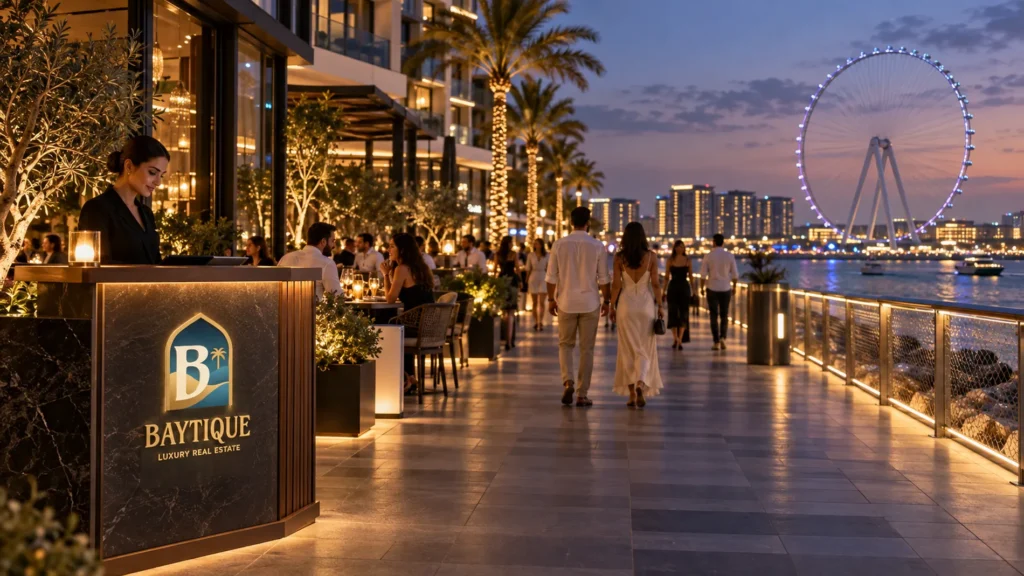
Evenings are the liveliest time of day. Restaurant terraces fill up, visitors walk over from JBR and Dubai Marina, entertainment venues come to life, and the illuminated observation wheel becomes the focal point of the skyline. For people who enjoy dining out regularly, this is one of the island’s strongest advantages: a wide choice of restaurants is only a few minutes away on foot, with no need for taxis or the hassle of finding parking.
The waterfront lifestyle here is defined less by the beach itself than by the constant presence of the sea: views from the promenade, the ocean breeze, sunsets over the Gulf, and the ability to step outside for an evening walk by the water. Banyan Tree Dubai and Delano Dubai add a resort-like atmosphere, while their restaurants and spas become part of everyday life for many residents.
There is, however, another side to this lifestyle. Residents gain easy access to resort-style amenities, but they are not living in a fully private residential enclave. On weekends, the areas around the apartment buildings can feel busier than some privacy-conscious residents would prefer, and traffic at the island entrance can increase on event days. Some people see this as part of a vibrant urban environment; others view it as a drawback.
The level of privacy on Bluewaters depends heavily on the specific building and the orientation of the apartment. Homes facing open water are generally quieter than those overlooking busy restaurant areas or the plaza around Ain Dubai. For that reason, the impression you get from an evening walk around the island should not automatically be taken as representative of what day-to-day life is like inside a particular apartment.
For some buyers, this combination is exactly what makes Bluewaters appealing: calm waterfront mornings followed by an active restaurant scene in the evening, all without having to drive anywhere. Others place a higher value on silence and a more secluded setting, in which case villas or smaller, more private residential communities may be a better fit.
Bluewaters Island Real Estate
The residential market on Bluewaters Island is relatively small and broadly consistent in terms of property class, but individual units can differ significantly. The completed housing stock is dominated by Bluewaters Residences, a collection of ten mid-rise buildings containing, according to the developer and project architects, around 700 one- to four-bedroom apartments, along with a limited number of penthouses and podium-level townhouses. The apartments were delivered with understated contemporary finishes and expansive floor-to-ceiling glazing.
A separate segment of the market consists of the branded Banyan Tree Residences connected to the hotel of the same name. These properties typically offer a hotel-style level of service and access to resort amenities, but their ownership costs are generally higher, while the rules governing occupancy and rental may differ from those applying to a conventional residential building.

 Dubai Islands
 from 137м²
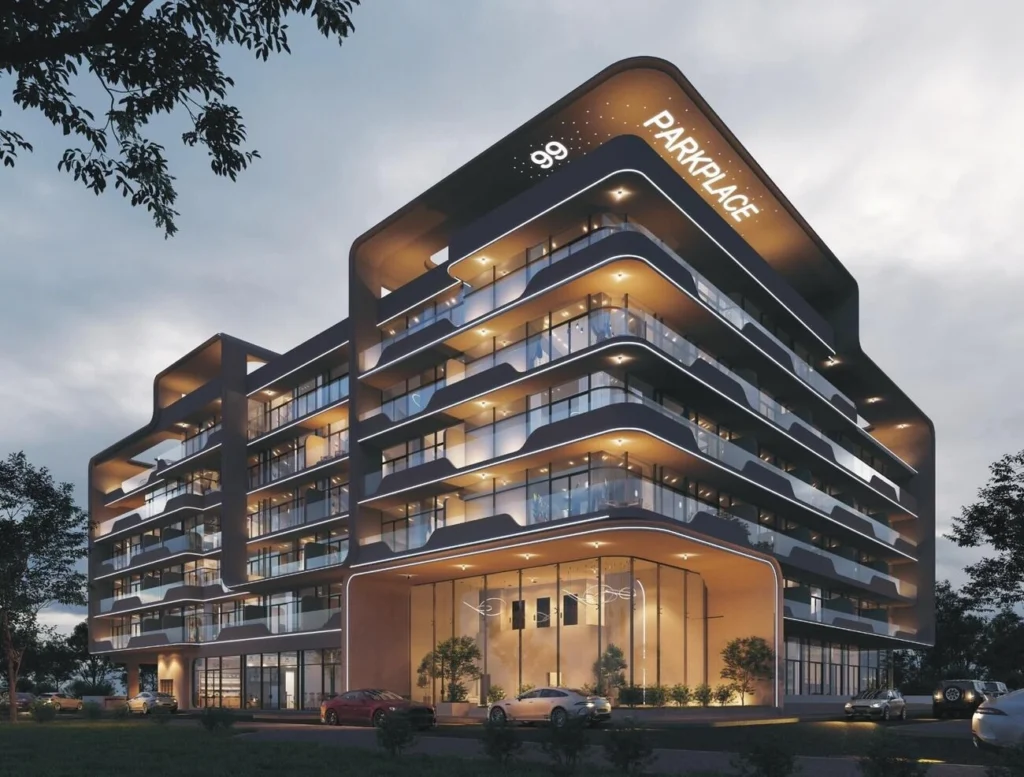
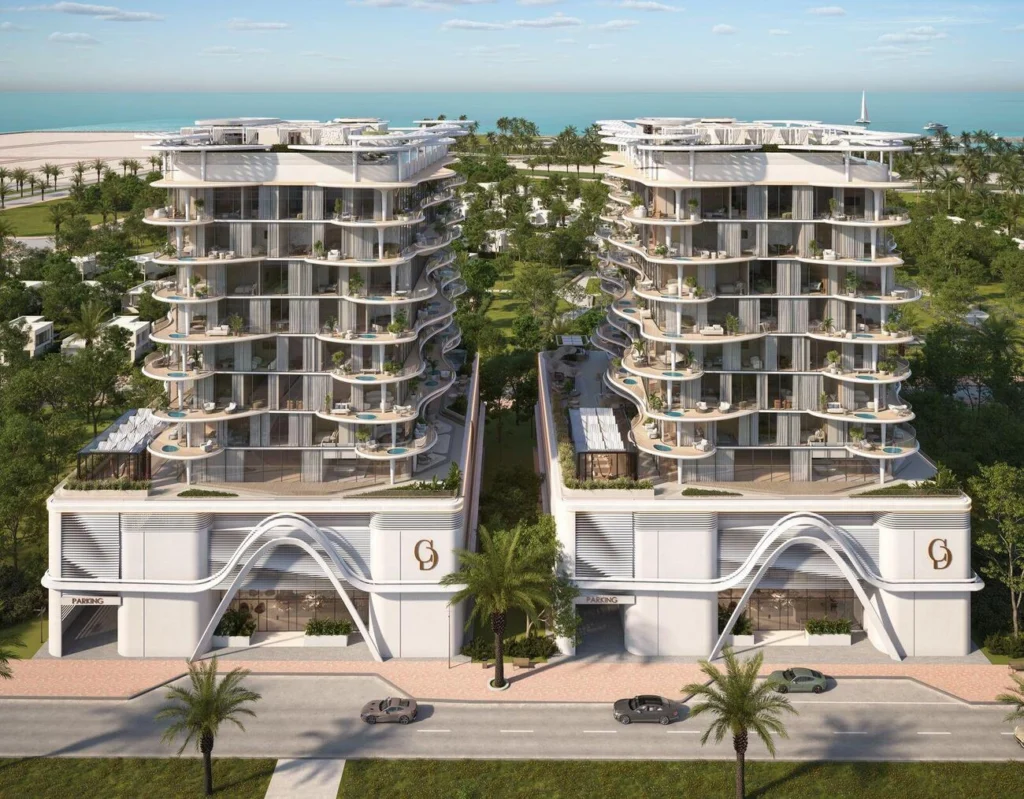
At the entrance to the island, between Bluewaters and The Beach JBR, Meraas is developing Bluewaters Bay, a new project comprising two residential towers on a shared podium, with one- to four-bedroom apartments and penthouses. Meraas currently schedules completion of Bluewaters Bay for Q4 2027. As the development remains under construction, prospective buyers should verify the latest construction status and contractual handover date through the developer and relevant official records before relying on that timetable. Buyers considering existing buildings should also bear in mind that nearby construction will remain part of the local environment for some time.
The most common formats in the completed stock are one-, two-, and three-bedroom apartments, with four-bedroom units less frequently available. Penthouses and townhouses appear on the market only occasionally, making direct comparison with standard apartments particularly difficult.
One of the biggest mistakes in analysing Bluewaters property is to assume that two apartments of the same size are interchangeable. In a compact premium market, value is determined not only by floor area, but also by the apartment’s exact position. The specific building and its location on the island, floor level, window orientation, view, balcony or terrace size, condition of the finishes, furniture, and even the unit’s distance from noisier public areas can all have a decisive impact on pricing.
Views generally fall into three main categories. Open-sea views are commonly treated as a premium feature by buyers, although the actual price difference should be established from comparable transactions in the same building or development.
Views of Ain Dubai provide an instantly recognisable outlook, although their appeal depends on how an individual buyer perceives the observation wheel and on the attraction’s operating status. Views toward Dubai Marina and JBR offer a striking urban skyline, particularly in the evening. Internal podium or neighbouring-building views may be priced differently from sea- or skyline-facing units, but the size of any discount should be tested against genuinely comparable transactions rather than assumed.
When buying on Bluewaters, the view and the apartment’s position within the building can have a greater impact on value than a difference of several dozen square feet in floor area.
| Property type | Best suited to | Key advantages | What to check |
|---|---|---|---|
| 1-bedroom apartment | Single professional, couple, second-home buyer | Lower entry price than larger units and relatively simple day-to-day maintenance | View, floor level, noise from public areas, parking |
| 2-bedroom apartment | Couple, small family, seasonal resident | More living space than a one-bedroom unit while remaining suitable for couples, small families and seasonal residents | Orientation, balcony size, condition of finishes |
| 3–4-bedroom apartment | Family, owner-occupier | More space, often better views, staff room in some layouts | Comparable transactions, service charges, number of parking spaces |
| Penthouse | Upper-segment buyer, lifestyle purchase | Scarcity, large outdoor areas | Transaction history, actual running costs, renovation restrictions |
| Podium townhouse | Buyer looking for a house-like feel with a private entrance | Greater sense of private living within a larger development | Privacy, proximity to shared areas, technical condition |
| Branded residence | Buyer who values hotel-style service | Hotel services and resort infrastructure | Charges, rental rules, management terms |
Prices and Investment Characteristics
Any market figure for Bluewaters is meaningful only when accompanied by a date, a source, and a clear methodology. Prices change, and different datasets measure different things, which means that an “average price on Bluewaters” tells a buyer very little unless it is clear what exactly has been averaged.
In practice, several different types of market indicators are publicly available, and they should not be mixed together. Registered transactions show the actual prices at which properties changed ownership, and in Dubai these records are maintained by the Dubai Land Department. Asking prices, by contrast, reflect sellers’ expectations and are often higher than the eventual transaction price. The median represents the midpoint of a dataset and is less affected by a small number of exceptionally expensive properties, whereas an average can be materially distorted by a single penthouse sale. Price per square foot is useful for comparison, but on an island where views, layouts, and property formats vary substantially, it can also be misleading.
The same distinction applies to the rental market. The asking rent shown in a listing is not the same as the rent recorded in an Ejari tenancy contract. Gross yield, calculated by dividing annual rent by the purchase price, does not include expenses and therefore should not be confused with the owner’s actual return.
The relatively small size of the market amplifies these effects. When only a limited number of apartments are sold over a six-month period, a handful of penthouse transactions or sales of units with exceptional views can shift the apparent “average” significantly. This is why published price-per-square-foot estimates for the same period can sometimes differ dramatically: some sources rely on listings, others on completed transactions, while others combine completed stock with newly launched developments.
The broad conclusion supported across different data sources is that Bluewaters Island sits firmly within Dubai’s premium and ultra-premium apartment segment. In half-year market reports published by major property portals for the first half of 2026, the island appears among the destinations attracting buyers at the highest end of the market, alongside locations such as Palm Jumeirah. The appropriate price for any particular apartment, however, should be established using genuinely comparable transactions rather than broad market averages.
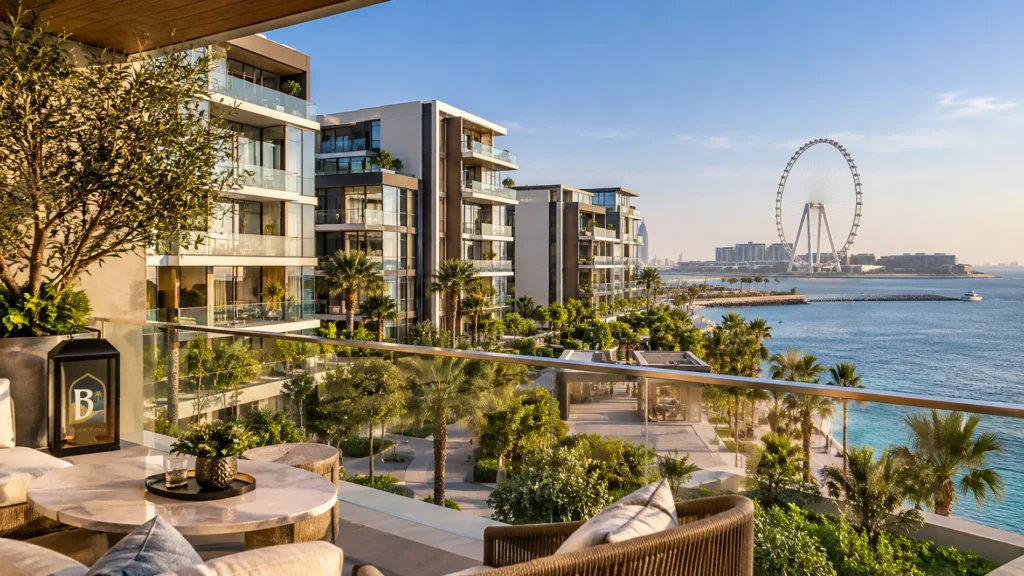
The relatively limited number of completed homes is a distinguishing supply characteristic of Bluewaters, but it should not be treated as evidence that prices will necessarily be preserved or increase. Relatively few new homes are delivered directly on the island, and Dubai has only a small number of comparable waterfront locations combining this type of walkable environment with immediate proximity to JBR. Scarcity, however, does not guarantee capital appreciation. Prices remain influenced by Dubai’s wider property cycle, new developments in surrounding areas, demand from international buyers, and macroeconomic factors beyond the control of any individual island destination.
A high purchase price also does not automatically translate into a high rental yield. A high purchase price can reduce the percentage yield even when absolute rental income is substantial. Whether Bluewaters produces a lower or higher yield than another district should therefore be tested using current transaction and rental data for comparable properties. This does not make Bluewaters a poor investment, but it does highlight the fact that a lifestyle purchase and an income-focused investment are two different strategies with different measures of success.
An owner’s net outcome depends on a wide range of costs. Service charges in premium developments can be substantial and vary from building to building. On top of these come vacancy periods between tenants, repairs and maintenance, furnishing costs, management fees—particularly where the property is used as a Holiday Home, an activity regulated by Dubai’s Department of Economy and Tourism and subject to the applicable licensing and unit-permit requirements—as well as transaction and registration expenses. Once all of these items are included, the gap between gross yield and actual net return can be significant.
A premium address does not automatically mean a high rental yield. On Bluewaters, part of an individual property’s value may reflect factors such as its waterfront setting, view, building position and limited comparable supply, so an income-focused buyer should assess rental performance separately from lifestyle characteristics.
What to check before valuing a specific property:
- DLD-registered transactions for comparable apartments in the same building, or with a similar view, over recent months—not just advertised asking prices.
- The date and methodology behind any index or market report referenced by a seller or adviser.
- Current service charges for the building and how they have changed over the past several years.
- The apartment’s actual rental history, including registered contracts, vacancy periods, and realised rental rates.
- The difference between advertised asking rents and rates in active tenancy contracts within the development.
- A full calculation of ownership costs, including charges, maintenance, furniture, management, and transaction expenses.
- The potential impact of nearby new developments on views, future supply, and competition for tenants.
Buying as a Foreign National
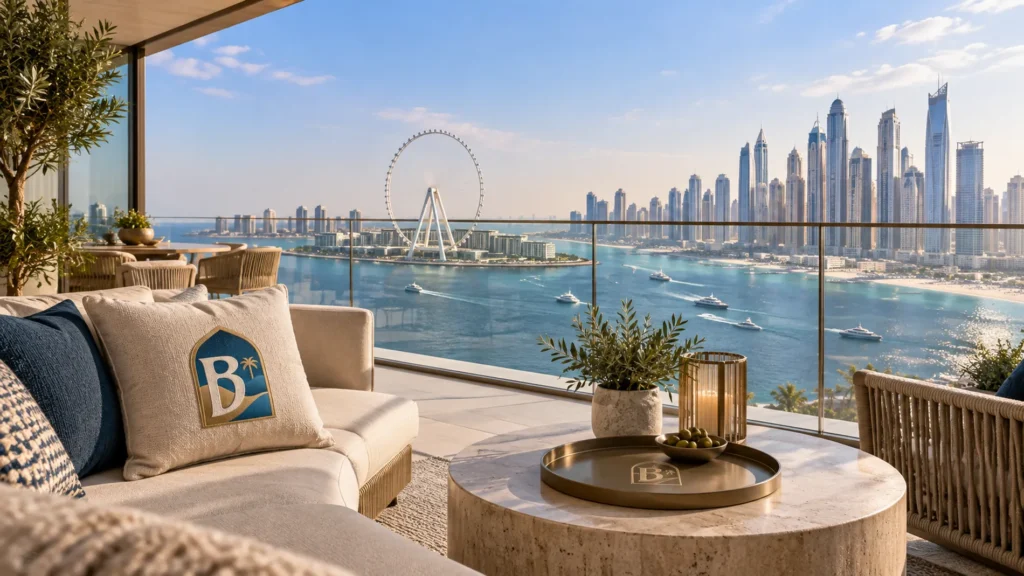
Foreign nationals are permitted to acquire freehold property in Dubai within areas specifically designated for foreign ownership. According to the Know Your Rights for Real Estate Investors guide published by the Dubai Land Department, freehold ownership in these designated areas is not limited by time and extends to both the land and the buildings on it, while ownership rights are recorded in the DLD registry. The list of designated areas is determined by decisions of the emirate’s authorities and may be expanded over time, so buyers should verify the legal status of the specific property rather than relying on general lists.
Registration of the transaction is a central element of buyer protection. Buyers should verify the current transfer procedure directly through the Dubai Land Department before committing to a transaction, because required documents, service channels and administrative procedures can change over time. For completed property, once the sale and purchase agreement has been signed, ownership is transferred through the DLD and its authorised service centres, and the buyer receives a title deed in their own name. For a resale in a freehold area, the DLD’s current sale-registration requirements include an electronic no-objection certificate (e-NOC) from the developer. The buyer should confirm the exact transfer requirements for the specific property and transaction before completion. The same DLD guidance also explains the standard contract framework, registration deadlines, and transfer fees.
For off-plan property, including new projects around the existing Bluewaters housing stock, the procedure is different. Transactions involving units under construction are recorded in an interim property register, and buyers should verify that the project is properly registered with the regulator, has an approved escrow account, and has the necessary sales permissions. Handover dates and payment schedules should likewise be checked against the contract and official records rather than relying on marketing materials.
Before purchasing a specific apartment, buyers should verify its legal status: who is registered as the owner, whether there are any mortgages, encumbrances, or disputes, whether the floor area stated in the documents corresponds to the registered property, and how parking spaces are legally allocated. These checks are carried out through official DLD services and, where appropriate, with the assistance of licensed professionals.
It is also important to distinguish property ownership from residency rights. Owning real estate in the UAE does not automatically grant a visa or residence permit. Residency programmes linked to property investment do exist, but their eligibility thresholds, documentary requirements, and conditions are governed separately, may change over time, and should always be verified against current official information from the relevant immigration authorities.
This material is provided for general information only and does not constitute legal, tax, or investment advice. The legal and tax implications of a purchase depend on the transaction structure, the specific property, and the buyer’s individual circumstances.
Who Bluewaters Island Is Best Suited For
Bluewaters works very well for some lifestyles and purchase scenarios, but is noticeably less suitable for others. The table below reflects an editorial assessment based on the island’s infrastructure, transport links, and market characteristics rather than a universal ranking.
| Scenario | Suitability | Why |
|---|---|---|
| Full-time living | Good, for the right lifestyle | Comfortable, walkable surroundings with everyday services nearby, although some needs still require trips to the mainland |
| Family with children | Moderate | There are play areas and pleasant spaces for walking, but no schools or major medical facilities on the island, so daily logistics need to be considered |
| Professional or couple | Very good | Restaurants, fitness facilities, the beach, and convenient access to major roads, without the need for a large family-oriented neighborhood |
| Second home | Very good | Low-maintenance ownership, a lively environment close at hand, and a highly recognizable address |
| Holiday home | Requires individual assessment | Short-term use can be considered, but the owner should verify Holiday Home rules, management costs, seasonality and the regulations applicable to the specific property. |
| Long-term rental | Requires current market analysis | Rental suitability depends on the unit, asking price, achieved rents for comparable apartments, service charges and current tenant demand. |
| Rental-income investor | Data-dependent | The investment case should be calculated from the acquisition price, achievable rent, vacancy assumptions, service charges, management costs and other ownership expenses. |
| Long-term ownership | Requires individual assessment | Bluewaters has a limited completed residential stock and a distinctive waterfront location, but future resale value depends on the specific unit, market conditions, competing supply and the wider Dubai property cycle. |
For a professional or a couple, the island is arguably at its most natural fit. It is possible to live here without making a large number of routine daily trips, while commuting to JLT, Media City, Internet City, or working remotely. Bluewaters can also suit a second-home scenario: apartments require less exterior maintenance than villas, many everyday and leisure services are nearby, and owners who spend part of the year abroad can consider professional property-management services, subject to the building rules, management agreement and intended rental model.
Families with children should assess the area more carefully. The island itself is pleasant and pedestrian-friendly, but the absence of schools, the need for regular daily travel, and heavier tourist footfall at weekends can make it less convenient than larger family-oriented master communities with their own landscaped grounds, schools, and clinics.
For an investor focused primarily on rental yield as a percentage return, Bluewaters may feel expensive to enter. For a buyer who places greater value on asset quality, scarcity, and the ability to combine personal use with occasional rental income, the equation looks different. The key question is not whether the area is “good,” but whether its profile matches your reason for buying.
Pros and Limitations of the Area
The most useful way to assess Bluewaters is to separate its lasting advantages from its objective limitations. Neither makes the area inherently “better” or “worse” — it all depends on how you intend to use the property.
Key strengths:
- A waterfront setting with views of the sea, Dubai Marina, and Ain Dubai that is difficult to replicate elsewhere in the city.
- A pedestrian-friendly environment within the island, with limited surface-level vehicle traffic.
- Walkable access to JBR and close proximity to Dubai Marina, where much of the area’s everyday infrastructure is concentrated.
- A premium residential offering with well-designed podiums, swimming pools, and dedicated resident amenities.
- A strong concentration of restaurants, hotels, and leisure facilities within walking distance.
- A distinctive visual identity and a highly recognizable address.
- A compact footprint and limited number of residential buildings, which help preserve the area’s more intimate character.
Limitations:
- A high entry price and correspondingly elevated ownership costs.
- Significant tourist and restaurant traffic, particularly in the evenings and on weekends.
- Limited standalone social infrastructure compared with larger family-oriented communities.
- Reliance on neighboring districts for schools, healthcare, and many everyday services.
- Public transport connections are less direct than in properties located next to Metro stations.
- Service charges and purchase prices can constrain investment returns.
- Ongoing development near the entrance to the island may temporarily affect the surrounding environment.
Bluewaters is likely to make more sense than a conventional apartment in Dubai Marina or JBR if you value a compact, walkable waterfront environment with limited surface-level through traffic, waterfront views, and a strong restaurant and leisure offering close to home — and if your budget allows you to pay a premium for the scarcity and prestige of the address.
If your priorities include rental yield, direct Metro access, a wider choice of apartments or lower ownership costs, Bluewaters should be compared with Dubai Marina and JBR using current transaction, rental and service-charge data rather than assuming that one district will automatically perform better.
What to Check Before Buying
In a compact premium market, mistakes can be more expensive because there are relatively few directly comparable properties and the differences between individual apartments can be substantial. Before proceeding with a purchase, it is worth working through a checklist that covers both the legal and practical aspects of the transaction.
- Title deed and registration. Confirm through the relevant DLD records that the seller is the registered owner and identify any registered mortgage, encumbrance or other restriction affecting the property. If a mortgage exists, verify the procedure for its settlement and release as part of the transfer.
- The building. Compare different buildings by their location on the island, age, condition of common areas, quality of management, and proximity to public spaces.
- The specific apartment. Check the floor, orientation, layout, actual size, and whether the stated area matches the official documentation.
- The view and the risk of it changing. Establish what may be built in front of the property in the future and how new developments near the island entrance could affect the outlook.
- Technical condition. Inspect the finishes, building systems, air conditioning, windows, and balcony. If necessary, bring in an independent specialist.
- Service charges. Request the current service-charge level, its historical changes, and confirmation that there are no outstanding payments.
- Parking. Verify how many allocated parking spaces come with the property and how they are recorded in the documentation.
- Furnishings. Clarify what is included in the purchase price, assess the condition of the furniture, and determine whether it suits your intended use — personal residence or rental.
- Actual rental history for an investment purchase. Review available registered tenancy contracts and achieved rental rates, and separately request evidence from the owner or property manager regarding vacancy periods, operating costs and any previous short-term letting.
- Noise, tourist traffic, access, and congestion. Visit the building at different times — on a weekday morning, on a weekend evening, and during peak traffic — to understand how the arrival, departure, and surrounding environment feel in practice.
It is also important to compare registered transactions for genuinely comparable properties with the seller’s asking price. If there is a substantial gap, there should be a clear reason for it: a superior view, a rare layout, a recent high-quality renovation, or simply an unrealistic asking price.
Looking for property on Bluewaters Island? Premium real estate should be assessed on more than just size and price per square foot. The building, floor, view, condition, and intended ownership strategy all matter. Answer a few questions to narrow the shortlist to properties that match your goals and budget.
Is Bluewaters Island the Right Choice?
Bluewaters Island is particularly well suited to buyers looking for a premium waterfront apartment for their own use: professionals and couples, second-home owners, and those who value a walkable environment, nearby restaurants, and convenient access to the rest of the city. For families with school-age children and investors focused primarily on rental yield, however, the area calls for a more careful assessment.
The trade-off is relatively straightforward. Buyers gain a resort-like setting, a prestigious and easily recognizable address, and a limited supply of properties, but they also have to accept tourist footfall, some dependence on neighboring districts for social infrastructure, and relatively high ownership costs.
In a market this small, the individual property matters more than any district-wide average. The building, floor, view, condition, service charges, and actual transaction history can influence the outcome far more than a general price index.
For that reason, Bluewaters Island is best evaluated through a combination of three factors: the quality of the living environment, the scarcity of available supply, and its connectivity with the wider city — rather than through the tourist appeal of Ain Dubai alone. If those three factors align with your reasons for buying, the island deserves a place on your shortlist.
 Real estate in Georgia
 Real estate in Cyprus
 Real estate in Montenegro
 Real estate in Bali
 Real estate in Thailand
 Real estate in Spain
 Real estate in Saudi Arabia
 Real estate in Turkey
 Real estate in Zanzibar
 +971 50 108 6910
 hello@baytique-uae.com
 UAE, Dubai, Dubai Hills Estate, Park Heights Square 1


 Get catalogue of TOP-7 objects