
 +971 50 108 6910


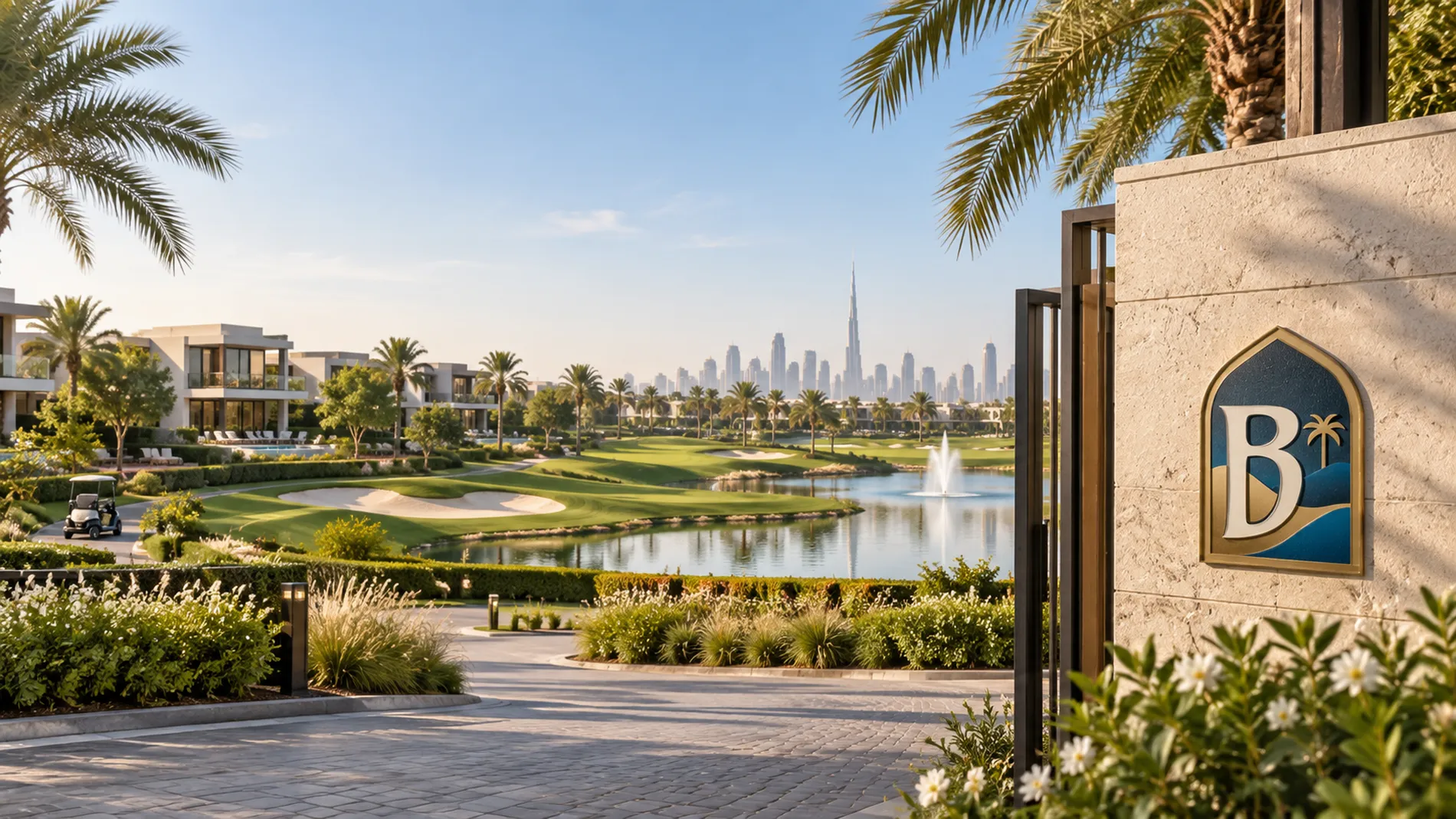

DAMAC Hills is a gated master-planned community in Dubailand, built around the Trump International Golf Club Dubai. By Dubai standards, it represents a distinctly suburban style of living: relatively low-density development, villas and townhouses arranged in separate gated clusters, several residential towers, a large park, and amenities designed primarily with families in mind. People do not move here for skyline views or easy access to the waterfront, but for space, greenery, and a quieter pace of life.
DAMAC Hills differs from a typical urban Dubai neighborhood in several important ways. Much of the housing consists of homes with private plots, gardens, or terraces, while the streets within the residential clusters are generally calm and low-traffic. Everyday essentials such as supermarkets, schools, clinics, and sports facilities are located either within the community itself or nearby. The golf course also gives the area a distinctive visual identity, even for residents who have never picked up a club.
That lifestyle comes with a trade-off. The community is designed around car ownership, there is no dedicated metro station, and journeys to Downtown Dubai, Business Bay, or Dubai Marina are heavily influenced by traffic conditions on Al Qudra Road and Hessa Street. The central compromise of DAMAC Hills is simple: a spacious, green residential environment in exchange for daily reliance on a car.
In this guide, we look at DAMAC Hills the way it should be assessed before a move or property purchase: through commuting routes, housing types, differences between individual clusters, schools, the property market, competing communities, and the practical limitations of living here. We also explain why DAMAC Hills should not be confused with DAMAC Hills 2.
DAMAC Hills at a Glance
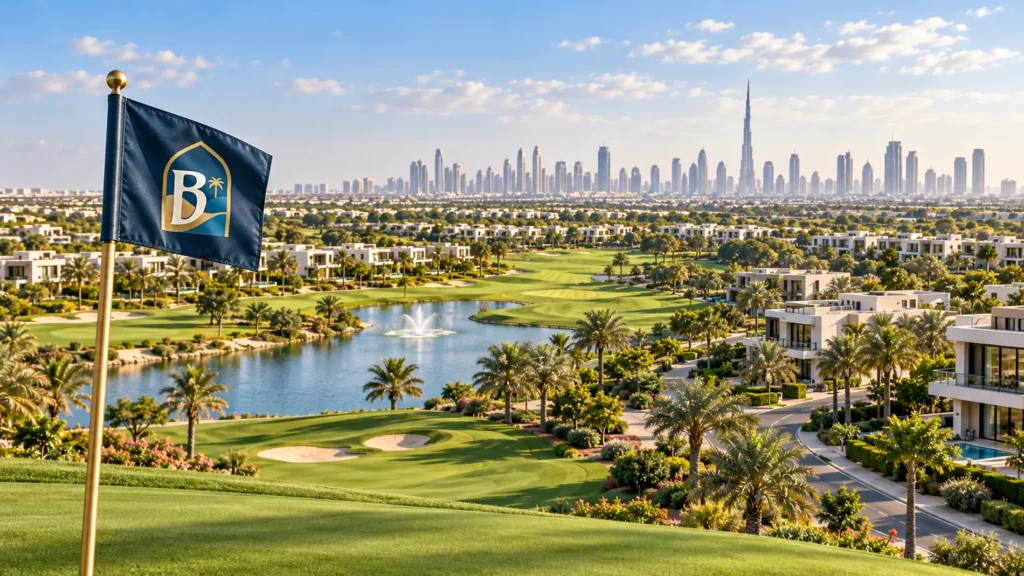
DAMAC Hills is located in Dubailand, between Al Qudra Road and Hessa Street, close to Dubai Studio City, Motor City, and Arabian Ranches. It was the first large-scale master development by DAMAC Properties. According to the developer, the community covers more than 42 million square feet, with approximately 4 million square feet dedicated to The Park, the development’s main landscaped green space. There is no single “typical” property here: the area is divided into more than two dozen clusters and residential developments, each with its own architecture, home sizes, and overall character.
At the heart of the master plan is Trump International Golf Club Dubai, an 18-hole championship golf course designed by architect Gil Hanse and opened in 2017. The Trump name is used under licence, and several villa developments, including Trump Estates, directly overlook the fairways. Villa and townhouse clusters are arranged around the golf course and park, while apartment buildings are concentrated closer to the main entrances and commercial areas.
The architecture is generally modern and relatively understated. The housing stock ranges from compact townhouses with small private yards to substantial mansions on large plots. The same bedroom count can describe dramatically different properties depending on the part of the community, a distinction we will return to later.
DAMAC Hills is typically chosen by families with children, long-term expatriate residents, dog owners, people who enjoy an active outdoor lifestyle, and buyers looking for a home with a garden at a lower price point than in Dubai’s more centrally located golf communities. It is considerably less suitable for people who commute to DIFC every day and do not want to rely on a car.
| DAMAC Hills overview | |
|---|---|
| Community type | Gated master-planned community in Dubailand, divided into individual residential clusters |
| Main property types | Townhouses, villas in a wide range of sizes, large golf-front mansions, and apartments |
| Lifestyle | Suburban and quiet, with a strong focus on parks, sport, and living in a private home |
| Transport | Predominantly car-based; no metro station within the community; RTA bus service available |
| Families with children | School, nurseries, playgrounds, and sports facilities within or close to the community |
| Golf | 18-hole Trump International Golf Club Dubai at the centre of the development |
| Ownership | Freehold ownership is available to foreign buyers in designated areas of Dubai, subject to the applicable ownership rules and registration with Dubai Land Department. |
| Main drawback | Commute times to Dubai’s central business districts during peak hours |
Location and Transport
Geographically, DAMAC Hills is an inland residential community positioned around the Hessa Street and Al Qudra Road corridors, with Dubai Studio City, Motor City and Arabian Ranches nearby.
The northern side of the development faces Hessa Street, which leads towards Al Barsha, Sheikh Zayed Road, and Dubai Marina. Its southern boundary runs along Al Qudra Road, linking Arabian Ranches, Motor City, Dubai Studio City, and further-out communities extending towards Emirates Road and DAMAC Hills 2.
In practical terms, residents tend to rely on two main routes. Hessa Street is commonly used for journeys to Dubai Marina, JLT, Dubai Internet City, and Palm Jumeirah. Al Qudra Road and its connecting interchanges provide access to Sheikh Mohammed bin Zayed Road and Emirates Road, making them more convenient for travel towards Dubai Silicon Oasis, the airport, or Sharjah. Downtown Dubai and Business Bay can be reached via Sheikh Zayed Road from either direction, and the better route often depends on the time of day.
Travel times to Dubai Marina, Downtown Dubai and other central districts vary substantially with the time of day, starting point within DAMAC Hills and traffic conditions. Prospective residents should test their actual commute at the hours when they expect to travel.
There is no single fixed commute time from DAMAC Hills, so the area should be assessed based on your actual route and the specific times at which you will travel.
The road network around the community is gradually being upgraded. RTA is carrying out improvements to Al Qudra Road, with DAMAC Hills officially included among the areas expected to benefit. In August 2026, the authority opened a new bridge at the intersection of Al Qudra Road and Sheikh Zayed bin Hamdan Al Nahyan Street, while additional side bridges at the junction are scheduled to open in the fourth quarter of 2026. According to RTA, the upgraded configuration is designed to increase road capacity from 3,600 to 7,200 vehicles per hour in each direction. This is encouraging for residents, although the real impact on any specific morning commute is best assessed after all sections have opened.
Public transport is more limited. DAMAC Hills does not have a metro station. In 2024, RTA launched the DA2 circular bus route between DAMAC Hills and Dubai Studio City, which at the time of launch operated at intervals of roughly two hours. The route is useful as an additional transport option, but it is not a realistic substitute for a car for most daily commutes. Timetables and route patterns change over time, so current information should always be checked through the RTA app or route planner.
For many families, this means one car per working adult, or at least a flexible working schedule. Teenagers without a driving licence are also much more dependent on parents, taxis, and school transport than they would be in a neighbourhood served directly by the metro.
What to check before choosing a home from a commuting perspective:
- The actual travel time to work between 7:30 and 8:30 a.m. and on the return journey between 5:30 and 7:00 p.m., ideally by driving the route yourself on a weekday.
- The route to school, including queues at drop-off and pick-up times.
- Which gate your cluster uses to access Hessa Street or Al Qudra Road, and how long it takes to get from your home to the community exit.
- Whether your household will need a second car and whether there is enough space for it on the plot or in the parking area.
- Whether your chosen school offers a school bus service to your specific cluster.
- How you will travel to the airport, children’s sports activities, and the places you visit most frequently at weekends.
Why Families Choose the Area
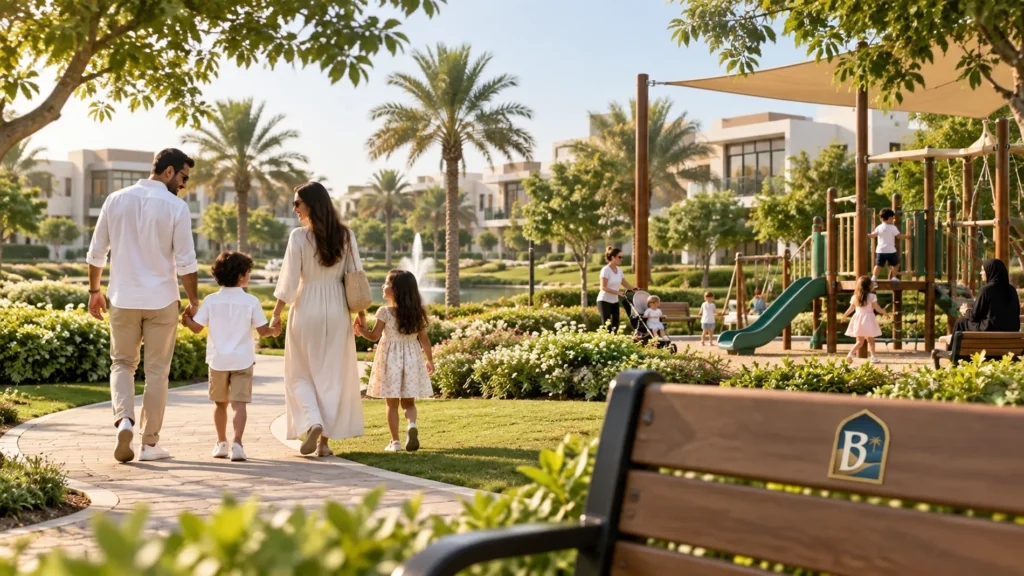
The phrase “family-friendly” appears in almost every description of DAMAC Hills, but its real meaning only becomes clear when you look at everyday routines. Families care less about a checklist of amenities than about how long ordinary tasks take and how comfortable they feel allowing their children to spend time outside the home.
The first thing many new residents notice is the gated-cluster format. Villas and townhouses are grouped into enclosed residential zones with controlled access, and through traffic inside these clusters is minimal. Controlled-access residential clusters and limited through traffic can make local walking and cycling more convenient for families. However, parents should assess traffic conditions, crossings and routes around their specific cluster rather than assume that all internal streets are equally suitable for children.
The second major advantage is The Park, a landscaped green zone stretching alongside the golf course. It includes playgrounds, running and cycling paths, themed gardens, barbecue areas, and dedicated spaces for walking dogs. For families with preschool-age children, this becomes part of daily life rather than something reserved for weekends. An after-dinner walk once the heat begins to ease can easily become part of the household routine, something that is much harder to achieve in densely built apartment districts.
A third factor is the range of sports and leisure facilities available for older children. The community includes tennis and basketball courts, a football pitch, a skate park, stables, and an equestrian club. Malibu Bay, with its artificial wave and sandy beach, offers the option of having a “beach day” without driving to the coast. Access rules, opening hours, and charges for individual facilities may change from time to time, so they are best confirmed with the management company before moving.
DAMAC Hills offers several features that may appeal to pet owners, including private gardens in many homes, landscaped areas and designated outdoor spaces. These features can make day-to-day life with a pet more convenient, although rules and access conditions vary by cluster and building.
That said, the pet policies of a specific cluster or apartment development should always be checked in advance, particularly when renting.
Living in a house with a garden changes family life more than many people expect when they first view a property. There may be room for a trampoline, a small pool, a vegetable garden, or simply outdoor dinners during the cooler months. At the same time, maintenance costs increase, including garden care, water consumption, and air-conditioning a larger living area. These expenses are best factored into the household budget from the outset.
Most day-to-day shopping needs can be met within the community. There are supermarkets, pharmacies, cafés, beauty salons, and small retail areas on site. For larger purchases, shopping malls, and entertainment, residents generally drive to neighbouring districts or to Mall of the Emirates.
The picture is more mixed for families with teenagers. The sports facilities and safe residential environment work in the community’s favour. However, a teenager who wants to meet friends independently in the city, go to the cinema, or travel to training sessions in other districts will need to rely much more heavily on parents or taxis. For families with older children, the lack of metro access tends to be more noticeable than it is for families with young children.
A family’s quality of life in DAMAC Hills depends less on the size of the villa than on how well a particular cluster fits into the daily cycle of home, school, work, sports, and shopping.
Living by the Golf Course
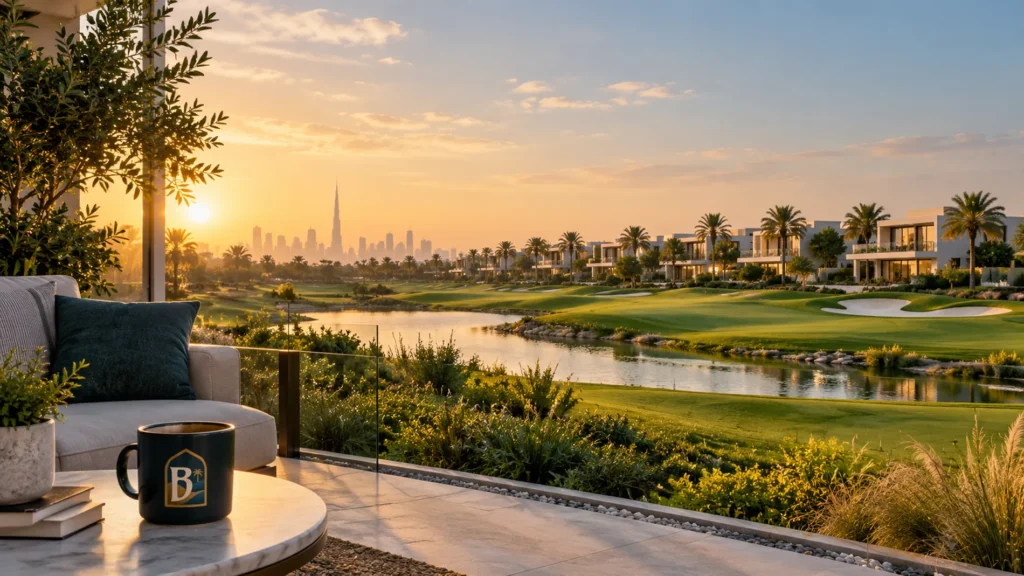
Trump International Golf Club Dubai occupies the central part of DAMAC Hills and, in many ways, defines the layout of the entire community. Residential clusters, parks, and roads are arranged around the fairways, which means a significant proportion of homes enjoy at least a partial view of the surrounding greenery. It is the golf course that gives DAMAC Hills a sense of openness and space that is difficult to achieve in more densely built residential areas.
For golfers, the benefits are obvious: the course is only a few minutes from home, while the clubhouse offers a restaurant, swimming pool, and practice facilities. Even residents who do not play golf may value the course for its open views, landscaped surroundings and the sense of space it creates within the community. It provides a carefully maintained landscape, open views from windows and gardens, fewer neighboring properties directly opposite, and a more visually open environment created by extensive landscaping and water features.
A villa facing the fairway offers a distinctive kind of privacy. There are no neighboring homes directly beyond the garden, and the outlook is not blocked by walls or buildings. That said, the privacy is relative rather than absolute: golf carts pass by, players move along the holes, and stray balls can occasionally reach plots located close to the edge of the course. Some buyers see this as a natural part of the golf-community atmosphere, while others find that after a year or two they begin to appreciate the quieter internal streets more.
It is important to understand the relationship between the property and the golf club correctly. Living in DAMAC Hills does not automatically include golf club membership or free access to the course. Membership terms, owner privileges for particular developments, and applicable fees are set by the club and may also depend on the terms attached to a specific property, so these details should always be checked separately before a purchase.
A golf-course view may carry a price premium over a comparable property on an internal street, but the size — or even the existence — of that premium should be checked against recent transactions for genuinely comparable homes. The size of that premium depends on the cluster, the width and quality of the view, the property’s orientation, and exactly what part of the course is visible. An open fairway with water features is valued very differently from a narrow glimpse of greenery between two houses. This is why a golf-course view does not, by itself, make a property a better investment. Paying more for a golf-course view does not guarantee a proportionally higher resale price or rental return. The premium should therefore be tested against recent comparable transactions and the property’s layout, condition and specifications.
Before buying a golf-facing villa, check the following:
- The orientation of the plot and façades in relation to the sun, as this will affect whether the garden is shaded in the evening and how much heat is absorbed by rooms facing the course.
- The actual sightlines from the living room, bedrooms, and garden, rather than relying only on the view from an upper floor or one corner of the plot.
- The distance to the nearest fairway, tee, or green, and whether protective netting is in place if the property sits close to the typical flight path of golf balls.
- The level of privacy in the garden from the course itself and from golf-cart paths.
- The condition of the landscaping along the property boundary and who is responsible for maintaining it.
- Future development plans and possible changes to the surrounding landscape, including new projects that could partially obstruct the view.
Paying a premium for a golf-course view makes the most sense when you will genuinely enjoy that view every day. If the property is being purchased purely for capital appreciation, the view should be one factor in the decision rather than the only one.
Property in DAMAC Hills


 Jumeirah Village Circle/JVC (Dubai)
 from 29м²


DAMAC Hills offers almost every residential property type commonly found in Dubai. This makes the community suitable for a wide range of budgets, but it also makes comparisons more complicated, because area-wide averages reveal very little about the value or quality of a specific home.
Apartments are concentrated in residential buildings closer to the main entrances and commercial areas. Options include studios and one-, two-, and three-bedroom apartments, many with views over the golf course or park. Typical amenities include shared swimming pools, gyms, and underground parking. This format works well for couples, single professionals, and smaller families who want the DAMAC Hills lifestyle without the upkeep and operating costs associated with a house.
Townhouses typically have three or four bedrooms, a small private garden, on-plot parking, and access to shared swimming pools and communal facilities within the cluster. They are the most common family-oriented housing format in the community. Clusters located near the park and close to the school are particularly popular.
Villas span several distinct segments. There are compact detached family homes with gardens, larger four- and five-bedroom villas with maid’s rooms and substantial plots, and high-end mansions, including properties in Trump Estates, with direct golf-course frontage, private pools, and extensive living space. Well-known villa clusters in DAMAC Hills include Rochester, Trinity, Pelham, Silver Springs, The Field, Queens Meadow, and Trump Estates. They differ considerably in house size, architectural style, density, and their position relative to the golf course and park.
One of the biggest mistakes buyers make is comparing properties solely by bedroom count. Two four-bedroom villas in neighboring clusters may differ in built-up area by tens of percent, while the difference in plot size can be even greater. One may be a mid-row property with a compact garden, while another occupies a corner plot with a much larger outdoor area and additional parking space.
Less obvious details can also have a major impact on both value and day-to-day comfort. A corner property may offer additional windows, a larger plot or more outdoor space, depending on the specific layout and plot configuration.
A park-facing home may appeal more to families because of easy access to play areas, while golf-course views tend to attract buyers willing to pay a premium for a greater sense of openness. A maid’s room, separate storage space, home office, or ground-floor guest bedroom can often be more useful than simply adding another bedroom upstairs.
Completed properties in DAMAC Hills also vary in age. The earliest phases were handed over around a decade ago, which means some homes have already been renovated, while others may require upgrades to air-conditioning systems, bathrooms, kitchens, and landscaping. At the same time, the developer and other companies continue to launch new projects in and around the community. Completion dates and specifications for off-plan properties can change, so they should always be verified against official project documentation rather than marketing materials.
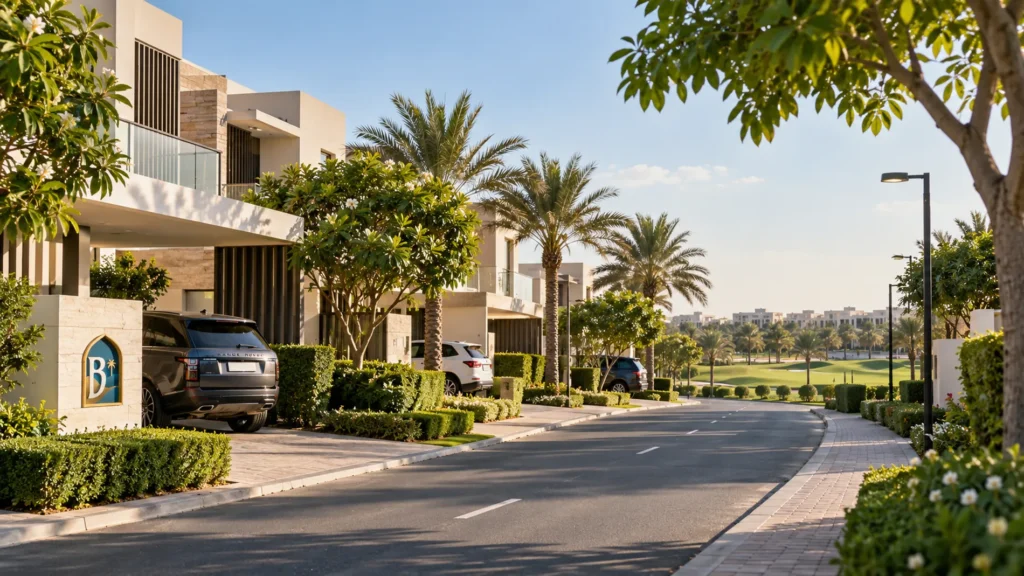
Villa or townhouse
A townhouse is often the better option when a family wants a home with a garden but prefers to keep maintenance responsibilities to a minimum. A townhouse typically has less external surface area and a smaller plot than a detached villa, although actual cooling and maintenance costs depend on the property’s size, orientation, insulation and condition. For some families with one or two young children, a townhouse can offer a useful compromise between private outdoor space, internal living area and maintenance requirements.
A villa makes more sense when greater privacy is important, when adults and children need separate living zones, or when there is a need for guest accommodation, a live-in nanny, a private pool, or a larger garden for dogs. A detached home also offers better separation from neighboring noise and gives owners more freedom when it comes to landscaping and outdoor improvements. In return, the owner should expect higher utility bills, repair costs, and garden maintenance expenses.
The difference is also noticeable in everyday life. A townhouse is generally easier to leave unattended during the summer. A large villa with a garden and swimming pool requires regular maintenance even when the owners are away.
How to choose a cluster
A cluster in DAMAC Hills is a distinct residential zone within the wider community, with its own architecture, entrance, shared facilities, and often its own service-charge structure. The choice of cluster can influence everyday life just as much as the choice of the individual property. You should evaluate a specific cluster, a specific street, and a specific plot rather than treating “DAMAC Hills” as a single uniform location.
Key criteria when choosing a cluster:
- Distance and route to the school, especially if a child is expected to walk or cycle there independently.
- Direct access to the park, playgrounds, and walking paths without having to cross busy internal roads.
- The availability and quality of golf-course views, particularly if the property carries a premium for them.
- Plot privacy and overall development density within the cluster.
- Typical plot sizes and the potential to extend or improve the garden.
- Proximity to the exits leading toward Hessa Street or Al Qudra Road, depending on the household’s main commuting route.
- The general condition of the homes, landscaping, and communal areas within the cluster.
- Current service charges and how they have changed in recent years.
- Walking distance to supermarkets, cafés, and sports facilities.
| Property type | Best suited to | Key advantages | What to check |
|---|---|---|---|
| Apartment | Couples, single professionals, smaller families, and investors with a more limited budget | Lower entry price, shared pool and gym, no garden maintenance | View, road noise, parking size and type, pet rules, building service charges |
| Townhouse | Families with one or two children, and renters choosing their first home with a garden | Private outdoor space, shared cluster amenities, moderate utility costs | Mid-row or corner unit, garden size, sound insulation between shared walls, proximity to the school and park |
| Villa | Larger families, dog owners, and people who work from home | Greater privacy, more rooms, private garden, potential for a swimming pool | Plot size, layout, presence of a maid’s room, age of the air-conditioning systems, ongoing maintenance costs |
| Golf-front / luxury villa | Affluent buyers, golf enthusiasts, and those who value space and views | Open outlook, prestigious address, larger plots and living areas | Actual sightlines, orientation, privacy from the golf course, club membership terms, liquidity within the relevant market segment |
Schools, Healthcare and Everyday Infrastructure
For families, the quality of a neighbourhood’s infrastructure comes down to a simple question: how many daily and weekly needs can be met without a long drive? In this respect, DAMAC Hills covers most basic requirements within the community itself, while more specialised services are available in neighbouring areas.
The community’s main educational institution is Jebel Ali School. This British-curriculum school relocated to DAMAC Hills in 2016 and now educates children from the early years through secondary school. In the most recently published KHDA inspection cycle, for the 2023–2024 academic year, the school received a Very Good rating. KHDA suspended full school inspections during the 2024–2025 and 2025–2026 academic years and announced that they would resume in 2026–2027, so the rating may be updated. The latest rating, curriculum information and school details are best checked in the official KHDA school directory.
Having a school within the community does not guarantee that a place will be available for your child. Popular year groups may have waiting lists, and tuition fees can change from one academic year to the next. School availability should be discussed before signing a tenancy agreement or completing a property purchase, not after moving in. Families looking for a different curriculum often consider schools in Arabian Ranches, Motor City, Dubai Sports City, The Sustainable City and nearby communities, which once again makes the morning commute a decisive factor.
For younger children, there are nurseries both within DAMAC Hills and in the surrounding area. Their educational approaches, schedules and availability vary, so parents typically choose a nursery based on its proximity to home and their route to work, then verify licensing and other details through KHDA.
Healthcare is relatively straightforward. Clinics, dental practices and pharmacies are available in and around the community. For specialist or hospital care, residents may need to travel to facilities in neighbouring districts. Availability, emergency capability and insurance-network status should be checked directly with the healthcare provider and insurer. When choosing health insurance, it is worth checking which nearby clinics are included in the provider network.
Residents can buy groceries and everyday household items from supermarkets within the community, while larger shopping trips are usually made to malls in neighbouring areas. DAMAC Hills also has cafés, restaurants, salons, fitness facilities and small retail zones. It cannot match Dubai Marina or Downtown for dining variety or nightlife, although many families see this as an advantage rather than a drawback.
| Family need | What is available | Practical consideration |
|---|---|---|
| School | Jebel Ali School, offering the British curriculum, within the community; other schools in neighbouring areas | Check availability in the required year group and the latest KHDA rating before committing to a property |
| Nursery | Nurseries within and close to the community | Choose based on the parents’ commuting route and check licensing and waiting lists |
| Groceries | Supermarkets and convenience stores within the community | Everyday shopping can be done locally; larger shopping trips are easier at nearby malls |
| Healthcare | General clinics, dental practices and pharmacies within the community | Emergency and specialist care requires travel to hospitals in surrounding areas |
| Sport | Golf club, courts, football pitch, skate park, equestrian club and fitness facilities | Access conditions and fees for individual facilities should be confirmed with the relevant operators |
| Weekend activities | The Park, Malibu Bay, walking areas and cafés | Well suited to children and active recreation; cultural activities and major shopping require a trip into the city |
Buying, Renting and the Property Market
Any decision to buy in DAMAC Hills should begin with an honest answer to one question: what is the property actually for? An owner-occupier evaluates a home in terms of how well it will support everyday life over the next five to ten years. An investor focuses on the stability of rental demand, running costs and resale liquidity. Those goals often lead to very different property choices within the same community.
Different property types also attract noticeably different tenant profiles. Apartments are more commonly rented by couples and single professionals who tend to prioritise price and the condition of the unit. Townhouses and villas are more likely to attract families planning to stay for longer periods, who pay close attention to schools and are willing to pay more for a good garden and quality renovation, but who also compare available options more carefully. Tenant demand can differ by property type, price range and cluster. Investors should therefore evaluate actual rental transactions and current competing supply rather than assume a particular tenant profile will produce lower turnover or shorter vacancy periods.
For that reason, an average rental yield for the area says relatively little about the performance of a specific property. Actual returns depend on the cluster, view, layout, condition, service charges, maintenance expenses and periods without a tenant. Two apartments of the same size in the same development may generate different returns simply because one is on a better floor or has a more desirable view.
Service charges in DAMAC Hills vary between clusters and buildings. They depend on the range of shared amenities, security, landscaping and swimming-pool maintenance. Before completing a purchase, it is sensible to cross-check charges against the official service charge index available through Dubai Land Department’s digital services, using the relevant project and budget year, and to ask the seller for a payment history and confirmation that there are no outstanding balances.
Market data should ideally come from primary sources. Asking prices in property listings reflect sellers’ expectations rather than actual transaction values, and listings may remain online even after a property has been sold. Registered transactions, including the transaction date, property size and sale price, can be checked in the Dubai Land Department open-data section. When comparing transactions, use the same property type and, where possible, the same project or cluster, similar size, registration type and a recent date range; community-wide averages can mix fundamentally different properties. Comparisons should focus on properties in the same cluster, of a similar size and sold within the past few months, rather than on broad averages for the entire community.
The choice between a completed property and an off-plan purchase also deserves careful consideration. A completed home can be inspected, its condition assessed, and it can be occupied or rented out immediately, although it may require renovation. An off-plan project may offer payment plans and more modern layouts, but it also comes with the risk of construction delays and uncertainty about the final quality. Escrow arrangements, project registration and the payment schedule should all be verified through official documentation.
Investment forecasts for DAMAC Hills, as with any area of Dubai, remain forecasts. Capital appreciation and rental yields are not guaranteed, and both are influenced by wider market conditions, the volume of new supply in neighbouring communities and changes in transport accessibility.
| Buyer profile | What to focus on first | Common mistake |
|---|---|---|
| Owner-occupier | Commute, layout suitability, condition of the home and its systems | Choosing a home based on photos and views without testing the morning commute |
| Family with children | School place, park access, street safety and garden size | Signing a contract before confirming school availability |
| Long-term renter | Contract terms, cluster rules, utility and garden maintenance costs | Comparing annual rent alone without considering maintenance-related expenses |
| Investor | Actual DLD transactions, service charges, demand within the specific cluster and vacancy risk | Relying on advertised yields and listing prices |
| Golf-front villa buyer | Sightline, privacy, liquidity within the relevant price segment and golf-club terms | Assuming the premium paid for the view will automatically be recovered on resale |
Not sure which type of property in DAMAC Hills is right for you? Answer a few questions about your budget, purchase goals and lifestyle, and we will prepare a shortlist of options worth considering.
Advantages and Limitations
DAMAC Hills has a clearly defined character, and its strengths are directly connected to its limitations. They are best assessed in relation to your own daily routine rather than in abstract terms.
Advantages
The first advantage is the housing format itself. The community gives residents the opportunity to live in a townhouse or villa with a private garden, on-plot parking and separate spaces for different members of the household. For many expatriates moving from apartments, this is the main reason to relocate.
The second is greenery and space. The golf course, park, lakes and landscaped streets create an environment that is particularly enjoyable for walking and spending time outdoors during the cooler months. Living alongside the fairways adds a resort-like quality while the area still functions as a fully established residential community.
The third is family infrastructure. The school, nurseries, playgrounds, sports facilities, skate park and equestrian club are all located within the community. For families with children, having several everyday facilities within the community can reduce the amount of additional driving required during the week.
The fourth is the peace and privacy of gated clusters. There is very little through traffic, and the streets tend to remain quiet in the evenings.
The fifth is convenience for dog owners and people with active lifestyles. Large green spaces, running routes and sports courts provide residents with a range of options for regular outdoor activity.
The sixth is the fact that the infrastructure is already established. Most of the community has been built and occupied, allowing buyers to assess the real environment rather than relying on renderings of a future development.
Limitations
The main limitation is dependence on a car. Life in DAMAC Hills becomes significantly more difficult without one, and households with two working adults will often find that two cars are necessary.
The absence of a metro station within the community means that daily journeys to central business districts are vulnerable to traffic conditions. Improvements to Al Qudra Road help, but they do not make commute times predictable at every hour of the day.
The clusters also differ considerably from one another. Construction quality, the condition of individual homes, development density, and proximity to the school and park can vary so much that the experience of residents in one cluster may say very little about another.
Service charges are not uniform and depend on the individual building or cluster, which makes it more difficult to compare properties on the basis of total ownership cost.
Construction of new developments and roadworks continues near the community and in some parts of it. These are temporary factors, but they may affect noise levels, dust and driving routes in specific parts of DAMAC Hills.
The area also offers less variety in restaurants, cultural venues and nightlife than Dubai’s central districts. Golf-course views and larger plots may carry a price premium, but buyers should not assume that the full premium will automatically be reflected in a future resale price. Recent comparable transactions should be checked before attributing a specific value to the view or plot.
Who Is DAMAC Hills Best Suited To?
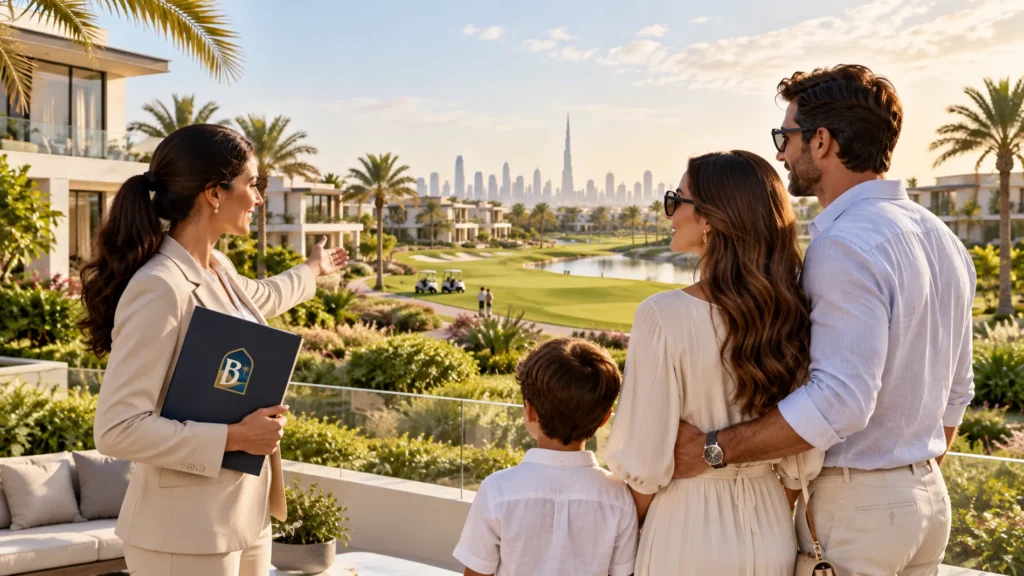
The answer is better based on real-life scenarios than on a general impression of the community. Below are some of the most common profiles among buyers and tenants.
A family with young children. For this type of household, DAMAC Hills can be one of the more convenient options. Nearby nurseries, playgrounds within the clusters, a park for daily walks and a house with a garden cover many of the family’s core needs. The decisive factor is the parents’ commute. If at least one adult works remotely or has a workplace closer to the southern part of Dubai, the community can be particularly well suited.
A family with school-age children. Families following the British curriculum have an advantage if they secure a place at Jebel Ali School. If a child attends school elsewhere, the daily journey and availability of school-bus transport need to be assessed realistically. Teenagers also value sports clubs and a degree of independent mobility, and this is an area where DAMAC Hills offers less freedom than communities served by the metro.
A couple without children. Couples who value peace, sport and a dog-friendly lifestyle may find DAMAC Hills appealing, especially in an apartment or smaller townhouse. Couples who enjoy spending evenings at restaurants in Dubai Marina and do not want to drive every time they go out may find the area too isolated.
A golf enthusiast. Having a championship-level course close to home is a major attraction. However, membership conditions should be checked separately, and it is worth comparing DAMAC Hills with other golf communities that offer multiple courses or a more central location.
An investor. The community can work well for investors who are willing to analyse specific data: DLD transactions, service charges and tenant demand within the chosen cluster. Buyers who rely mainly on a generic “average area yield” risk overlooking differences in transaction prices, service charges, competing rental supply and vacancy periods between individual properties and clusters.
Someone who works in central Dubai every day. For a resident who must commute to DIFC, Downtown or Business Bay every weekday at a fixed start time, DAMAC Hills may become a source of ongoing stress. The lifestyle can still work, but only after testing the route during actual rush hour.
Who may find the area less suitable. DAMAC Hills is unlikely to be the right choice for people without a car, those who want restaurants and cultural life within walking distance, short-term residents who change homes frequently, or buyers expecting guaranteed capital appreciation without conducting detailed property-level analysis.
DAMAC Hills and Its Alternatives
DAMAC Hills is most often compared with other villa and golf communities in Dubai. Each occupies a distinct niche, so it is more useful to think in terms of different trade-offs rather than trying to identify a single “best” area.
Arabian Ranches is one of Dubai’s oldest villa communities and is located close to DAMAC Hills along Al Qudra Road. It has mature infrastructure, an established atmosphere and a large number of families who have lived in the community for many years. There is also a golf club, while villas in some of the older clusters often occupy large plots. Transport conditions are broadly similar to those in DAMAC Hills.
Dubai Hills Estate is closer to the city centre, between Al Khail Road and Umm Suqeim Road. The community combines villas, townhouses and a large number of apartments, and it has its own golf course, a major shopping mall and a hospital. Its more central position and broader commercial infrastructure create a different market profile from DAMAC Hills; current pricing should be compared using recent transactions for equivalent property types.
Jumeirah Golf Estates is in the southern part of Dubai, closer to Emirates Road and Sheikh Zayed Road. The community is built around two golf courses and is geared towards buyers of larger villas and dedicated golf enthusiasts. The community has a strong focus on larger villas and golf-oriented residential living. Current pricing relative to DAMAC Hills should be compared using recent transactions for equivalent property types rather than broad community averages.
DAMAC Hills and DAMAC Hills 2 are separate communities. DAMAC Hills 2, formerly known as Akoya Oxygen, is located much farther along Al Qudra Road, beyond Emirates Road. It is a newer development with its own themed amenities and a location farther from central Dubai. Property prices should be compared using recent transactions for equivalent homes, as the difference varies by property type, size and phase.
Trump International Golf Club is not located there. Confusion between the two names is common in property listings and advertising, so buyers should always verify the exact location on a map and against the property documents.
| Criterion | DAMAC Hills | Arabian Ranches | Dubai Hills Estate | Jumeirah Golf Estates | DAMAC Hills 2 |
|---|---|---|---|---|---|
| Golf | 18-hole Trump International course | Golf club within the community | Own golf course | Two golf courses | No championship golf course |
| Villa lifestyle | Strong, ranging from townhouses to mansions | Strong, with mature villa clusters | Villas plus a large apartment component | Strong focus on larger villas | More affordable townhouses and villas |
| Central location | Moderate | Moderate | More central, closer to the city core | Moderate, southern part of Dubai | Less central, farther from the city |
| Maturity | Established community with some new projects | One of Dubai’s oldest villa communities | Still actively developing | Established, with newer phases continuing | Newer community |
| Commute to central Dubai | Depends on Hessa Street and Al Qudra Road | Similar to DAMAC Hills | More centrally positioned; actual commute depends on destination and traffic | Depends on Sheikh Zayed Road and Emirates Road | Farther from central Dubai; actual commute depends on destination and traffic |
Key Takeaways on DAMAC Hills
DAMAC Hills offers a suburban lifestyle within Dubai. It is defined by homes with gardens, quiet clusters, a large park and a golf course that forms part of the everyday landscape. People choose the community for space and peace rather than for urban energy.
Its family-oriented character is reflected not just in marketing language but in the physical environment itself. The school, nurseries, playgrounds, sports facilities and safe internal streets reduce the amount of time parents need to spend on everyday logistics.
The choice of cluster matters more than simply choosing DAMAC Hills as a whole. The condition of homes, plot sizes, distance to the school and park, service charges and ease of access to major roads vary enough that two properties within the same community can offer completely different living experiences.
A car remains an essential part of life in DAMAC Hills. RTA improvements to Al Qudra Road are helpful, but they do not remove the need to test the real commute during peak hours.
Golf-facing property makes sense when the view will genuinely be part of your day-to-day lifestyle. For an investment purchase, however, the premium attached to a golf-course view needs to be calculated separately and compared against actual transaction data.
Before buying, it is important to review registered DLD transactions, verify service charges and inspect the specific property. Listing prices and average yield figures are not a substitute for this level of due diligence.
DAMAC Hills and DAMAC Hills 2 are different communities with different locations, price levels and infrastructure, and this distinction should be kept in mind when evaluating any listing.
Conclusion: How to Make the Right Decision
DAMAC Hills is not a one-size-fits-all community. It is a particularly strong option for families who value space, greenery, the privacy of a home with a garden, and well-developed amenities within the community—and who are comfortable relying on a car for their daily routine. The golf course, expansive park, and quiet residential clusters create a living environment that is relatively rare in Dubai, but the trade-off comes in the form of longer travel times and higher costs associated with maintaining a house.
Evaluating DAMAC Hills is best approached step by step. First, determine whether the location realistically works for your daily commute to work and school. Next, decide which type of property best suits your needs: an apartment, townhouse, villa, or a home overlooking the golf course. From there, the focus should shift away from assessing DAMAC Hills as a whole and toward evaluating the specific cluster, street, plot, and individual property. Compare options based on their condition, size, views, service charges, and actual transaction data.
For families whose priority is a walkable urban lifestyle or a short, car-free journey to central Dubai, a more centrally located neighborhood may be a better fit. But for those who picture evening walks along the fairways, children riding their bikes through quiet streets, and a private garden of their own, DAMAC Hills can be an excellent choice—provided the property is selected carefully and the decision is based on verified, up-to-date information.
 Real estate in Georgia
 Real estate in Cyprus
 Real estate in Montenegro
 Real estate in Bali
 Real estate in Thailand
 Real estate in Spain
 Real estate in Saudi Arabia
 Real estate in Turkey
 Real estate in Zanzibar
 +971 50 108 6910
 hello@baytique-uae.com
 UAE, Dubai, Dubai Hills Estate, Park Heights Square 1


 Get catalogue of TOP-7 objects