
 +971 50 108 6910


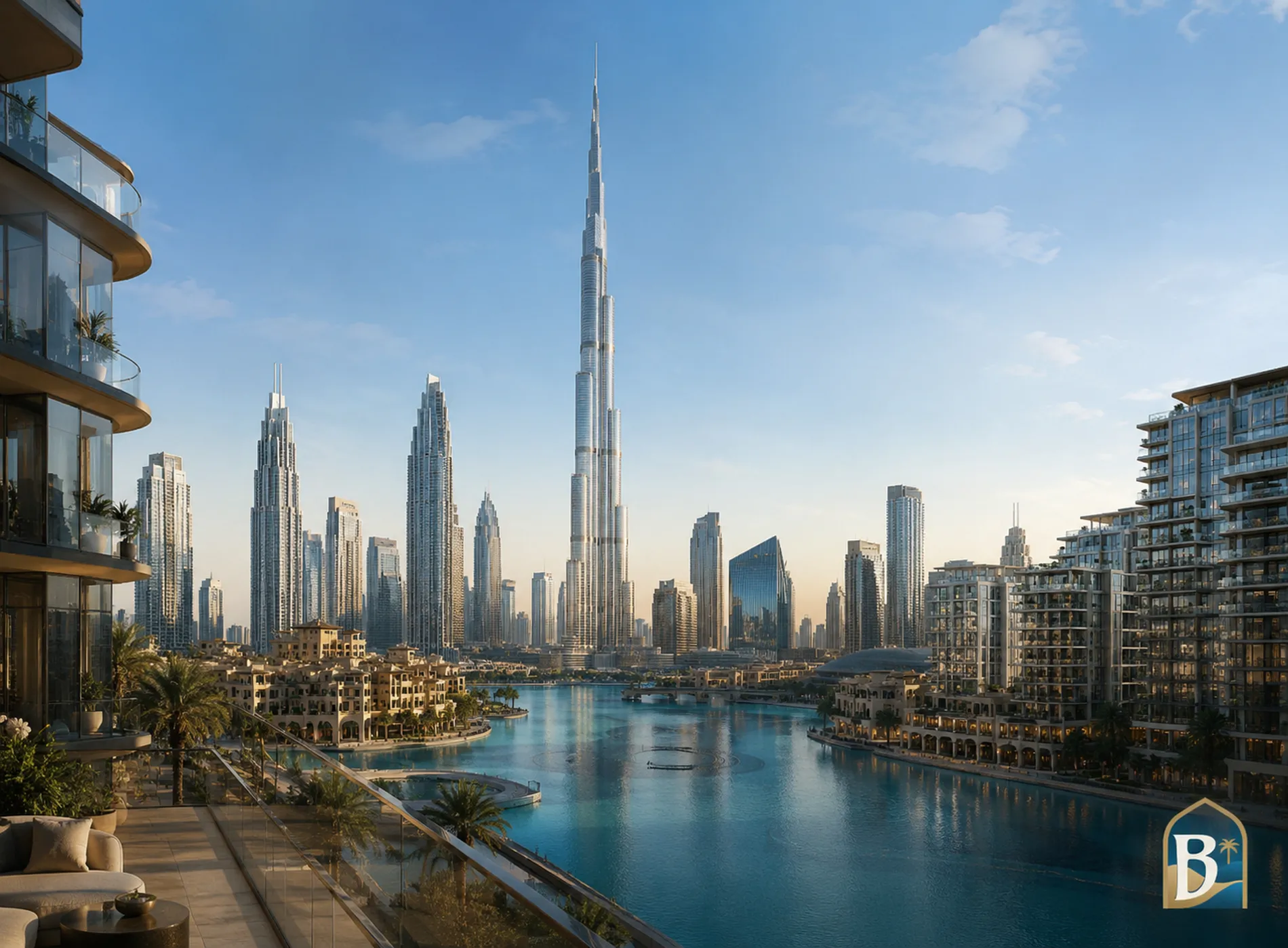

Downtown Dubai is one of the most recognizable urban districts in the world. Home to the Burj Khalifa, Dubai Mall, and the Dubai Fountain, it has helped define the visual identity of modern Dubai and remains a major draw for tourists, professionals, and property buyers from around the globe. At the same time, Downtown is a fully established residential neighborhood rather than solely a tourist destination. Its residential environment varies considerably from one building to another, particularly in terms of noise, pedestrian access, traffic, amenities, management quality, and proximity to the district’s busiest visitor areas.
That last point makes choosing a property here more demanding than it may initially appear. Two homes of the same size, both technically located at the same Downtown Dubai address, can offer completely different day-to-day experiences: one may be within easy walking distance of the metro on a relatively quiet street, while another may sit in the middle of heavy tourist traffic with a view overlooking a shopping mall car park. The label “Downtown Dubai” alone is not a sufficient basis for choosing a property.
The district is structured in such a way that exceptional centrality and extensive infrastructure inevitably come with tourist crowds, road congestion, and a distinctive urban pace. For some residents, that is precisely the appeal: the energy of the city begins right outside their front door. For others, it is the main reason to consider a quieter neighboring district instead.
This guide takes a practical look at Downtown Dubai for anyone researching the area before buying a property, relocating, or comparing it with other central parts of the city. We will examine the district’s individual subareas and how they differ, the main property formats, transport conditions, local infrastructure, and the factors that are often overlooked in standard neighborhood descriptions.
Where Is Downtown Dubai Located?
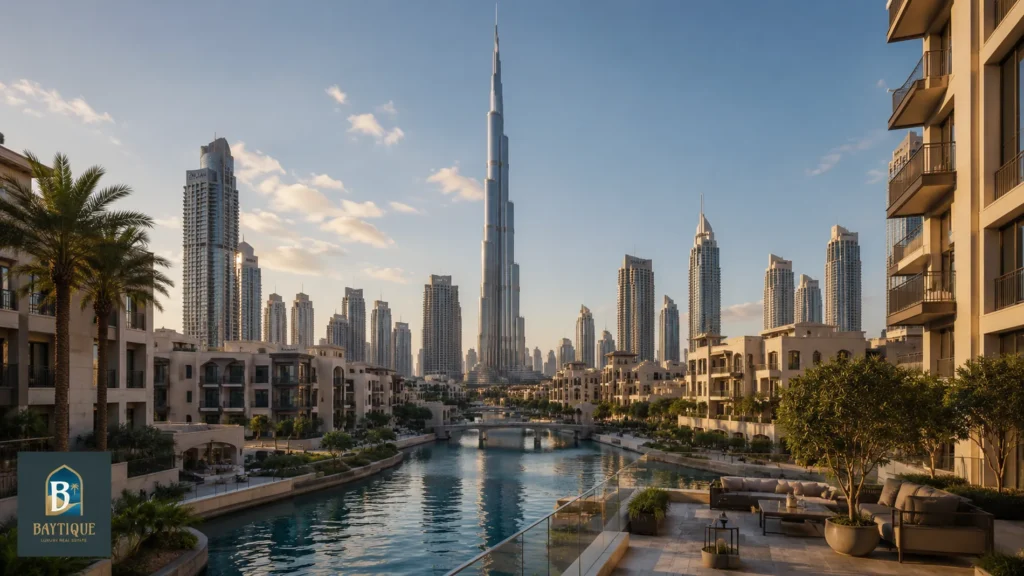
Downtown Dubai is situated in the central part of the city, southeast of the historic district of Deira and northwest of the newer developments of Dubai Creek Harbour. In terms of Dubai’s urban structure, Downtown is one of the city’s key central districts, with relatively convenient access to major business areas, retail destinations, tourist attractions, and Dubai International Airport.
The district directly borders Business Bay to the south and southeast, effectively making Downtown part of Dubai’s broader central business corridor. DIFC — the Dubai International Financial Centre — is just a short drive to the west, making the location particularly convenient for professionals working in finance, law, and related sectors. To the west and north, the district is bordered by Sheikh Zayed Road, Dubai’s main arterial highway, which connects the emirate with Abu Dhabi and provides access to most of the city’s other major roads.
Internal connectivity is centred around Financial Centre Road (D71), which runs through Downtown toward Business Bay, and Sheikh Mohammed bin Rashid Boulevard, the district’s principal boulevard and ceremonial thoroughfare.
It is important to understand that the idea of a “city centre” in Dubai is fundamentally different from the European model. Unlike older districts such as Deira and Bur Dubai, Downtown Dubai is a modern, purpose-built urban centre whose present-day character was shaped primarily by large-scale development in the 2000s. Its importance comes from the concentration of landmarks, residential towers, retail, hospitality and transport infrastructure rather than from a traditional historic city-centre role. This comes with clear advantages: modern engineering, predictable zoning, and high-quality public spaces. At the same time, it gives the area a distinct character. Downtown functions differently from traditional European city centres and is built around a different model of urban mobility.
The practical value of this location is significant. DIFC and Dubai International Airport are both relatively close to Downtown by road, but actual journey times can vary substantially depending on the building, route, time of day and traffic conditions. The journey to the newer Al Maktoum International Airport is considerably longer, which is worth taking into account if frequent air travel is part of your lifestyle.
How the District Is Structured
Emaar describes Downtown Dubai as a roughly 500-acre master development, equivalent to about 2 square kilometres, yet within this relatively compact area are several distinctly different urban environments. Understanding how they differ is essential to choosing the right property.
Burj Khalifa and Dubai Mall area — the most heavily visited part of Downtown and one of the busiest tourist hubs in Dubai as a whole. The Burj Khalifa and Dubai Mall area experiences exceptionally high visitor traffic throughout the year, with activity increasing further during weekends, holidays and major events.
Residential towers located immediately next to this zone — such as Address Boulevard and Address Fountain Views — offer spectacular views of the fountains and Burj Khalifa, but living here also means dealing with a constant flow of tourists, more difficult parking in the evenings, and a sharp increase in activity during holiday shows and major events. This is an environment with exceptional visual appeal, but not one that feels particularly quiet or residential. The area may appeal to buyers considering short-term letting because of its proximity to major attractions. However, the investment case varies by building and unit and should account for acquisition price, service charges, competition, applicable holiday-home requirements and achievable rental performance.
Opera District — a comparatively more intimate part of Downtown centered around Dubai Opera. It has a higher concentration of restaurants, galleries, and cultural venues, while the architectural environment is somewhat less uniform than in other parts of the district. Residential towers such as Opera Grand, Il Primo, and neighboring developments offer a more residential pace of life while retaining a prime central address. Tourists are still part of the landscape, but footfall is noticeably lower than around Dubai Mall.
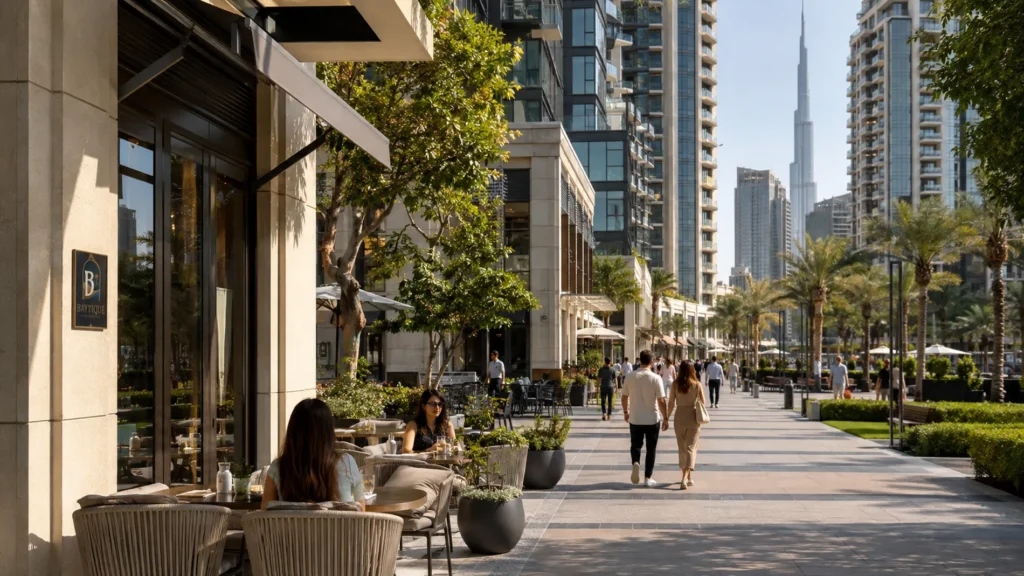
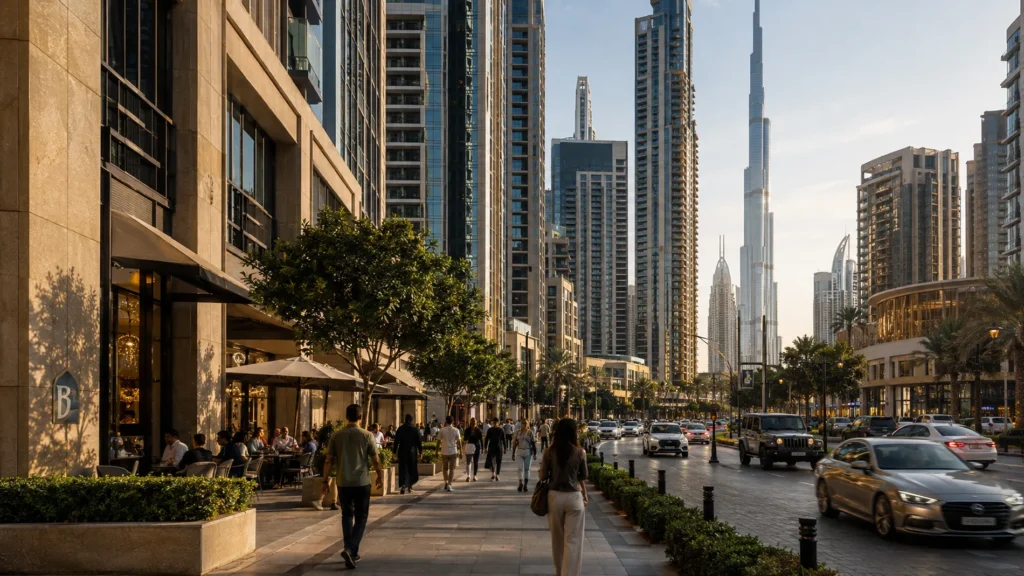
Sheikh Mohammed bin Rashid Boulevard — one of Downtown’s main pedestrian-oriented areas, combining residential towers with restaurants, cafés, shops and public spaces. The broad avenue is lined with shops, restaurants, and cafés at the base of residential towers, creating an active but livable streetscape. Residential developments along the boulevard benefit from convenient access to local amenities while remaining slightly removed from the district’s heaviest tourist concentrations.
Old Town — a neighborhood with a fundamentally different architectural character. Low-rise buildings inspired by traditional Arabian design, Souk Al Bahar, and a pleasant pedestrian environment overlooking the fountains give Old Town a completely different feel from the high-rise sections of Downtown. Residential properties here are less typical and more limited in supply, but the area is popular with buyers and tenants looking for a less urbanized setting without giving up a central location.
Peripheral residential clusters bordering Business Bay — an area where some residential towers are technically part of Downtown but feel more like Business Bay in terms of atmosphere. These locations tend to feel less tourism-oriented and more closely connected to Business Bay. Pricing, however, varies significantly by building, age, view and unit type and should be compared using recent transactions rather than assumed from location alone. The trade-off is that these locations offer less of the lifestyle infrastructure and distinctive atmosphere that typically draw people to Downtown in the first place.
| Part of Downtown | Character of the Area | What Is Nearby | Best Suited For | What to Consider |
|---|---|---|---|---|
| Burj Khalifa / Dubai Mall | Heavy tourist activity, landmark-focused setting | Dubai Fountain, Dubai Mall, hotels, observation decks | Short-term rentals; buyers who value views and an intense urban environment | Noise, evening traffic, rental competition from hotels |
| Opera District | Cultural atmosphere, moderate tourist traffic | Dubai Opera, restaurants, galleries | Couples, professionals, and people who value cultural life | Higher prices in newer towers |
| Sheikh Mohammed bin Rashid Boulevard | Balanced urban environment with a strong pedestrian character | Restaurants, shops, walkable boulevard | A broad range of residents, from singles to couples | Peak-hour traffic |
| Old Town | Quiet, low-rise, Arabian-style environment | Souk Al Bahar, Dubai Fountain, Old Town Souq | Buyers seeking an unconventional central-city setting | Limited property availability |
| Periphery / Business Bay border | More business-oriented, fewer tourists | Business Bay, Financial Centre Road | Professionals and more budget-conscious buyers | Less of the distinctive Downtown atmosphere |
Downtown Dubai Real Estate
The residential real estate market in Downtown Dubai spans a wide range of property types, from compact studios to penthouses and branded residences offering five-star hotel-style services. The district offers a broad mix of residential formats, from compact apartments and established towers to branded residences, premium penthouses and new developments. This variety makes building-level comparison particularly important.
Current Downtown Dubai market snapshot. Prices vary substantially by building, unit type, floor, view and condition, so district-wide averages should be treated as reference points rather than valuations of individual properties. Buyers should compare recent Dubai Land Department transactions for comparable units and check the date of any market statistics used, particularly in a fast-moving market.
Studios and one-bedroom apartments are widely represented in Downtown and are used for both long-term and short-term rental strategies. Rental performance can differ materially between buildings, so buyers should compare recent achieved rents, transaction activity, service charges and competing supply for comparable units.
Two- and three-bedroom apartments are geared more toward families and couples who value a central location and convenient urban living. This is also the segment where differences in quality between properties can be especially noticeable. Floor plans, ceiling heights, building systems, and management standards may vary considerably even between neighboring developments completed only a few years apart.
Branded residences such as Address, Armani and Vida occupy a distinct segment of the Downtown market. Depending on the specific development and operator, residents may have access to concierge services, leisure facilities, housekeeping options, restaurants or other hotel-style amenities. Service charges and included services vary considerably between projects, so buyers should compare the approved charges and management terms for the exact residence before assessing whether the branded format justifies its additional ownership costs.
Penthouses form a distinct premium segment of the Downtown market. Pricing depends not only on size and finishes but also on the building, floor, terrace configuration, orientation and view. Burj Khalifa or fountain views may attract a premium in individual developments, but this should be checked against recent comparable transactions.
Residential complexes in Downtown

 Downtown Dubai
 from 203м²
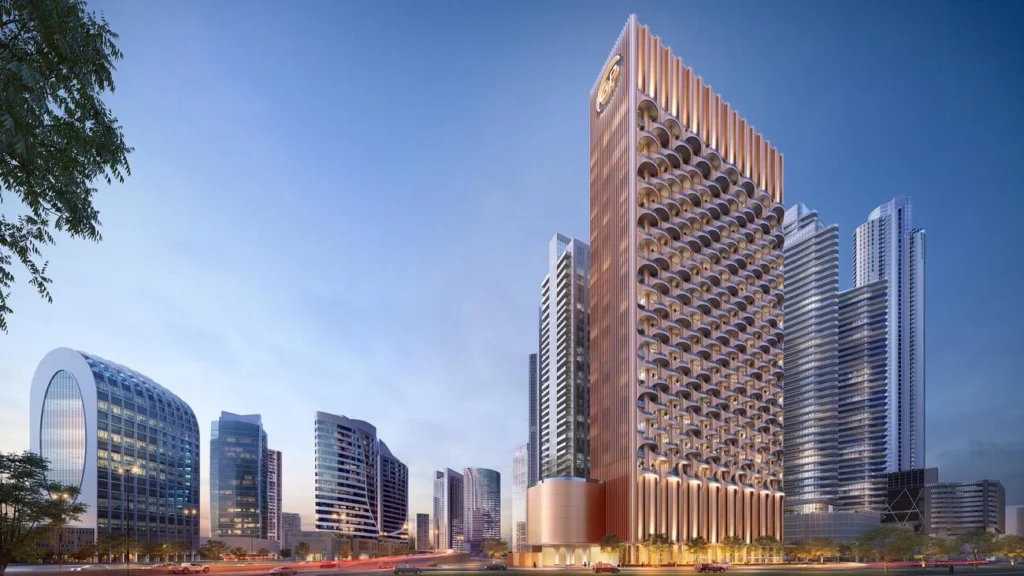
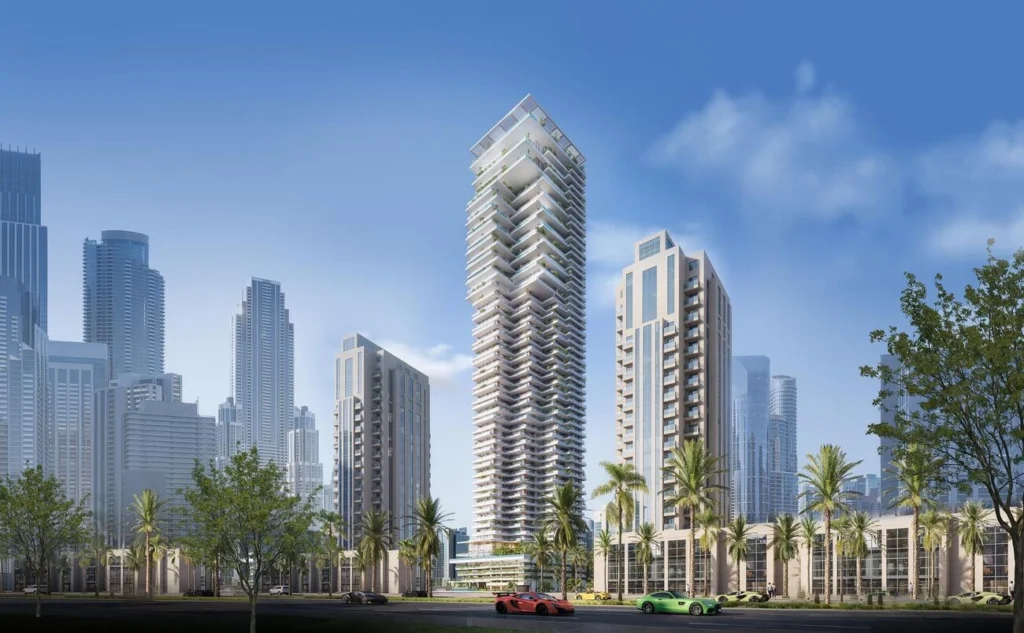
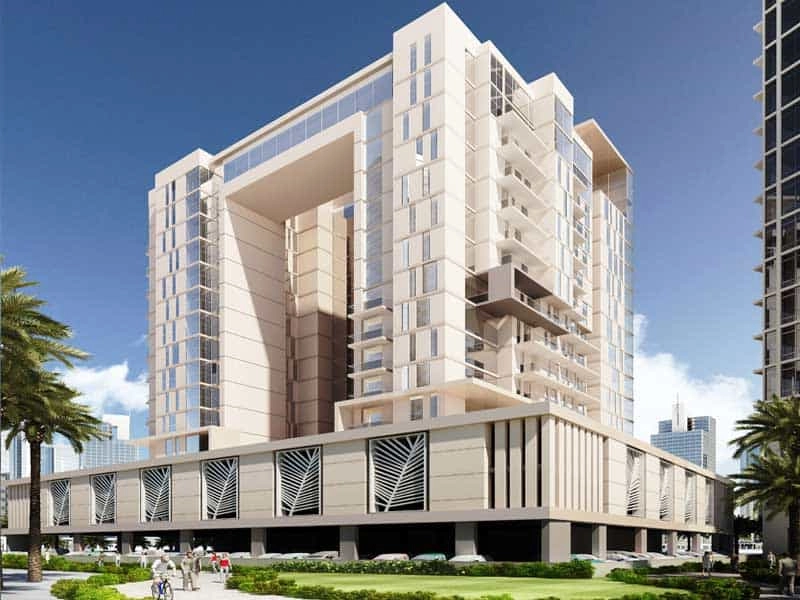
Off-plan developments also have a strong presence in Downtown and the surrounding areas, with developers regularly bringing new phases and projects to market. Buying during construction can provide access to contemporary layouts and, in some cases, more flexible payment terms. However, it also requires careful due diligence on the developer’s track record, the project’s current stage of completion, and realistic delivery timelines.
Why can two properties of the same size in Downtown have dramatically different real-world value? There are several determining factors, and their combined effect matters more than any single one of them:
- Building age and management. Towers completed in the early 2000s can differ significantly from recently delivered buildings in terms of engineering systems, common-area amenities, and property management standards. Good management slows deterioration; poor management accelerates it.
- Floor and view. Views of Burj Khalifa and the fountains traditionally command a premium. But a view is also an asset with an element of risk: future construction on a neighboring plot can materially change the outlook.
- Service charges. Service charges can represent a significant part of the annual ownership cost in Downtown and vary considerably between developments. Buyers should check the approved charge for the specific building and calculate the annual cost based on the property’s chargeable area rather than relying on a district-wide estimate.
- Layout. Apartments in the same size category can vary substantially in functionality, including the proportion of usable living space to circulation or utility space, the presence of balconies and storage areas, and the design of the kitchen.
- Parking. Not every apartment in Downtown comes with an allocated parking space. If you own a car, this should be treated as a key selection criterion rather than a minor detail.
- Building amenities. Pools, gyms, lobbies and concierge services can contribute to higher operating costs, but they may also affect resident satisfaction and the property’s appeal to prospective buyers and tenants.
- Distance to key destinations. Being “in Downtown” and being a five-minute walk from Dubai Mall are not the same thing. The actual distance to the metro, the main mall entrances, and the Boulevard all has a direct impact on day-to-day convenience.
| Property Type | Main Use Case | Key Strengths | What to Check |
|---|---|---|---|
| Studio / 1 bedroom | Personal residence for a professional, short-term rental | Broad rental use case; compare recent achieved rents and transaction activity | Building management, service charges, parking |
| 2–3 bedrooms | Family or couple, long-term residence | More space, central location | Layout, noise, view, building age |
| Branded residence | Occasional personal use + rental program | Hotel-style service, managed rental options | High service charges, rental program terms |
| Penthouse | Purchase of a flagship property | Views, scarcity and premium positioning | View orientation, risk of future neighboring development |
| Off-plan | Purchase during construction; suitability depends on the project timeline and the buyer’s objective | Modern layouts, payment flexibility | Developer reputation, realistic completion timeline |
What Buyers Should Pay Attention To
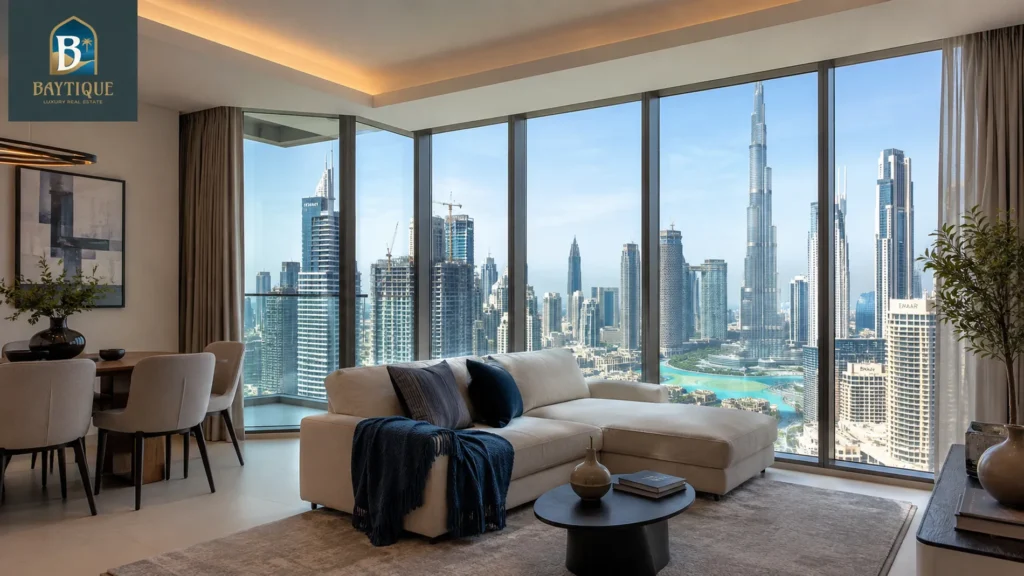
Choosing property in Downtown Dubai based on a photo of the tower and a Burj Khalifa view is a common mistake—and potentially an expensive one. The district has enormous visual appeal, and developer and agent marketing often focuses heavily on image and lifestyle rather than the practical details of ownership. In practice, the total cost of ownership and the property’s future resale or rental appeal depend on a combination of factors that are less visible in marketing materials but important to the buyer.
The evaluation process should begin with your objective and work down to the details, rather than starting with an attractive address and then looking for reasons to justify the purchase.
A practical checklist for choosing real estate in Downtown Dubai:
- Purpose of the purchase. Personal use, long-term rental, short-term rental, or a combination of these will determine what you should prioritize in terms of building type, floor level, and amenities.
- Budget including service charges. The purchase price is only part of the equation. Annual servService charges can materially affect the total cost of ownership. Calculate the purchase price together with the building’s current annual service charges and other expected ownership costs over your intended holding period.
- The specific part of Downtown. Identify where the building is actually located within the district: the Burj Khalifa area, Opera District, Boulevard, Old Town, or the periphery. This affects tourist traffic, noise levels, and the overall character of the immediate environment.
- Distance to your everyday destinations. If you commute to DIFC every day, test the route during the morning rush hour. If you work remotely, assess walking access to cafés, shops, and parks.
- Metro access. Check the actual walking distance to Burj Khalifa/Dubai Mall Metro Station—not simply the distance shown on a map, but the real route across streets or through pedestrian links, taking Dubai’s summer temperatures into account.
- Parking and road access. Does the apartment include a dedicated parking space? How easy is it to reach Financial Centre Road or Sheikh Zayed Road during peak hours?
- Building management. Find out who manages the building, how well the common areas are maintained, whether elevator repairs are handled promptly, and how resident complaints are addressed.
- The view and the risk of losing it. If you are paying a premium for a Burj Khalifa or fountain view, check the development status of neighboring plots. New towers continue to appear in Downtown from time to time.
- Noise. Ask about the floor level and window orientation: whether the apartment faces the Boulevard or a side street, how close it is to major roads, and whether fountain-show music is audible.
- Liquidity and rental format. If you are buying for investment, assess whether the property can be used for short-term letting under the applicable Dubai holiday-home requirements and any relevant building or community rules. Compare actual rental transaction data from DLD rather than relying only on advertised asking rents.
The distinction between buying to live in and buying to rent out is crucial. An ideal apartment for long-term personal use—a quiet floor, efficient layout, and low foot traffic around the entrance—may be less attractive in the short-term rental market, where views and proximity to major attractions may influence nightly rates and guest demand. The effect should be tested against comparable rental performance for the specific building and unit type.
Not sure which part of Downtown Dubai best suits your budget and intended use? Find properties that match your criteria based on your purchase goals, preferred property type, and location requirements.
Getting Around Downtown Dubai
Transport accessibility is one of the most frequently overestimated aspects of living in Downtown Dubai. Its Metro access, taxi availability and connections to major roads give Downtown strong transport links, although convenience varies significantly by exact address. However, the actual experience varies considerably depending on where exactly you live within Downtown, whether you own a car, and where you need to travel on a daily basis.
Metro and Buses
Burj Khalifa/Dubai Mall Metro Station on the Dubai Metro Red Line is the district’s main public transport hub. The station is connected to Dubai Mall and the surrounding area by an air-conditioned covered walkway, which becomes particularly important during the summer months, when outdoor temperatures regularly exceed 40°C.
The Red Line provides direct connections to major business districts, including DIFC via Financial Centre station, as well as Dubai International Airport, Dubai Marina, and Jumeirah Beach Residence. For regular journeys within central Dubai, the Metro is generally an efficient and practical option.
There is, however, an important caveat: not every residential building in Downtown is within a comfortable walking distance of the Metro. Some residential towers require a considerably longer walk to the station than others, and during the hotter months this can become a genuine inconvenience. For that reason, walkability to the Metro should always be assessed for a specific building or address rather than judged based on the district as a whole.
The Roads and Transport Authority (RTA) has officially confirmed the expansion of Burj Khalifa/Dubai Mall Metro Station. According to the RTA, the project is intended to increase the station’s capacity by 65%, reflecting both growing passenger volumes and its increasing importance within Dubai’s public transport network.
Surface public transport in Downtown is provided by RTA bus services, including feeder routes connecting major transport hubs with residential areas. Up-to-date routes and timetables are available through the official RTA resources. For everyday use, buses are generally less convenient than the Metro or taxis, but they significantly broaden the options available to residents who are prepared to plan their journeys in advance.
Driving and Taxis
For residents with a private car, Downtown offers convenient access to Sheikh Zayed Road, Dubai’s main transport artery. From here, most parts of the city can be reached without complicated route changes, while the same road network also provides straightforward access toward Abu Dhabi and Sharjah.
Traffic congestion is a genuine part of everyday life in Downtown. Traffic congestion is a genuine part of everyday life in Downtown. During weekday peak periods, Financial Centre Road and approaches to Sheikh Zayed Road can become heavily congested, with conditions varying by day and event schedule. Major events and New Year celebrations can create additional road restrictions and delays around Dubai Mall and Burj Khalifa, so residents of nearby buildings should consider alternative routes and access arrangements on event days. During major events—such as drone shows, New Year celebrations, or performances at Dubai Opera—traffic around the Dubai Fountain and Dubai Mall can effectively grind to a halt for several hours. Residents of buildings close to the district’s main tourist attractions should factor this into their daily planning.
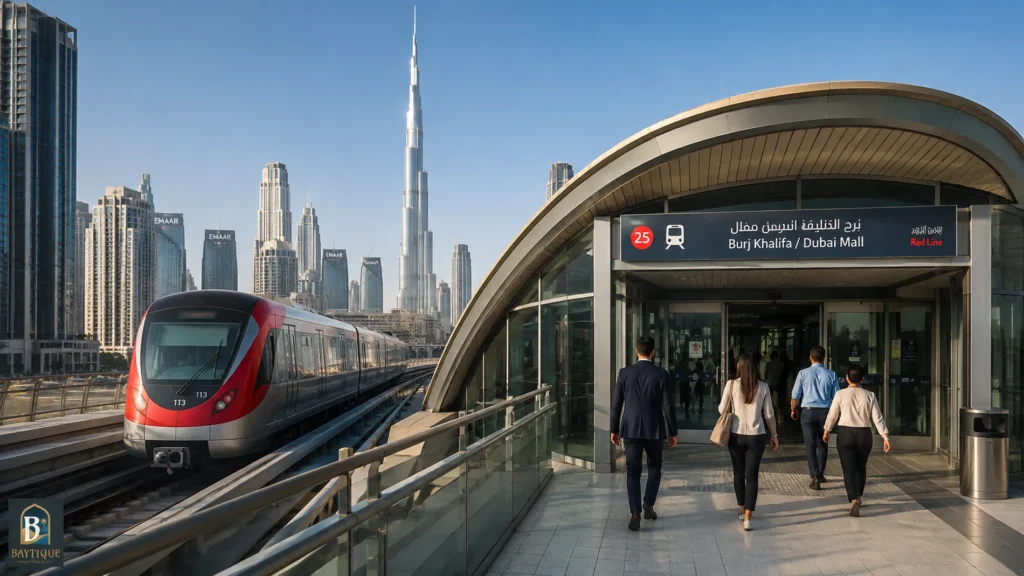
Taxis and ride-hailing services such as Careem and Uber operate reliably throughout Downtown, although both waiting times and fares can rise significantly during major events and peak periods. Designated pick-up and drop-off zones around Dubai Mall and Burj Khalifa Plaza help organize traffic flow, but they do not eliminate congestion altogether.
Residential buildings in Downtown generally include dedicated parking, although the number of spaces allocated per apartment varies from one development to another. Guest parking is a separate consideration: in buildings with high visitor and tourist traffic, reaching the property by car and finding a space for a guest in the evening can be far from straightforward.
Can You Live in Downtown Dubai Without a Car?
For some residents, the answer is yes—provided certain conditions are met. Within Downtown itself, the pedestrian environment is reasonably well developed. Shops, restaurants, cafés, and everyday services are concentrated within a relatively compact area, Dubai Mall is accessible, and there are established walking routes and landscaped public spaces.
Travelling across Dubai as a whole is a different matter. From an infrastructure perspective, Dubai remains a car-oriented city. The Metro covers only part of the urban area, while districts without convenient rail access—such as parts of Jumeirah, Al Barsha, and major retail and lifestyle destinations outside the Metro network—typically require either a taxi or a private car. Living in Downtown without a car is certainly possible, but it creates a real dependence on taxis at virtually any time of day, along with the corresponding monthly expense.
The summer period from May to September deserves particular consideration. During Dubai’s hotter months, high daytime temperatures and humidity can make even relatively short outdoor walks uncomfortable, especially around midday. Downtown residents without a car are therefore heavily reliant during the summer on covered walkways, air-conditioned indoor spaces, and taxis. This does not make car-free living impractical, but it does mean that the lifestyle needs to be assessed realistically.
Daily Life and Infrastructure
Living in Downtown Dubai means having access to one of the city’s most extensive concentrations of everyday services and amenities. The more important question, however, is how well that infrastructure meets the practical day-to-day needs of different types of residents.
Grocery stores and everyday essentials are available throughout Downtown, although there are some trade-offs. Everyday grocery options include Waitrose in Dubai Mall and LuLu Hypermarket in Dubai Mall Zabeel, alongside other supermarkets and delivery services in and around Downtown. However, grocery shopping at Dubai Mall often means navigating a busy shopping centre filled with tourists. For this reason, some residents prefer online grocery delivery or choose to drive to quieter supermarkets outside the district.
Restaurants and cafés are one of Downtown’s unquestionable strengths. Sheikh Mohammed bin Rashid Boulevard, Souk Al Bahar, Dubai Mall and the area surrounding Dubai Opera together form one of the most diverse dining clusters in the city, ranging from casual street-side cafés to Michelin-starred restaurants. For many residents, this variety and convenience are among the neighbourhood’s biggest advantages.
Fitness and sports. Most residential towers in Downtown have their own gyms and swimming pools. The area also offers commercial fitness clubs, while Burj Park — an open-air park located on an island at the foot of Burj Khalifa — provides space for morning runs, walks and outdoor recreation.
For local residents, Dubai Mall brings together medical clinics, dental practices, cinemas, an ice rink, Dubai Aquarium & Underwater Zoo, PlayDXB and numerous other leisure and service facilities. In practical terms, Dubai Mall functions as a major multifunctional urban hub, offering the obvious convenience of having so much close at hand, but also the equally obvious drawback of a constant flow of tourists.
Dubai Opera is the district’s main cultural anchor. Concerts, opera productions, ballet performances and international shows create a busy year-round programme, making Downtown particularly attractive to residents who value having cultural entertainment within walking distance.
Healthcare infrastructure within Downtown itself is largely limited to clinics and general practitioners. For more complex treatment or specialist care, residents typically travel to major medical centres such as Mediclinic City Hospital in Dubai Healthcare City, American Hospital in Oud Metha and other facilities that are within reasonable driving distance.
Nurseries and schools are an important consideration for families. Downtown itself is not one of Dubai’s main school clusters, so families with school-age children commonly need to commute to schools in other districts. Available schools and travel times should be checked against the current KHDA directory and the family’s preferred curriculum. Nurseries and early-learning centres are available within the district, but parents should research individual options and daily routes in advance.
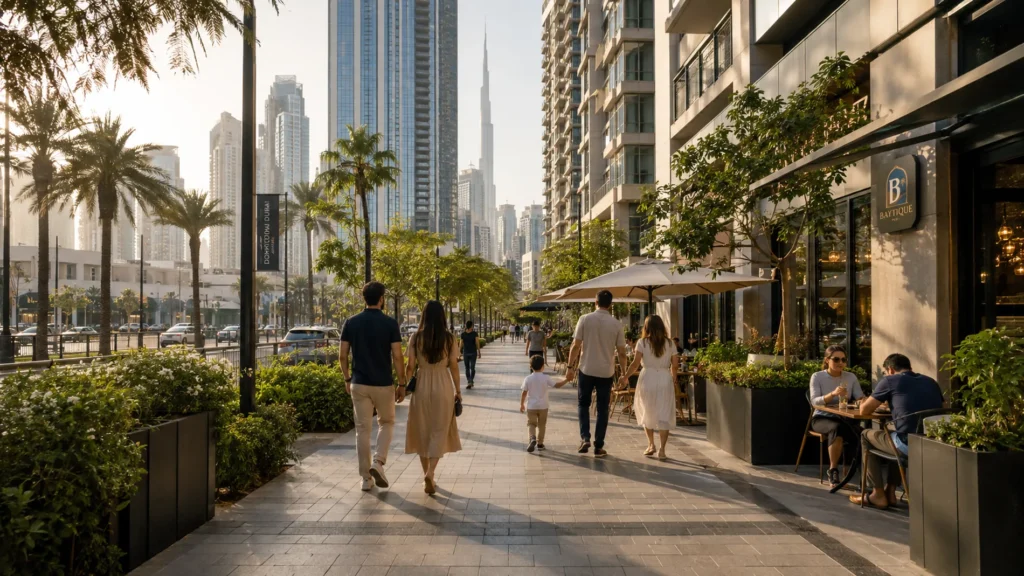
The level of convenience varies considerably depending on the type of resident:
- A single resident or professional without children benefits from an exceptionally well-developed everyday environment, with restaurants, coffee shops, fitness facilities, cultural events, metro access and close proximity to major business districts.
- A couple enjoys much the same lifestyle, with the option of choosing a larger home.
- A family with young children has access to pleasant outdoor spaces such as Burj Park and the Boulevard, but a more limited selection of childcare facilities within the immediate neighbourhood.
- A family with school-age children will usually need to travel outside Downtown for school every day, which can require a significant time commitment given Dubai’s traffic conditions.
Depending on the building, everyday destinations within Downtown may include Dubai Mall, grocery stores, Souk Al Bahar, Dubai Opera, Sheikh Mohammed bin Rashid Boulevard, Burj Park, restaurants, cafés, clinics and pharmacies.
Beyond comfortable walking distance but still reasonably close are DIFC, Business Bay, major international schools and the beaches of Jumeirah.
The Rhythm of Downtown
Downtown Dubai operates in several modes at once, and that is difficult to capture through a simple list of amenities.
In the morning, the district feels businesslike and functional. In the morning, residents use the Boulevard for walking and exercise, cafés open for the day, and commuter traffic begins building toward DIFC and Business Bay. At this time of day, Downtown feels most like a conventional urban neighborhood: active and energetic, but without the full intensity of the tourist crowds.
By daytime, especially on weekends, the atmosphere changes. Tour buses arriving at Dubai Mall, queues for the Burj Khalifa observation deck, and streams of people moving through the fountain area all become part of everyday life for those living in the central part of the district. For some residents, this urban buzz feels natural and even enjoyable. For others, it can become a daily source of irritation.
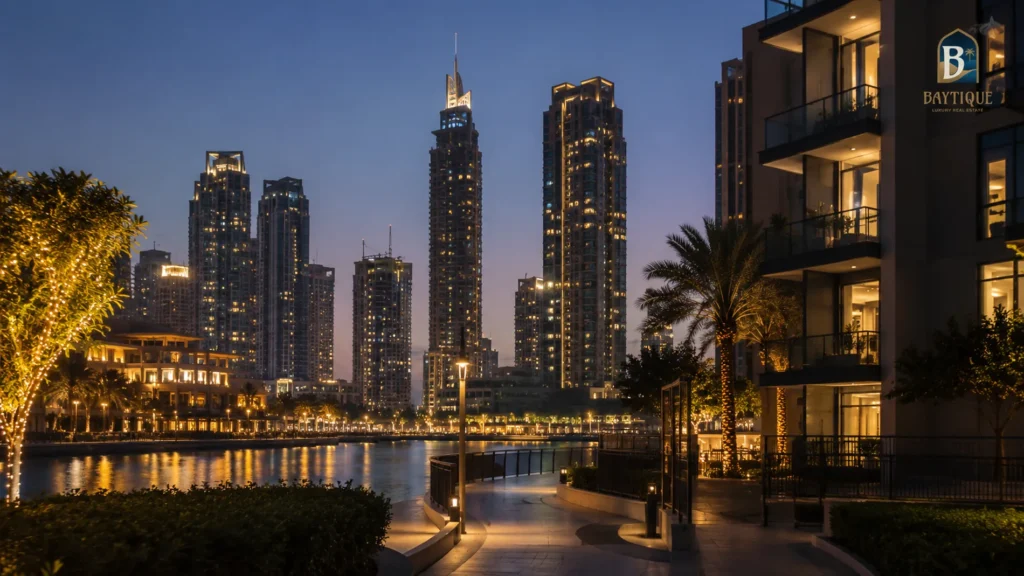
In the evening, Downtown reaches its peak level of activity. The fountain shows draw large crowds, the Boulevard fills with people strolling, and restaurants remain open until midnight and beyond. During holidays and major events, activity increases dramatically. New Year’s Eve, Ramadan, major international forums, and concerts can all turn the district into the city’s epicenter, bringing heavier traffic, more noise, and greater difficulty finding parking.
This dual character—part residential neighborhood, part major tourist destination—also shapes the way property should be evaluated. A lower-floor apartment overlooking the fountains may look highly appealing in photographs, but the sound of the regular evening fountain shows can be a practical consideration for apartments facing Burj Lake; schedules may change, so buyers should also assess the unit at the times when they expect to be at home.
The quality of day-to-day life in Downtown is determined less by the name of the district than by the exact location and orientation of a particular building in relation to the main tourist flows. Two properties just a hundred meters apart can offer fundamentally different living experiences.
Pros and Cons of Downtown Dubai
An objective look at the advantages and trade-offs of Downtown Dubai is particularly important because the area is often discussed in terms of absolute superiority. In reality, the picture is more nuanced.
Its central location and connectivity are genuine strengths. Living in Downtown provides relatively convenient access to DIFC, a large concentration of restaurants and cultural venues, Dubai International Airport by road, and the Metro. For a certain lifestyle, that level of convenience is exceptionally valuable. At the same time, the very same centrality also brings heavy tourist footfall, dense traffic, and a fast-paced urban environment that may not suit everyone for everyday living.
Advantages:
- Central location with convenient access to DIFC, Business Bay, and Sheikh Zayed Road
- Highly developed infrastructure for everyday needs
- Metro access within the district
- A wide range of property types and formats
- Established long-term and short-term rental markets, with performance varying materially by building, unit type, price and season
- A high concentration of restaurants, cultural attractions, retail and everyday services
- A globally recognised address with a strong international reputation
Trade-offs:
- Service charges can represent a significant annual ownership cost and vary considerably by building
- Heavy tourist traffic around Dubai Mall and Burj Khalifa
- Congestion during peak hours and major events
- Noise on lower and mid-level floors in buildings facing the Boulevard or fountain area
- Limited school infrastructure within Downtown itself
- The beach is not part of the district’s everyday environment, so a beach-oriented lifestyle requires regular travel
- Quality of life can vary considerably depending on the specific building and the standard of its management
| Factor | Advantage | Potential Trade-off | Most Relevant To |
|---|---|---|---|
| Location | Central position with easy access to key parts of the city | Traffic and heavy tourist activity | All buyers |
| Metro | Metro station within the district | Not every building is within a convenient walking distance | Residents who prefer not to drive |
| Rental market | Active rental market; verify current transaction depth and competition for the specific property | Competition from hotels in the short-term rental segment | Investors |
| Service charges | Extensive building amenities and infrastructure | High annual ownership costs | All property owners |
| Schools | A wider choice of schools is available outside Downtown; commute times depend on the chosen school and daily traffic | No major schools within Downtown itself | Families |
| Beach | Accessible by car or taxi | Not part of the immediate day-to-day environment | Buyers prioritising a beach lifestyle |
| Views | Burj Khalifa and fountain views are available in selected properties | Views may be affected by future development | Buyers paying a premium for views |
Who Is Downtown Dubai Best Suited For?
One of the most practical questions to ask when considering Downtown Dubai is not simply, “Is this a good area?” but rather, “Does it suit my particular lifestyle and objectives?” Below are several common buyer profiles and how well Downtown fits each one.
A professional or entrepreneur working in DIFC or Business Bay. For this group, Downtown is one of the most logical choices. Proximity to major business districts, extensive infrastructure, a strong restaurant and service scene, and access to the metro all align well with the lifestyle of a busy urban professional. Buyers in this category typically value the pace and convenience of city-centre living and are less likely to see tourist activity as a drawback.
A couple without children. Downtown offers a vibrant dining and cultural scene, strong transport links, and a wide range of property formats, from compact apartments to spacious residences with panoramic views. For couples who want to live at the heart of a dynamic urban environment, Downtown can make a great deal of sense. The main consideration is choosing a building that provides the right level of comfort and privacy for two people.
A family. The decision is more nuanced here. Downtown offers promenades, landscaped public spaces and a large concentration of managed residential and commercial developments. However, school infrastructure within the district itself is limited, which means families with school-age children will inevitably need to plan for daily commutes. In addition, high service charges can have a noticeable impact on the overall budget when purchasing a larger property. Families should therefore consider carefully whether Downtown offers the best balance for their needs, or whether neighbouring Business Bay, Arabian Ranches, or another district with more developed family-oriented infrastructure would be more practical.
An owner-occupier. For someone buying a home to live in, rental yield is not the primary consideration. What matters more is day-to-day comfort: distance to work, noise levels, quality of building management, parking availability, and proximity to essential services. An owner-occupier may deliberately choose an apartment without a fountain view in exchange for a quieter floor, easier road access, or a more convenient building layout.
A rental-focused investor. A rental-focused investor. Downtown has established long-term and short-term rental markets, but performance varies by building, unit type, acquisition price, service charges and competing supply. Buyers considering short-term letting should also verify applicable Dubai holiday-home requirements and relevant building or community rules. Investment analysis should incorporate recent registered transaction and rental data from Dubai Land Department alongside current asking prices and property-specific operating costs.
Someone who wants to live without a car. Downtown is one of the relatively few areas of Dubai where a car-free lifestyle is theoretically possible. Metro access, walkable infrastructure, and the high concentration of shops, restaurants, and everyday services all support this type of lifestyle. There are, however, important limitations: Dubai’s summer heat restricts how much walking is practical, while trips beyond the district often make taxis or ride-hailing services necessary.
| Scenario | How Suitable Is Downtown? | What to Look For | What to Check |
|---|---|---|---|
| Professional working in DIFC or Business Bay | Good fit | Apartment with convenient road access and metro nearby | Peak-hour commute to work |
| Couple without children | Good fit | Property with a comfortable layout and strong building amenities | Noise levels in the chosen location |
| Family with school-age children | Suitable with reservations | Larger property, potentially on the edge of the district | School commute, service charges, parking |
| Buying for personal use | Depends on the individual scenario | Property tailored to everyday needs | Noise, building management, parking |
| Rental investor | Good fit if the right property is selected | Building and unit type supported by recent transaction and rental data | DLD data, building rental rules, service charges |
| Living without a car | Possible, but with limitations | Building close to the metro and pedestrian infrastructure | Summer heat and reliance on taxis |
Downtown or Another Area
Choosing between Downtown Dubai and other central districts is not about ranking one area above another; it is about finding the location that best fits a particular lifestyle and set of priorities. Here is the logic in brief.
Business Bay sits directly next to Downtown and is often seen as its business-oriented extension. Pricing varies widely across both districts, so buyers should compare recent DLD transactions for similar buildings and unit types. Transport convenience should likewise be assessed from the exact property rather than from the district name alone. Business Bay is more focused on the pace of professional life and less shaped by tourism. For professionals who value proximity to DIFC and Sheikh Zayed Road but do not need the tourist atmosphere surrounding Burj Khalifa, Business Bay may be the more pragmatic choice.
DIFC — the Dubai International Financial Centre — offers the closest possible access to the financial sector, international companies, and major legal firms. The residential market here is more limited than in Downtown, but it is strongly geared toward high-income residents. If your workplace is located within DIFC, the district is well worth considering alongside Downtown.
Dubai Marina offers a fundamentally different environment. Its waterfront promenade, yacht-filled canals, JBR beaches, and more relaxed pace of life attract a different type of resident. For buyers who value easy access to the sea and a more laid-back coastal atmosphere without sacrificing the infrastructure and convenience of city living, the Marina is a strong alternative. You can read more about the area in our Dubai Marina overview.
Other residential areas such as Jumeirah Village Circle, Arabian Ranches, Al Barsha and Mirdif offer different housing formats and family infrastructure. School access, traffic, purchase prices and ongoing ownership costs vary significantly between these communities and should be compared for the buyer’s specific requirements. For families who find the pace and intensity of Downtown excessive, these areas deserve serious consideration.
The key takeaway is simple: Downtown makes sense when centrality and an active urban lifestyle provide genuine value to a particular buyer, rather than simply adding an impressive line to the property’s address.
What to See in Downtown Dubai
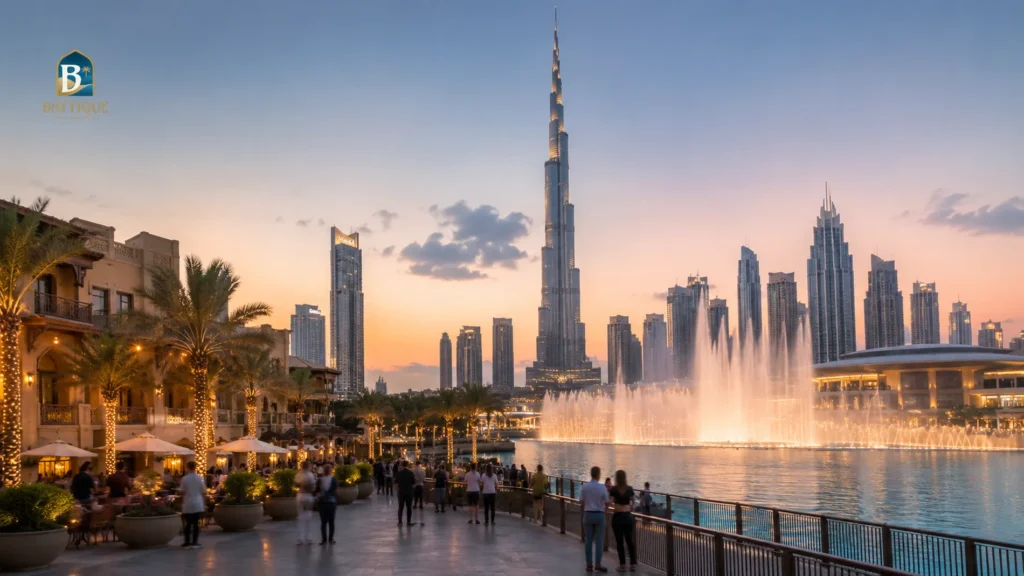
Downtown Dubai brings together several globally recognized landmarks within a remarkably compact area. For residents, this is both one of the neighborhood’s greatest advantages and a constant part of everyday life.
Burj Khalifa is the tallest building in the world and the defining feature of the Downtown skyline. Its At The Top observation decks are open to the public, although queues can be substantial during peak hours. For residents of the surrounding towers, however, Burj Khalifa is often simply part of the view from home.
Dubai Mall is one of the largest shopping malls in the world. For Downtown residents, it is far more than a place to shop: it also serves as a convenient destination for meeting friends, going to the cinema, dining out, accessing medical services, and much more. In many ways, the mall is fully integrated into the neighborhood’s day-to-day lifestyle.
Dubai Fountain is one of Downtown Dubai’s signature attractions and is described by Visit Dubai as the world’s tallest performing fountain, located at the foot of Burj Khalifa. Its shows take place daily and regularly attract large crowds of visitors.
Dubai Opera is a multifunctional cultural venue whose architecture is inspired by the traditional Arabian dhow. Its year-round program includes concerts, opera and ballet performances, theatre productions, exhibitions, and other cultural events.
Souk Al Bahar is an Arabian-style shopping and entertainment destination overlooking Burj Khalifa and the fountains. It brings together restaurants, galleries, and boutiques in an attractive, pedestrian-friendly setting.
Burj Park is an open green space located on an island within Downtown and is particularly popular with residents for walks, relaxed outdoor time, and morning runs.
For a broader overview of Dubai’s must-see places—not only in Downtown but across the city—see our guide to the top attractions in Dubai.
Is Downtown Dubai the Right Choice?
Downtown Dubai is one of the city’s most complete central districts when it comes to infrastructure, connectivity, and urban amenities. Its main practical advantages include Metro access, developed pedestrian infrastructure in key parts of the district, a high concentration of restaurants and cultural attractions, and convenient access to several of Dubai’s major business districts.
At the same time, Downtown is not the right choice for everyone. Heavy tourist traffic, high service charges, inconsistent road conditions at peak times, and limited school infrastructure are all trade-offs that buyers need to weigh according to their own priorities. Some deliberately choose a central location and are comfortable with the compromises that come with it. Others, after considering the practicalities of everyday life, may find that Business Bay or Dubai Marina is a better fit for their lifestyle and needs.
The best property in Downtown is not necessarily the most visually impressive one in a rendering, nor the one with the most prestigious address. The right choice depends on a combination of factors: the purpose of the purchase, the overall budget including ongoing operating costs, the specific building and quality of its management, the daily travel routes to the places you use most often, and how the property is ultimately intended to be used.
If you want to understand how this logic applies to your own situation, it makes sense to start by looking at Downtown in the broader context of the city. This overview of Dubai’s real estate districts and infrastructure will help you build a more systematic understanding of the market before moving on to individual properties.
The specialists at World Estate Homes support buyers throughout the entire process, from selecting and evaluating the right district to coordinating the transaction across several countries, including the UAE.
 Real estate in Georgia
 Real estate in Cyprus
 Real estate in Montenegro
 Real estate in Bali
 Real estate in Thailand
 Real estate in Spain
 Real estate in Saudi Arabia
 Real estate in Turkey
 Real estate in Zanzibar
 +971 50 108 6910
 hello@baytique-uae.com
 UAE, Dubai, Dubai Hills Estate, Park Heights Square 1


 Get catalogue of TOP-7 objects