
 +971 52 110 0777


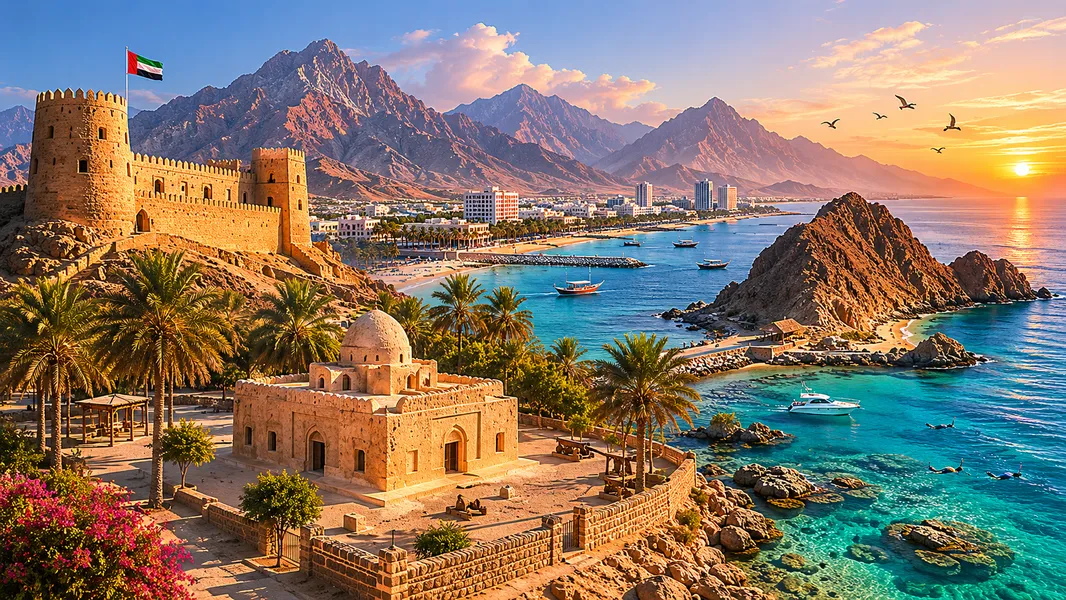

Fujairah is the kind of emirate people often overlook when they view the UAE solely through the lens of Dubai’s skyscrapers, luxury malls, and Abu Dhabi’s business districts. But life and travel here follow a completely different rhythm: less about speed and spectacle, more about space, nature, and atmosphere. Located on the UAE’s eastern coastline along the Gulf of Oman, Fujairah stands apart from every other emirate in the country. The official UAE government portal specifically highlights Fujairah as the UAE’s eastern emirate — a distinction that matters not only for tourism, but also for understanding its real estate market.
What truly sets Fujairah apart is its rare combination of coastline, the Hajar Mountains, and a noticeably slower pace of life. Visitors tend to experience it not as an “urban getaway,” but as a genuine resort destination — with beaches, rocky landscapes, winding coastal roads, and the feeling that nature is never more than a few minutes away.
How Fujairah Differs from Dubai and Abu Dhabi
While Dubai is typically associated with business, shopping, restaurants, and dense urban infrastructure, Fujairah offers an entirely different experience. People come here for beach holidays, diving, snorkeling, mountain drives, historic forts, and a more relaxed atmosphere. For tourists, that means fewer crowds and less rush; for property buyers, it translates into a more resort-oriented lifestyle and a different balance between price, quality of life, and location.
| Criteria | Fujairah | Dubai | Abu Dhabi |
|---|---|---|---|
| Geography | Gulf of Oman, Hajar Mountains | Arabian Gulf, dense urban skyline | Islands, waterfronts, administrative capital |
| Pace of Life | Relaxed, resort-style | Fast-paced, business-driven, tourist-heavy | More reserved and residential |
| Main Appeal | Nature, sea, historical landmarks | Shopping, entertainment, business | Culture, government institutions, family infrastructure |
| Popular Activities | Beaches, diving, Fujairah sightseeing, mountain routes | Urban tourism, restaurants, events | Museums, parks, island resorts |
| Typical Short-Trip Costs | Car rental from $30–50/day, hotels from $80–180/night | Usually higher in prime areas | Mid- to high-range pricing |
Mountains and Sea: The Core of Fujairah’s Appeal
Fujairah is valued for something surprisingly rare in the UAE: within the same morning, you can drive through the dramatic rocky landscapes of the Hajar Mountains and, half an hour later, be sitting beside the water overlooking the Gulf of Oman. That’s not a marketing slogan — it’s simply how the emirate is built. Visually, Fujairah feels more grounded and organic: fewer glass towers, more natural terrain, open space, and low-rise coastal communities.
That’s why searches such as Fujairah attractions, things to do in Fujairah, what to see in Fujairah, and best places to visit in Fujairah are increasingly tied not only to landmarks, but to lifestyle itself. Travelers aren’t looking for a single photo stop — they’re looking for an experience: a fort, a mosque, a beach, Snoopy Island, a mountain road, and dinner by the sea all woven into one route.
Fujairah is ideal for travelers who want to experience a different side of the UAE — beyond the polished metropolitan image — with history, landscapes, fishing villages, beaches, and a quieter everyday rhythm.
History and Culture Without the “Museum Set” Feeling
Fujairah’s appeal goes far beyond nature. The emirate is home to important historical landmarks, including Fujairah Fort, Al Bidya Mosque, archaeological sites, old settlements, and the Fujairah Museum. Information about the emirate’s heritage and tourism infrastructure can be found through official Fujairah resources, which publish updates on regional development, institutions, and public infrastructure.
For travelers, this makes sightseeing remarkably convenient: many of Fujairah’s key attractions are located relatively close to one another. With a well-planned route, it’s entirely possible to visit the fort, museum, Al Bidya Mosque, and part of the coastline in a single day. However, if you also want time for beach relaxation or snorkeling, it’s far better to allow two full days so the trip doesn’t become a race from one location to another.
A Slower Pace of Life as an Advantage for Living and Real Estate
More and more people are beginning to view Fujairah not just as a short-term travel destination, but as a place to live, spend part of the year, or invest in property. The same factors that attract tourists also drive demand in the Fujairah real estate market: the sea, natural surroundings, lower urban density, and steadily developing infrastructure. Buyers searching for property in Fujairah usually prioritize proximity to beaches, mountain views, hotels, schools, road access, and tourist areas.
From a practical standpoint, Fujairah appeals to those looking for an alternative to Dubai: a calmer environment, resort-style atmosphere, and easy access to nature without long commutes. At the same time, everyday leisure expenses here often feel more reasonable. For example, car rentals for independent sightseeing typically start at around $30–50 per day, a taxi ride from Dubai may cost approximately $100–150 one way, and a room in a quality beachfront hotel usually ranges from $100–250 per night, depending on the season and property category.
For investors, Fujairah’s attractions are more than just tourist landmarks. They are part of the demand equation: the stronger an area’s tourism and lifestyle appeal, the greater the interest in rentals, holiday stays, and beachfront property purchases.
When Fujairah Is at Its Best
The ideal time to visit Fujairah is between October and April, when temperatures are more comfortable for walking, visiting viewpoints, exploring Fujairah Fort and Al Bidya Mosque, driving through the mountains, and spending time on the beach. Summers are hot, as they are across the UAE, but the Gulf of Oman coastline still attracts travelers who prefer beach resorts and shorter outdoor excursions.
As a destination, Fujairah is especially well suited for:
- Families seeking beaches, resort hotels, and a peaceful atmosphere;
- Nature lovers interested in mountains, scenic viewpoints, and road trips;
- Divers and snorkeling enthusiasts, particularly around Snoopy Island;
- Property buyers exploring the UAE beyond Dubai alone;
- Travelers who value culture, history, and less crowded routes.
Additional information about tourism, cultural landmarks, and events is available through the Fujairah Tourism & Antiquities Department, which regularly publishes updates on the emirate’s attractions, heritage, and tourism initiatives.
1. Fujairah Fort — The Historic Symbol of the Emirate
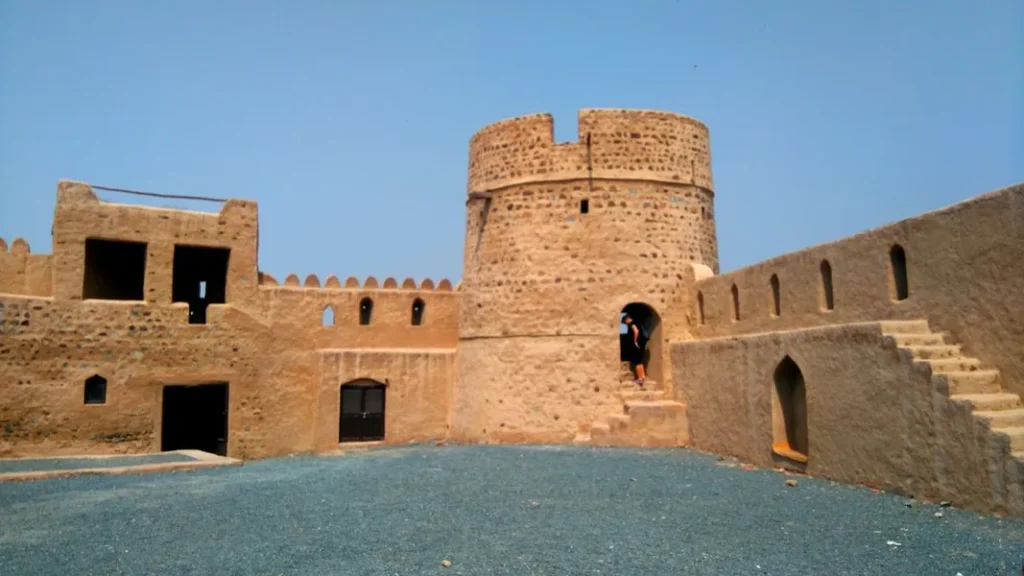
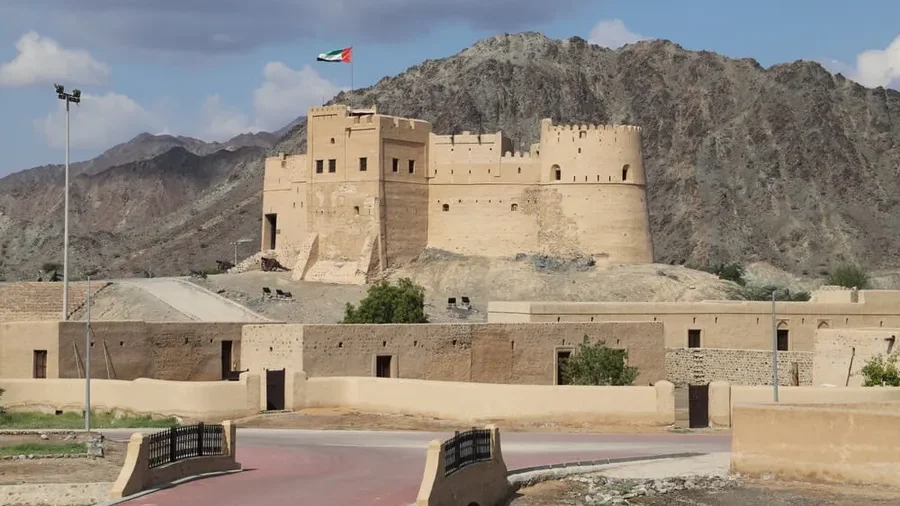
Fujairah Fort is one of the most significant historical landmarks in Fujairah and an essential stop for anyone who wants to experience the emirate as more than just a beach destination. Beyond its coastline and resorts, Fujairah has its own political, defensive, and cultural history — and the fort stands at the center of it. Positioned at the foot of the mountains near the old part of the city, the structure immediately reflects the character of Fujairah itself: rather than feeling like a staged historical attraction, it appears organically woven into the surrounding landscape.
According to the official Fujairah tourism portal, Fujairah Fort is considered one of the emirate’s most important heritage sites. It is frequently included in standard Fujairah sightseeing itineraries, especially for travelers with only one day in the emirate who want to visit the most recognizable Fujairah attractions.
Fujairah Fort is far more than a photogenic fortress. It was the historic center of old Fujairah — the place around which settlement life, territorial defense, and the emirate’s administrative significance once revolved.
Location and How to Get There
The fort is located in Fujairah City, just a short drive from the central districts and the coastline. For visitors, this makes it an especially convenient destination, easily combined with nearby attractions such as the Fujairah Museum, the old settlement area, and the surrounding historical quarter.
If you are traveling from Dubai, the journey typically takes around 1.5 to 2 hours, depending on traffic and your departure point. In practice, renting a car is the most convenient option: roads are well maintained, navigation is straightforward, and parking near the historical district is usually easy to find.
| Travel Option | Approximate Travel Time | Estimated Cost |
|---|---|---|
| Rental car from Dubai | 1.5–2 hours | from $30–50 per day |
| Taxi from Dubai | 1.5–2 hours | approximately $100–150 one way |
| Bus + local taxi in Fujairah | from 2.5 hours | around $10–25, depending on the route |
| From a Fujairah hotel | 5–20 minutes | taxis usually start from $5–15 |
For a self-guided itinerary, the following route works particularly well:
Fujairah Fort → Fujairah Museum → Historic District → Waterfront or Beach Resort
If you also plan to visit Al Bidya Mosque, it is worth allowing extra time, as the mosque lies farther north along the coastal road toward Dibba.
The best time to visit is in the morning, before the strongest heat and harsh midday light set in. Walking around is far more comfortable, and the soft lighting makes the fort’s walls and towers especially photogenic.
What to See at Fujairah Fort
The fortress itself is the main reason people come here. Constructed from local materials including stone, clay, and lime mortar, the fort blends naturally into its environment. Its architecture clearly reflects its defensive purpose: thick walls, elevated towers, internal passageways, and strategic viewpoints were all designed to monitor and protect the surrounding area.
Several elements deserve particular attention:
- The round and rectangular towers, which give the fort its instantly recognizable silhouette;
- The massive defensive walls that once protected the inner compound;
- The central courtyard, ideal for appreciating the scale of the structure;
- Views over the mountains and old Fujairah, one of the reasons the fort is so popular with photographers;
- The adjacent heritage area, where visitors can imagine what the settlement looked like before modern urban development.
Fujairah Fort is often visited together with the Fujairah Museum because the museum provides essential historical context — from regional archaeology and traditional lifestyles to local crafts, weaponry, jewelry, and everyday artifacts. Additional information about Fujairah’s cultural heritage can also be found through the official UAE government portal, which presents Fujairah as a distinct emirate with its own historical and geographical identity.
Viewed on its own, the fort is an impressive fortress. Combined with the museum and old settlement, it becomes clear why Fujairah Fort is regarded as a cultural symbol of the emirate.
For travelers searching for the best places to visit in Fujairah, the fort is also appealing because it requires very little preparation. Unlike a mountain trek or a marine activity dependent on weather and equipment, a visit here simply calls for comfortable shoes, water, and about 40–60 minutes of your time.
Entrance Fees and Opening Hours
A visit to Fujairah Fort is generally considered one of the emirate’s most accessible cultural experiences. Entry is often free of charge or requires only a symbolic fee, although policies may change depending on special events, restoration work, or museum programming. Before visiting, it is best to check the latest details through the official Fujairah government website.
| Visitor Information | General Guidance |
|---|---|
| Entrance fee | usually $0–3 |
| Recommended visit duration | 40–60 minutes |
| Best visiting time | morning or late afternoon |
| Clothing | light, comfortable, sun-protective clothing |
| What to bring | water, sunglasses, hat |
| Suitable for children | yes, though extended walks are best avoided in peak summer heat |
Opening hours for historical attractions in the UAE may vary on weekdays, weekends, public holidays, and during Ramadan. As a practical guideline, most travelers plan their visit between morning and early evening, but checking exact opening times before your trip is highly recommended.
One important tip: avoid visiting the fort during midday in summer. From May through September, temperatures can become extremely high, making long walks uncomfortable — especially for families with children.
Even travelers visiting Fujairah primarily for the beaches should make time for the fort. It reveals a different side of the emirate — one rooted in history, local identity, and cultural heritage. For buyers interested in property in Fujairah, landmarks like this also matter from an investment perspective: recognizable cultural attractions strengthen tourism appeal and help sustain long-term interest in the destination. In that sense, Fujairah Fort functions not only as a monument to the past, but as part of the emirate’s modern identity as well.
2. Al Bidya Mosque — The Oldest Mosque in the UAE
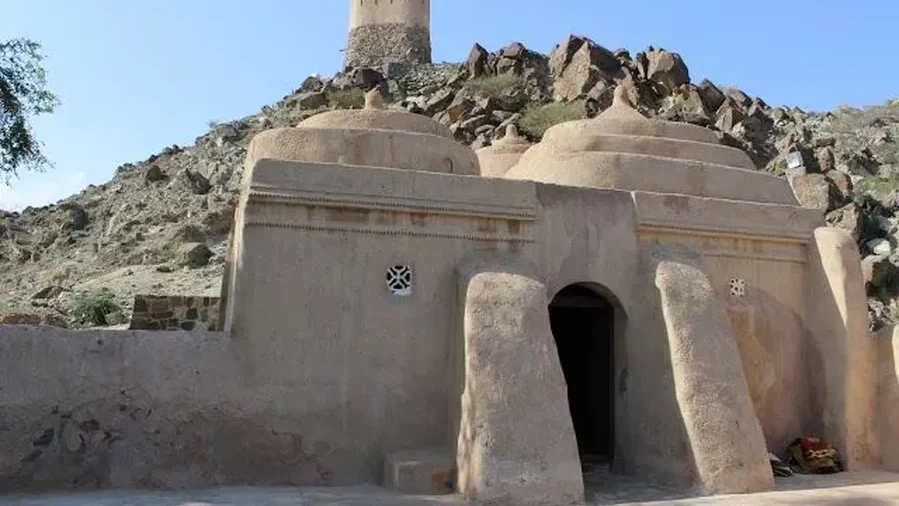
Al Bidya Mosque is one of the most important historical and religious landmarks not only in Fujairah, but in the entire United Arab Emirates. Often referred to as the oldest surviving mosque in the UAE, Al Bidya Mosque dates back to approximately the 15th century and remains a vital part of the eastern coast’s cultural heritage. For travelers exploring Fujairah attractions and deciding what to see in Fujairah, this site deserves a place on the itinerary — not because of its size, but because of its authenticity.
Compared to the grand modern mosques found across the UAE, Al Bidya Mosque appears remarkably modest: a small stone-and-mud structure topped with four domes and almost entirely free of decorative excess. Yet this simplicity is precisely what makes it so significant. The mosque offers a rare glimpse into what religious and community life looked like in the region long before the oil era, modern cities, and glass skyscrapers transformed the country.
Al Bidya Mosque is important not because of its scale, but because of its historical significance. It is one of the rare surviving examples of early Islamic architecture in what is now the UAE, preserved within its natural setting.
Information about Fujairah’s cultural heritage and historical significance can be found through the official UAE government portal, while tourism-related details are available via the official Fujairah tourism portal.
Location and How to Get There
The mosque is located in the village of Al Bidya on Fujairah’s eastern coastline, north of Fujairah City. Its location is particularly convenient for travelers driving along the coast toward Dibba or combining the visit with nearby beaches, mountain viewpoints, and a stop at Snoopy Island.
From central Fujairah, the drive usually takes around 30–40 minutes. From Dubai, the journey is typically about 2–2.5 hours, depending on traffic, route choice, and departure time. For independent travelers, renting a car is highly recommended, as public transportation in this direction is not always practical for a sightseeing itinerary with multiple stops.
| Route | Approximate Travel Time | Estimated Cost |
|---|---|---|
| From central Fujairah by car | 30–40 minutes | taxi approximately $20–35 |
| From Dubai by car | 2–2.5 hours | car rental from $30–50 per day |
| From Dubai by taxi | 2–2.5 hours | around $120–170 one way |
| Private guided tour | 6–8 hours for the full route | typically $180–350 per vehicle |
If you are planning a one-day itinerary, the following route works especially well:
Fujairah Fort → Fujairah Museum → Al Bidya Mosque → Coastline or Snoopy Island
This schedule creates a full yet comfortable day without feeling overly rushed.
The best time to visit is either in the morning or later in the afternoon, when the light is softer, temperatures are lower, and the walk up to the historic watchtowers beside the mosque is more comfortable.
What to See
The mosque itself is naturally the main attraction. Al Bidya Mosque stands out for its unusual architectural design: a compact prayer hall covered by four domes supported by a central pillar. Externally, the structure appears almost austere, but that very simplicity gives it an extraordinary sense of authenticity and character.
Beside the mosque are two historic watchtowers positioned on elevated ground. From there, visitors can look out across the village, mountains, roadway, and sections of the coastline. The setting makes it easy to understand why this location once held both religious and strategic importance.
Highlights worth paying attention to include:
- The mosque’s architecture — mud-and-stone walls, compact interiors, and distinctive domes;
- The surrounding historical landscape, which feels genuine rather than artificially staged for tourism;
- The watchtowers on the hillside, offering excellent viewpoints and photography spots;
- Views of the mountains and coastline, characteristic of the UAE’s eastern region;
- The atmosphere of the old settlement, calm, understated, and strikingly different from Dubai.
For travelers searching for the best places to visit in Fujairah, Al Bidya Mosque is especially compelling because it brings together multiple layers of meaning at once: religion, architecture, archaeology, settlement history, and natural scenery. Although the mosque itself is relatively small, this is not a place to rush through in five minutes. It is worth taking the time to walk around, climb to the towers, observe the landscape, and imagine what the eastern coastline looked like centuries ago.
It is important to remember that Al Bidya Mosque is both an active religious site and a protected heritage monument. Visitors should approach it respectfully, quietly, and without disruptive behavior.
Entrance Fees and Visiting Information
Visiting Al Bidya Mosque is generally free of charge. Additional costs usually apply only if the visit is part of an organized excursion, transfer service, or private tour of Fujairah. Independent travelers will mainly need to budget for transportation, car rental, or taxi expenses.
| Visitor Information | General Guidance |
|---|---|
| Entrance fee | usually free |
| Recommended visit duration | 30–60 minutes |
| Best visiting time | morning or near sunset |
| Clothing | shoulders and knees should be covered; modest attire recommended |
| For women | bringing a scarf to cover the head is advisable |
| Footwear | shoes are removed before entering the prayer area |
| Photography | allowed when done respectfully and without disturbing worshippers |
Opening arrangements may vary during religious holidays, Fridays, prayer times, and Ramadan. Before visiting, it is advisable to confirm current information through the official Fujairah government website or with your hotel, tour operator, or local guide.
Visitors should avoid entering during prayer, speaking loudly, photographing people without permission, or arriving in beachwear. In the UAE, these are considered basic standards of respect in religious spaces.
Al Bidya Mosque is one of those places that reveals a deeper side of Fujairah. It demonstrates that Fujairah sightseeing is not only about beaches, mountains, and coastal scenery, but also about a living connection to the past. For travelers, it serves as a cultural landmark; for families, it offers a peaceful and educational stop; and for those exploring the Fujairah lifestyle or considering property in Fujairah, it is an important reminder that the emirate’s value lies not only in its coastline and real estate, but also in the historical environment that shapes its identity.
3. Snoopy Island — The Best Spot for Snorkeling and Seaside Relaxation

Snoopy Island is one of the most recognizable natural landmarks on the UAE’s eastern coastline. The small rocky island earned its unofficial name because its silhouette resembles Snoopy — the famous comic strip character lying on his back. Yet visitors come here for far more than the amusing shape of the rock formation. What truly makes this destination special is the combination of clear Gulf of Oman waters, accessible snorkeling, nearby beachfront resorts, and a calm resort atmosphere that feels dramatically different from Dubai or Abu Dhabi.
For travelers researching things to do in Fujairah, Snoopy Island almost always ranks among the emirate’s essential stops. It is one of the best places in the UAE to see sea turtles, schools of tropical fish, coral patches, and rocky underwater landscapes without requiring advanced diving experience or extensive preparation. Information about Fujairah’s beach and nature destinations is available through the official Fujairah tourism portal, while broader details about the emirate can be found on the official UAE government portal.
Snoopy Island is not the kind of attraction you visit for twenty minutes and leave behind. It is a полноценная seaside destination best enjoyed over at least half a day — especially if you plan to snorkel, kayak, dive, or simply spend time by the beach.
Location and How to Get There
Snoopy Island lies just off the coast of the Al Aqah area in northeastern Fujairah. Nearby landmarks include the Al Aqah beachfront resorts, the Hajar Mountains, and the coastal highway leading toward Dibba. Because the island sits relatively close to shore, it is clearly visible from the beach.
From central Fujairah, the drive takes approximately 40–50 minutes. From Dubai, the journey is usually around 2–2.5 hours by car. Renting a vehicle is the most practical option for independent travelers, as it allows you to combine Snoopy Island with other Fujairah tourist attractions such as Al Bidya Mosque, Fujairah Fort, or scenic mountain viewpoints.
| Route | Approximate Travel Time | Estimated Cost |
|---|---|---|
| Fujairah City → Snoopy Island | 40–50 minutes | taxi approximately $25–45 |
| Dubai → Snoopy Island | 2–2.5 hours | car rental from $30–50 per day |
| Dubai → Snoopy Island by taxi | 2–2.5 hours | around $130–180 one way |
| Private driver for the day | 8–10 hours | approximately $220–400 per vehicle |
| Guided excursion with marine activities | half-day or full-day | around $60–150 per person |
For a one-day itinerary, a practical route would be:
Dubai → Al Bidya Mosque → Snoopy Island → Coastal Drive or Mountain Route Back
This schedule works especially well for travelers searching for the best places to visit in Fujairah who want to experience both the emirate’s cultural landmarks and its natural scenery.
Weekdays are generally the best time to visit Snoopy Island. During weekends and peak travel seasons, the beaches and resorts around Al Aqah can become significantly busier.
What to See and Do
The main attraction at Snoopy Island is, without question, snorkeling. Water visibility here is often excellent, and the underwater scenery is far more vibrant than on many urban beaches elsewhere in the UAE. Around the island, visitors may encounter colorful fish, sea urchins, coral formations, and — with some luck — turtles and rays. Of course, marine life can never be guaranteed, but the possibility of observing it in a natural environment is precisely what makes the location so appealing.
In addition to snorkeling, popular activities include:
- Scuba diving, for both beginners and certified divers;
- Kayaking and paddleboarding, offering a peaceful way to approach the island;
- Beach relaxation, especially when staying at one of the Al Aqah resorts;
- Photography, as the island looks particularly dramatic at sunrise and near sunset;
- Family-friendly seaside recreation, provided conditions are calm and safety precautions are followed.
Snoopy Island perfectly illustrates the meaning of the Fujairah lifestyle. In Dubai, beach life often competes with the pace of the city, shopping malls, and business schedules. Fujairah feels entirely different: a quiet morning by the water, an hour snorkeling in the sea, lunch at a resort, followed by a drive through the mountains or a relaxed afternoon by the pool. This slower, nature-oriented rhythm increasingly appeals not only to tourists, but also to buyers exploring Fujairah real estate or considering property in Fujairah for personal use or seasonal rentals.
Snoopy Island highlights Fujairah’s strongest lifestyle advantage: here, value is created not by skyscrapers, but by the sea, tranquility, natural scenery, and immediate access to outdoor recreation.
That said, weather and sea conditions should always be taken seriously. Although the island is relatively close to shore, swimming out independently is advisable only when the sea is calm and visibility is good. For visitors without experience, organized snorkeling tours or hotel-affiliated dive centers are the safer and more comfortable choice. Local instructors know the best entry points, current conditions, and the areas where marine life is most commonly seen.
Costs and Visiting Information
Snoopy Island itself does not have a single official “entrance fee,” since it is a natural marine location rather than a gated attraction. However, access to certain beach areas may depend on the surrounding resorts, many of which operate day passes, equipment rentals, and dive center services.
| Service or Expense | Estimated Cost |
|---|---|
| Public beach access | often free, if open access is available |
| Resort day pass | approximately $30–80 per person |
| Mask and fins rental | around $10–25 |
| Guided snorkeling tour | approximately $40–90 per person |
| Introductory diving session | around $80–150 per person |
| Kayak or paddleboard rental | approximately $20–50 per hour |
| Night in an Al Aqah beachfront hotel | around $120–300+ per room |
While the location itself is accessible throughout the day, marine activities are best planned during daylight hours. The most comfortable times are usually before 11:00 AM and later in the afternoon after 3:30–4:00 PM, particularly during the warmer months. From October through April, conditions are generally far more pleasant for beach relaxation, sightseeing, and water sports.
Current water safety recommendations, beach regulations, and visitor guidelines can be checked through official emirate channels, including the Fujairah government website. Before booking snorkeling or diving activities, it is also advisable to confirm the operator’s licensing, cancellation policy, and insurance coverage.
One important recommendation: avoid touching coral, feeding fish, or approaching turtles too closely. These actions can damage the marine ecosystem and may result in fines or conflicts with local beach authorities.
Snoopy Island is one of the places that clearly explains why Fujairah continues to strengthen its position as a resort destination. For travelers, it provides a compelling answer to the question of what to see in Fujairah. For investors, it reflects the quality of the surrounding environment: beaches, marine activities, resorts, and natural attractions all contribute to sustained interest in the area. That is why, when evaluating beachfront property, it is important to consider not only the development itself, but also proximity to lifestyle destinations such as Snoopy Island Fujairah.
4. Hajar Mountains — Dramatic Landscapes and Outdoor Adventure
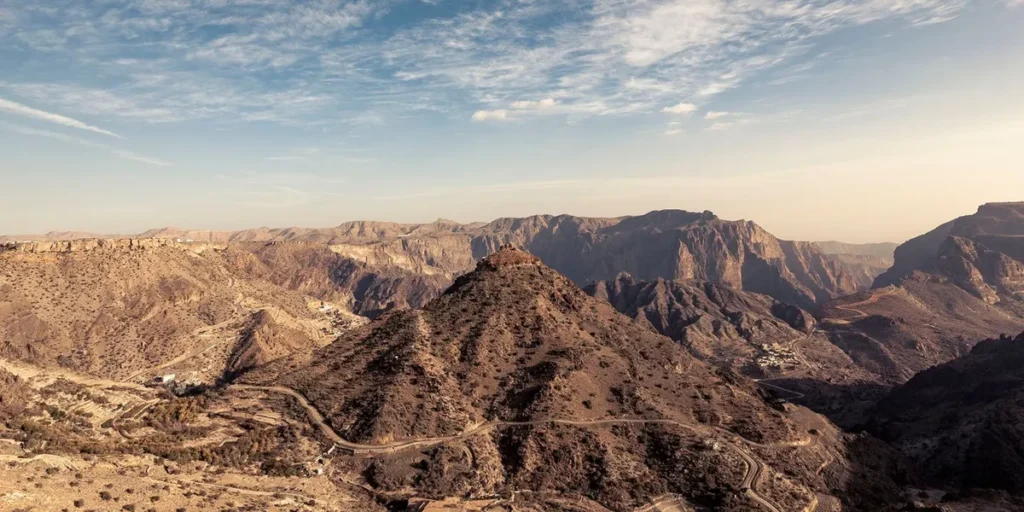
The Hajar Mountains are where Fujairah suddenly stops feeling like “just another beach destination” and reveals an entirely different side of its character: dry mountain slopes, rugged gray-orange ridges, winding roads, wadis, panoramic viewpoints, and a sense of open space that is often missing in Dubai. For anyone exploring Fujairah sightseeing, the Hajar Mountains are an essential part of the experience. This is the ideal place for scenic drives, short hikes, photography stops, and watching the sun disappear behind jagged stone peaks.
The most important rule for visiting the Hajar Mountains in Fujairah is simple: leave early, bring plenty of water, and avoid unfamiliar routes without a guide. The mountains may appear calm, but heat, rocky terrain, and limited phone coverage in certain areas can quickly change the nature of the trip.
Location and How to Get There
The Hajar mountain range stretches across eastern parts of the UAE and Oman, coming remarkably close to the Gulf of Oman coastline near Fujairah. That proximity makes it easy to combine beach relaxation, Fujairah attractions, and an active half-day mountain route within the same itinerary: mountains in the morning, sea or resort time in the afternoon.
From central Fujairah, most mountain roads can be reached within 20–40 minutes by car. From Dubai, the drive usually takes around 1.5–2 hours, depending on traffic, departure point, and chosen route. Most travelers approach Fujairah via highways that gradually transition into mountainous terrain, meaning the scenic views begin long before you arrive at your destination.
General tourism information and regional travel recommendations are available through the Fujairah Tourism & Antiquities Department. For road conditions and transport-related updates — particularly when driving from Dubai — it is also useful to check the Roads and Transport Authority Dubai.
| Travel Option | Travel Time | Best For | Estimated Cost |
|---|---|---|---|
| Rental car from Fujairah | 20–60 minutes to mountain areas | Families, couples, independent travelers | from $35–70 per day |
| Car from Dubai | 1.5–2 hours one way | Day trips from Dubai | from $45–90 per day plus fuel |
| Taxi or transfer from Dubai | 1.5–2 hours one way | Travelers who prefer not to drive | approximately $120–200 one way |
| Guided tour | 4–8 hours | Hiking, photography tours, wadi exploration | from $60–150 per person |
Renting a car is by far the most practical option. It gives you the flexibility to stop at viewpoints, avoid the midday heat, and comfortably combine the Hajar Mountains with other best places to visit in Fujairah.
What to See
One of the defining qualities of the Hajar Mountains is that there is not necessarily a single “must-see point” on the map. Their appeal lies in the journey itself: roads weaving through rock formations, changing perspectives around every turn, dry wadi riverbeds, and isolated settlements scattered across the landscape. Here, the drive becomes part of the destination.
Within any Fujairah travel guide, several mountain experiences are especially worth noting:
- Mountain roads and winding passes — ideal for a first visit if you prefer scenic driving over difficult trekking;
- Wadi routes — dry riverbeds that can dramatically change after rainfall and should be approached cautiously;
- Panoramic viewpoints — particularly beautiful in the early morning and around sunset;
- Photography locations at the foot of the mountains — where rocky slopes, palm trees, and open roads create striking contrasts;
- Protected natural areas, including the region around Wadi Wurayah National Park, where access conditions and regulations should be checked in advance through the Fujairah Environment Authority.
Never enter wadis immediately after rainfall without checking local conditions first. Even if the sky is clear, sudden water flow from the mountains can arrive unexpectedly and become dangerous very quickly.
For travelers looking for things to do in Fujairah, the mountains offer several clear options. You can take a relaxed scenic drive lasting two or three hours, book a guided hiking experience, join a photography-focused excursion, or combine the route with cultural landmarks such as Fujairah Fort, Fujairah Museum, and the coastline. The result is a full but balanced day: Hajar Mountains in the morning, Fujairah’s cultural attractions during the day, and dinner by the sea in the evening.
Costs and Visiting Information
The mountains themselves do not have ticket booths, entrance gates, or fixed operating hours. Most scenic roads and open natural areas are accessible free of charge. Costs depend primarily on your travel format: car rental, fuel, guide services, excursions, transfers, or off-road experiences.
| Expense | Estimated Cost |
|---|---|
| Access to open mountain roads | Free |
| Economy or mid-range rental car | $35–70 per day |
| SUV rental | $70–120 per day |
| Fuel for a trip from Fujairah | approximately $8–20 |
| Private guide or hiking experience | $80–180 |
| Group excursion | $60–150 per person |
| Private transfer from Dubai | $120–200 one way |
Visiting hours: the roads themselves are accessible around the clock, but sightseeing trips are best planned during daylight hours. The most comfortable times are typically between 6:00 AM and 10:00 AM, and again after 4:00 PM, especially during the warmer months.
The ideal season for visiting is from October through April, when temperatures are comfortable for walks and short treks. The mountains remain visually impressive during summer as well, but daytime heat can be physically demanding even for experienced travelers.
For an active trip through the Hajar Mountains, plan at least 3–4 hours. If you intend to combine the mountains with beaches and historical attractions, a full-day itinerary is the better choice.
The Hajar Mountains help explain why the Fujairah lifestyle feels so different from life in the UAE’s denser and faster-paced emirates. Here, the sea is nearby, roads are quieter, nature feels more accessible, and weekends are more likely to be spent driving through mountain landscapes than walking through shopping malls. That is one of the reasons growing interest in Fujairah real estate and property in Fujairah is driven not only by property prices, but also by quality of life itself. Buyers increasingly see the emirate as a place where life feels calmer, the environment feels more open, and the mountains are literally less than half an hour away from home.
5. Fujairah Museum — Discovering the Cultural Identity of the Region
Fujairah Museum is one of the emirate’s most important cultural landmarks and an essential stop for travelers who want to experience Fujairah as more than simply a beach destination. The museum offers insight into the region’s history, archaeology, and traditional way of life, revealing a side of the emirate that goes far beyond resorts and coastlines. Located close to the historic heart of Fujairah City, it is particularly convenient to combine with a visit to Fujairah Fort and the surrounding old quarter.
The museum’s collections help explain how the UAE’s eastern coastline developed differently from the country’s better-known urban centers. Rather than presenting abstract “history behind glass,” the exhibitions focus on the real lives of the region’s inhabitants: fishing, agriculture, trade, craftsmanship, weaponry, jewelry, pottery, and archaeological discoveries unearthed throughout the emirate.
What makes Fujairah Museum especially valuable is the way it captures the emirate’s local identity. Here, the Hajar Mountains, the Gulf of Oman coastline, historic settlements, and the traditions of the UAE’s eastern region come together to form a coherent historical narrative.
Location and How to Get There
The museum is located in Fujairah City, just a short distance from Fujairah Fort and the surrounding historical district. This makes it especially convenient for visitors, as several cultural heritage sites can be explored within a single trip without spending excessive time on transportation.
From central Fujairah, the museum can typically be reached within 5–15 minutes by car or taxi. If you are staying at one of the beachfront resorts along the coast, the journey usually takes around 15–30 minutes, depending on the location of your hotel.
From Dubai, the drive to Fujairah Museum generally takes 1.5–2 hours. Renting a car remains the most practical option, as public transportation within the emirate is limited and many of the key Fujairah tourist attractions are spread across different areas.
Information about the emirate’s cultural sites can be found through the Fujairah Tourism & Antiquities Department, while broader tourism and administrative information about the UAE is available via the UAE Government Portal.
| Route | Approximate Travel Time | Recommended Transport |
|---|---|---|
| Fujairah City Center → Fujairah Museum | 5–15 minutes | Taxi or car |
| Fujairah beach resorts → Museum | 15–30 minutes | Taxi or car |
| Dubai → Fujairah Museum | 1.5–2 hours | Rental car or private transfer |
| Fujairah Fort → Fujairah Museum | A few minutes | Walking or a short drive |
A practical itinerary option: begin with Fujairah Fort, continue to Fujairah Museum, and then head toward the coastline or continue exploring the city’s historical landmarks.
What to See
The museum’s exhibitions cover several key themes: archaeology, ethnography, traditional lifestyles, and the military history of the region. For travelers researching what to see in Fujairah, the museum serves as an excellent starting point. After visiting, many of the emirate’s landmarks become far more meaningful and easier to understand within their historical context.
The collections include:
- Archaeological discoveries from across the emirate, including artifacts linked to ancient settlements along the eastern coast;
- Pottery, vessels, and household objects that illustrate everyday local life;
- Traditional weapons, including daggers, swords, and rifles;
- Jewelry and traditional clothing, reflecting regional craftsmanship and cultural traditions;
- Fishing and agricultural tools, connected to pre-oil-era lifestyles;
- Reconstructed traditional living environments, particularly engaging for families with children.
The museum’s value lies not in its size, but in its content. In a relatively short visit, you gain a clear picture of how life in Fujairah developed long before modern hotels, highways, and residential projects transformed the region.
Particular attention should be paid to the archaeological exhibits. Fujairah and its surrounding areas are known for ancient settlements, burial sites, fortifications, and discoveries connected to historical trade routes. The Fujairah Environment Authority also provides useful information about the emirate’s environmental and geographical characteristics, helping visitors better understand the relationship between local culture and the surrounding landscape of mountains, wadis, and coastline.
For tourists, Fujairah Museum works especially well as part of a classic Fujairah sightseeing itinerary. For expatriates and property buyers, it offers something more valuable: context. Anyone exploring the Fujairah lifestyle or considering property in Fujairah benefits from understanding not only the beaches and new developments, but also the cultural foundation of the region itself.
Entrance Fees and Opening Hours
A visit to Fujairah Museum is generally considered an affordable cultural activity. Ticket prices may occasionally change, so it is advisable to confirm current information through official tourism resources or directly with the museum administration before visiting.
| Category | Approximate Cost |
|---|---|
| Adult ticket | around $1–2 |
| Child ticket | around $0.5–1 |
| Family admission | approximately $3–6 |
| Guided tour, if available | upon request |
| Taxi from central Fujairah | approximately $4–10 |
| Taxi from beachfront hotels | approximately $8–20 |
Typical opening hours: the museum is generally open during daytime hours, usually from morning until early evening. Schedules may vary on Fridays, public holidays, and during Ramadan.
Before visiting, it is recommended to check the latest opening hours. In the UAE, museum schedules and government-run cultural venues may change depending on the season, religious holidays, or official events.
For most visitors, 40–60 minutes is enough for a comfortable visit. However, if you enjoy reading exhibit descriptions, examining details, and photographing the surrounding architecture, it is worth allowing 1–1.5 hours. Morning or early afternoon is usually the best time to visit, especially if you plan to combine the museum with Fujairah Fort, Al Bidya Mosque, or a trip to the coastline afterward.
Unlike some of the emirate’s larger tourist attractions, Fujairah Museum remains relatively calm and uncrowded — and that is precisely part of its appeal. Visitors can move through the galleries at their own pace, study the exhibits without pressure, and gain a deeper understanding of the region. As part of any itinerary covering the best places to visit in Fujairah, the museum adds an important cultural dimension. And for those interested in Fujairah real estate, it provides something equally valuable: a sense of the living historical environment and enduring local identity that exist beyond the property market itself.
Where to Stay and the Best Way to Explore Fujairah’s Attractions


 Dubai Hills
 from 40м²



Fujairah is perfectly suited for a one- or two-day trip, but it is worth planning your travel format in advance. The emirate stretches along the Gulf of Oman coastline, and many of its key attractions are spread across different areas. Fujairah Fort and Fujairah Museum are located closer to the city center, Al Bidya Mosque lies farther north along the coastal route, Snoopy Island is situated in the Al Aqah area, while the mountain routes of the Hajar Mountains require additional time — and ideally a car.
The most important tip is simple: if you want to experience more than just the beach and truly explore Fujairah’s main attractions, renting a car is the best option. It makes the journey far more flexible, relaxed, and efficient, without relying on taxis between distant locations.
Location and Transportation
Fujairah is located on the UAE’s eastern coast along the Gulf of Oman. Unlike Dubai or Abu Dhabi, it does not have dense urban development across every kilometer of land, so distances between attractions feel more significant. For travelers, however, this is often part of the appeal: roads pass through mountain scenery, small settlements, and coastal stretches that make the drive itself feel like part of the experience.
From Dubai, the drive to Fujairah typically takes 1.5–2 hours by car. The route passes through inland areas and mountainous terrain, making the journey visually rewarding even before you arrive. Before departure, it is useful to check road conditions and transport updates through the Roads and Transport Authority Dubai, especially during weekends or public holidays.
For information about attractions and tourism zones across the emirate, the Fujairah Tourism & Antiquities Department is the most practical resource. General information regarding entry regulations, safety, travel seasons, and transportation within the UAE is also available through the UAE Government Portal.
| Starting Point | Approximate Travel Time | Recommended Transport | Notes |
|---|---|---|---|
| Dubai → Fujairah City Center | 1.5–2 hours | Car or private transfer | Ideal for a day trip |
| Dubai → Al Aqah / Snoopy Island | 1.5–2.5 hours | Car | Best to leave early |
| Fujairah City Center → Fujairah Fort / Museum | 5–15 minutes | Taxi or car | Easy to combine in one visit |
| Fujairah City Center → Al Bidya Mosque | 30–45 minutes | Car or taxi | Convenient to combine with the coastline |
| Fujairah City Center → Beach Resorts | 15–45 minutes | Car or taxi | Depends on hotel location |
If your trip is short, avoid trying to see everything in one day. For a first visit, choosing three or four key locations is usually enough — for example: Fujairah Fort, Fujairah Museum, Al Bidya Mosque, and one beach area.
What to See and How to Plan Your Route
The easiest way to explore Fujairah is to divide the emirate into several logical zones. This minimizes unnecessary driving and makes the itinerary far more comfortable.
A one-day itinerary works well for travelers leaving Dubai in the morning and returning in the evening. In this case, it is best to focus on the emirate’s best-known landmarks:
- Fujairah Fort — the historical symbol of the emirate;
- Fujairah Museum — an introduction to the region’s culture and archaeology;
- Al Bidya Mosque — the oldest mosque in the UAE;
- Snoopy Island or Al Aqah Beach — for seaside relaxation and snorkeling if time allows.
For a day trip from Dubai, leaving between 7:00 and 8:00 AM is ideal. This allows you to explore historical sites before the midday heat and reserve the second half of the day for the coast.
A two-day itinerary is considerably more relaxed and provides a much fuller impression of the emirate. The first day can focus on the city and cultural landmarks, while the second is dedicated to the sea, mountains, and slower-paced leisure.
| Day | Recommended Route | Focus |
|---|---|---|
| Day 1 | Fujairah Fort → Fujairah Museum → Waterfront / City Center | Culture, history, walking |
| Day 2 | Al Bidya Mosque → Snoopy Island → Hajar Mountains | Sea, nature, viewpoints |
For families with children, a gentler itinerary usually works best: museum, fort, beachfront hotel, and a short visit to Snoopy Island. More active travelers may prefer the Hajar Mountains, snorkeling, diving, and scenic mountain drives.
Where to Stay
The best area to stay depends entirely on the purpose of your trip. If beach relaxation is the priority, the coastline — especially the Al Aqah and Dibba areas — is the best choice. If you are more interested in cultural attractions and city exploration, staying closer to Fujairah City Center or the main highways is more convenient.
| Area | Best For | Advantages | Considerations |
|---|---|---|---|
| Fujairah City Center | Short stays, business trips | Close to Fujairah Fort, Fujairah Museum, shops | Requires driving to beaches |
| Al Aqah | Families, couples, beach lovers | Near Snoopy Island, beaches, resort atmosphere | Farther from city attractions |
| Dibba and northern coast | Quiet holidays, diving | Scenic landscapes, less urban activity | Car recommended |
| Mountain road areas | Active travelers | Fast access to the Hajar Mountains | Limited urban infrastructure |
For a first visit, staying at a beachfront resort in Al Aqah is usually the most practical option. From there, it is easy to reach Snoopy Island, Al Bidya Mosque, and northern natural attractions, while a separate half-day can be dedicated to Fujairah City.
Costs and Visiting Times
Travel costs in Fujairah depend heavily on the season, hotel category, and transportation choice. During high season — from October through April — beachfront resort prices are usually higher, but the weather is far more comfortable for sightseeing, walking, and snorkeling.
| Expense | Approximate Cost |
|---|---|
| 3–4 star city hotel | $50–120 per night |
| 4–5 star beachfront hotel | $120–300 per night |
| Luxury resort | $250–500+ per night |
| Rental car | $35–90 per day |
| SUV for mountain routes | $70–140 per day |
| Taxi within the city | $5–20 per ride |
| Transfer from Dubai | $120–220 one way |
| Fuel for driving within the emirate | $10–30 |
Attractions in Fujairah do not operate under a single unified schedule. Natural areas, beaches, and mountain roads are generally accessible throughout the day, while historical and cultural sites follow opening hours that may vary during public holidays and Ramadan.
The best time for sightseeing in Fujairah is early morning and late afternoon. Between 12:00 PM and 3:00 PM during warmer months, it is better to plan lunch, relax at the hotel, or visit indoor attractions such as museums.
As a general guideline:
- Historical landmarks are best visited in the morning before the heat intensifies;
- Museums work well during midday hours;
- Beaches and Snoopy Island are most enjoyable in the morning or near sunset;
- The Hajar Mountains should only be explored during daylight;
- Trips from Dubai are best started early in the morning, with return travel after 6:00–7:00 PM.
The ideal season for visiting Fujairah is from October through April. During this period, the weather is far more comfortable for mountain drives, sightseeing, and coastal relaxation. Summer trips are still possible, but itineraries are best centered around the hotel, the sea, early departures, and shorter travel distances.
Fujairah is an excellent destination for travelers looking to combine Fujairah sightseeing, beach relaxation, and the slower rhythm of the UAE’s eastern coastline. A single day is enough for a brief introduction, but two days provide a far richer and more complete experience: enough time to explore Fujairah Fort, Fujairah Museum, Al Bidya Mosque, Snoopy Island, and the landscapes of the Hajar Mountains without rushing. This format is particularly appealing to tourists, families, expatriates, and buyers who view Fujairah real estate not only as an investment opportunity, but as part of a calmer, seaside-oriented lifestyle.
Conclusion
Fujairah is not about chasing skyscrapers or getting swept up in endless urban noise. Its appeal lies elsewhere: in the historic walls of Fujairah Fort, the timeless atmosphere of Al Bidya Mosque, the coastal lifestyle surrounding Snoopy Island, the dramatic landscapes of the Hajar Mountains, and the cultural depth of Fujairah Museum. Few places in the UAE allow you to combine beach relaxation, history, nature, and a slower pace of life so naturally. That is exactly why the emirate is increasingly being viewed not only as a weekend getaway destination, but also as a place to live, spend part of the year, or invest in property by the sea.
If you are considering real estate in Fujairah, feel free to leave a request with us. We will carefully review your goals and help you identify several suitable options — whether you are looking for beachfront apartments, homes close to infrastructure and daily amenities, or properties with strong investment potential. We will not promise to find the “perfect property in five minutes,” but we will help you navigate the market, compare opportunities, and approach your purchase with greater confidence and clarity.
 +971 52 110 0777
 hello@baytique-uae.com
 UAE, Dubai, Dubai Hills Estate, Park Heights Square 1


 Get catalogue of TOP-7 objects